Saturday, August 18, 2018

Sharpest Tools In The Shed | Baseball America


Image result for scouts versus stats debate

JACKSONVILLE - Hopefully, this article silences some of those who feel that Yadier Molina is a better defensive catcher than Posey. Although, I doubt it will.

Also, some in the pocket protector crowd at SABR continue to make the ridiculous case that Addison Russell is a better defensive SS than Brandon Crawford. "Crawford has two Gold Gloves that belong to Russell" according to their convoluted metrics. I actually heard that at SABR48 from somebody.

Any statistical hocus-pocus that gives you that result needs to be re-engineered. Russell isn't even the best defensive SS on his own team, Javier Baez is. Russell doesn't even make the top three in the NL according to the experts that BA polled.
Every year Baseball America polls managers, scouts and executives to identify the best players in a variety of categories. Here are the results for 2018.

from Baseball America:
https://www.baseballamerica.com/stories/2018-mlb-best-tools/
Best Defensive C1. Buster Posey, Giants2. Austin Hedges, Padres3. Yasmani Grandal, Dodgers
Best Defensive 1B1. Paul Goldschmidt, D-backs2. Freddie Freeman, Braves3. Anthony Rizzo, Cubs
Best Defensive 2B1. D.J. LeMahieu, Rockies2. Javier Baez, Cubs3. Ozzie Albies, Braves
 Best Defensive 3B
1. Nolan Arenado, Rockies2. Anthony Rendon, Nationals3. Johan Camargo, Braves
Best Defensive SS1. Brandon Crawford, Giants2. Nick Ahmed, D-backs3. Trea Turner, Nationals
I know this is blasphemy coming from a member of SABR but, sometimes the eye test wins.

Rage against the Machine(s).

...and screw Ben Zobrist and Anthony Rizzo and Saint Jospeh. If we're going to go down this robo-ump rabbit-hole, let's just go full throttle stupid and replace the players with robots that we can bet on or against and have a total fantasy, non-reality sport.

Screw the human element and remove it in "all" aspects of the game including the players and coaches.

Really getting tired of these ass-hats and the direction this game appears to be going. Let them become the NFL and the NBA, there's a reason I don't watch those clowns anymore.


Friday, August 10, 2018

2018 MLB Organizational Talent Rankings | Baseball America


JACKSONVILLE - At least there is this for Giants fans. We've moved up three spots in Baseball America's Organizational Talent Rankings. Bart makes the list and the new influx of talent from the most recent draft seems to have pushed Heliot Ramos outside the Top 100.

As mentioned, pitching is thin and filled with high-floor, low-ceiling guys. The Giants really had to get more out of Beede and Stratton, the two #1's. That they are getting more from Suarez, a lower rounder and Derek Rodriguez, a converted outfielder says a lot about where this team is and where it is going.

from baseballamerica.com
https://www.baseballamerica.com/rankings/2018-mlb-organizational-talent-rankings/

  1. 23 
    Last: 26
    3ds_giants83.jpg

    San Francisco Giants

    Notes:
    2017: 24 | 2016: 19 | 2015: 26 | 2014: 19 | 2013: 28
    1 Top 100 Prospect: C Joey Bart (37).

    State of the System: The Giants added a potential first-division catcher in Bart. Young outfielders like Heliot Ramos and Alexander Canario are years away, but they they do have promise. The Giants' pitching depth is thin, but finding surprises on the free agent market like Dereck Rodriguez has helped them work around those issues in the past.


Sent from my iPhone

Thursday, August 02, 2018

This Is The Real Reason The Best Athletes Usually Make The Worst Coaches | Elite Daily

This Is The Real Reason The Best Athletes Usually Make The Worst Coaches


JACKSONVILLE - A companion to the prior article.

from elitedaily.com
https://www.elitedaily.com/sports/amazing-athletes-flop-coaches/1339816

This Is The Real Reason The Best Athletes Usually Make The Worst Coaches

I've always thought I'd make a great coach.

To be completely honest with you, I was never a spectacular athlete growing up. I mean, I was pretty capable at most sports, but I never expected to earn a scholarship anywhere. I just loved sports and played as a result.

Still, regardless of which sport I was playing, I always found a way to make myself useful -- because of my sports IQ. You know, I'd do all of the little things that don't usually show up on the stat sheet to help my team win.

In short, I played with a very "coach-like" mentality. One that I chalked up to an exorbitant amount of time spent watching sports on TV and playing sports video games.

See, to be a coach, you don't necessarily need to be a great athlete. You need instincts -- and the type of charismatic personality that gets the guys around you fired up to play. Most importantly, you need to know how to win games -- not necessarily have the athletic ability to do it yourself.
Take Vince Lombardi, for example, the man who most consider the greatest football coach of all time. Despite winning five NFL Championships -- and the first two Super Bowls -- Lombardi never played football professionally.

Lombardi just understood the game and was great at translating his knowledge to his players. Although his own football skill set might have not been too profound, he was remarkable at elevating the skill sets of his players. And that's what matters as a coach.

Just because you're able to excel at a sport as a player doesn't mean you'll excel at teaching the sport to others. Sure, it probably doesn't hurt to have achieved some level of success as a player prior to coaching, but the two are far from being causally related.

In fact, according to Sian Beilock Ph.D., a professor of psychology at the University of Chicago, the best players rarely make the best coaches:

As you get better and better at what you do, your ability to communicate your understanding or to help others learn that skill often gets worse and worse.

Sure, you might have a world class jump shot, but unless you're able to pass that skill on to the players around you, you'll never be a good coach.

As Beilock explains, many of the top athletes rarely are able to communicate how or why they're so talented.

These types of upper-echelon athletes might flourish with the ball in their hand -- with the game on the line -- but putting other players in the right spots to succeed is a different thing entirely.

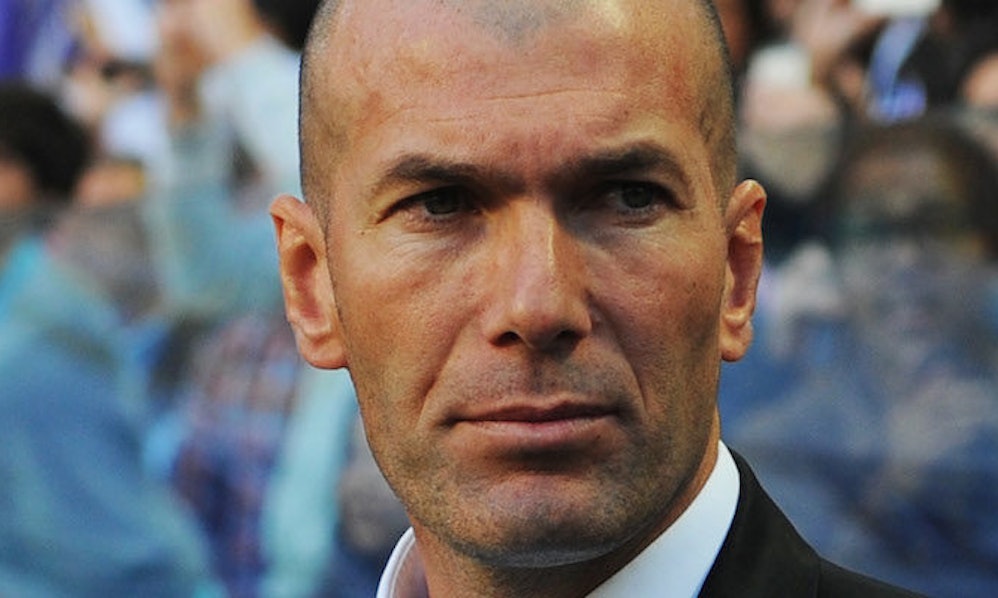
I recently was thinking about the whole player-coaching thing earlier this week, with Real Madrid's announcement that Zizou Zidane would be the new boss of "Los Blancos."

Anyone who follows football (soccer), even slightly, should be familiar with Zidane -- one of the greatest footballers of all time. However, this new opportunity at Real Madrid presents a new test for the Frenchman, marking his first major coaching position.

Although he surely had one of the highest football IQs of any player to ever step on the pitch, it remains to be seen how well he'll fare from the sideline.

If he were to falter, he definitely wouldn't be the first superstar athlete to do so. I mean, take some of these amazing athletes whose coaching tenures weren't nearly as impressive as their playing careers:

Wayne Gretzky
If Gretzky was one fraction as good of a coach as he was a player, he'd probably still have a job behind some NHL team's bench today. In his time coaching the (then) Phoenix Coyotes, "The Great One" failed to elevate his team to the playoffs and produced only one winning record in four seasons.
After putting together a .473 percent winning percentage from 2006 to 2009, he resigned and pumped the brakes on his coaching aspirations. Although I have a feeling he'll return to the sidelines again at some point in the future.
Magic Johnson 
Yes, it was a very short-lived experiment, but Magic Johnson did, in fact, coach his beloved lakers for a brief stint in the 1993-1994 season (in between retirements). Coaching many of his former teammates, Johnson led the purple and gold to a dismal 5-11 record before surrendering his duties at the end of the season.
He then returned to actually playing the game -- as opposed to coaching it -- as a point forward of sorts in the 1995-96 season. Despite it being his worst statistical year as a player, it was still lightyears more successful than his job as a coach.
          Isiah Thomas
I'm a Knicks fan, so I could probably lecture you about Isiah Thomas' shortcomings as a coach until the cows come home. Aside from being a poor coach, Thomas might've been a worse GM -- acquiring Steve Francis and Stephon Marbury at the expense of the Knicks future.
While Thomas surely knew how to run an offense during his days with the Bad Boy Pistons, he couldn't make it happen at the Mecca of basketball, posting a career .456 winning percentage over five seasons with the Pacers and Knicks.
          Ted Williams
Ted Williams is probably the greatest pure hitter of all time, undisputed. However, when it came to Ted Williams the coach, he was far from great.
His career as a manager was pretty short -- lasting only five seasons between the Washington Senators and Texas Rangers -- and for good reason. After winning 86 games with the Senators in '69, his first season, the team got progressively worse over his tenure as manager.
He eventually left the Senators after the '71 season for the Texas job, where he managed to rack up a mere 54 wins. That's just not gonna cut it.
While I'm sure Zidane will kill it as the manager for Real, being great at a sport doesn't necessarily mean you know how to coach it.


Sent from my iPhone

The Best Players Rarely Make the Best Coaches | Psychology Today

The Best Players Rarely Make the Best Coaches | Psychology TodayImage result for the best players rarely make the best coaches

JACKSONVILLE - At the youth level, I can tell you that parents "believe" that the best players make the best coaches and throw a lot of money at what seems to be a low-ROI investment.

from psychologytoday.com
https://www.psychologytoday.com/us/blog/choke/201008/the-best-players-rarely-make-the-best-coaches

The Best Players Rarely Make the Best Coaches

Why those who do can't teach

The 92nd P.G.A Championship ended yesterday with the usual fanfare and excitement that this last major of the year typically garners. But, what this tournament may be most remembered for was the younger generation of golfers - most who had not yet won a major - that sat atop the leaderboard throughout the final days at Whistling Straits.

Seasoned players like Padraig Harrington missed the cut and, although we saw some amazing shots, Tiger Woods was never really in contention. With younger players climbing the superstar ranks, you might wonder if it is time for some of the older generation to think about retirement. But, what does a golfer do after his career on the tour is over? There is of course a long list of options. You might be interested to know, however, that sport science research suggests that coaching should NOT be one of them - especially if a player wants to keep his game at a high level.
As it happens, the best players don't make the best coaches in sports. According to Canadian gold-medal hockey player Therese Brisson, "Recently retired hockey players who played at high levels rarely make the ideal coaches for youth hockey. They know what to do, but they can't communicate how they do it!" She says that given the choice between a skilled hockey player and an experienced physical education teacher to help at the youth hockey camps she now runs, she will always take the teacher. "Teaching skating skills is one of those problem areas," Brisson says. "How exactly do you skate faster?" Being able to communicate this type of information comes from coaching experience, not from playing experience.
This sentiment applies in golf too. Take a recent study conducted by psychologists Mike Anderson and Kristin Flegal.1 The researchers asked expert golfers and beginners to take some short putts on a fairly flat, straight green. The golfers then spent several minutes describing the putts they had just taken or they worked on an unrelated task, instead. Afterwards, all the golfers were asked to perform the putts again. After spending time describing their past putts, the expert golfers needed twice as many attempts to sink their putts as experts who had not put their performances into words. Beginning golfers' performances were not affected by describing putts. These less skilled players even improved a little bit when asked to recount what they had just done.


As I have blogged about in the past, for well-learned activities like taking a free throw, hitting a simple putt, or playing a cadence that you have performed a thousand times in the past, thinking too much about the step-by-step processes of what you are doing can be detrimental. But, it's not just that trying to describe your performance can disrupt it. Skilled performers often have trouble putting their actions into words in the first place. That's why those who perform at the highest levels should think twice about teaching their skills to others. When a scratch golfer in my lab, for instance, was asked to describe a putt he just took, he replied, "I don't know, I don't think while I putt." When your performance flows largely outside of your conscious awareness, your memories of what you've done are just not that good. This makes it hard to teach what you know to someone else. Just think about the type of description you might get from Michael Jordan if he were asked how he dunks a basketball. He might invoke the Nike motto and say that he "just does it," not because he doesn't want to give away his flying secrets, but because he may not know what he does.

As you get better and better at what you do, your ability to communicate your understanding or to help others learn that skill often gets worse and worse. This communication can even screw you up. Just think about golfer Ralph Guldahl, who won the US Open in both 1937 and 1938 and then the Masters in 1939. He was, at the time, one of the best players in the world. Then he wrote, "Groove Your Golf" - a how to guide for the beginning player. Guldahl never won another championship again.
__
1Flegal, K. E., & Anderson, M. C. (2008). Overthinking skilled motor performance: Or why those who teach can't do. Psychonomic Bulletin & Review, 15, 927-932


Sent from my iPhone

Friday, July 27, 2018

Facility Friday: Rays Stadium Renderings, Audi Field - Athletic Business

Facility Friday: Rays Stadium Renderings, Audi Field - Athletic Business

Image result for rays new field tampa ybor city

JACKSONVILLE - It looks wild, but it's better than the St. Pete mausoleum. This development and the new TV deal the Rays just signed should allow them to compete somewhat, but in that division,either the Sawks or the Yanks have to make a big misstep first and then a team like the Rays or the Jays can pounce.

It's a start. The Rays have shown they can be innovative and do more with less. Hey, somebody should write a book about them.

from athleticbusiness.com
https://www.athleticbusiness.com/facilities/facility-friday-rays-stadium-renderings-audi-field.html

Facility Friday: Rays Stadium Renderings, Audi Field

The Tampa Bay Rays unveiled renderings of a proposed stadium in Ybor City, Fla. At an estimated cost of $892 million (including the ballpark and related infrastructure), plans call for seating for 28,216, and a unique translucent roof. Kansas City-based firm Populous provided designs for the facility. — Tampa Bay TimesTampa Bay's future ballpark. https://atmlb.com/2L4QDik  — Tampa Bay Rays (@RaysBaseball)

Sent from my iPhone

Thoughtful Ideas: Political Diversity Of Stanford Students: 94% Voted Democrat For Governor and U.S. Senator, only 4% voted Republican

Thoughtful Ideas: Political Diversity Of Stanford Students: 94% Voted Democrat For Governor and U.S. Senator, only 4% voted Republican
Image result for Political Diversity Of Stanford Students


JACKSONVILLE - I love the methodology and the use of data, but the money shot is the conclusion.


Universities talk a lot about the importance of diversity of ideas but have done little to achieve it.
 Diversity is said to help students learn from each other—so long as the dominant political views are not challenged!

from thoughtfulideas blog:
http://thoughtfulideas.blogspot.com/2018/06/political-diversity-of-stanford.html

Political Diversity Of Stanford Students: 94% Voted Democrat For Governor and U.S. Senator, only 4% voted Republican


California is a Blue State.  The San Francisco Bay Area is Dark Blue.  Stanford University, where your friendly proprietor has worked and lived for more than 40 years, is Deep Dark Blue.

By acreage, Stanford is the second largest university in the world.  From its founding in 1891, portions of its land have been used to construct housing for faculty and staff.  Over 125 years, Stanford faculty and the University have built about 650 single-family homes, 250 condominiums, and 40 duplexes.  (Several hundred more housing units are nearing completion and several hundred more are in the planning or early stage of construction.)
Stanford has 2,219 members of the professoriate faculty and several top administrators who are eligible to purchase a campus residence.  About 40% live in the "faculty ghetto."  The other 60% are scattered about neighboring towns and suburbs (Palo Alto, Menlo Park, San Jose, San Francisco, and others).  It seems reasonable to assume that the political predilections of on- and off-campus faculty and are similar.

California's 2018 primaries were held on June 5. 

Four precincts (Santa Clara County Precincts 2542, 2544, 2545, and 2546) circumscribe Stanford University.

Precincts 2542 and 2544 consist of graduate and undergraduate student housing.  Some students are registered to vote using their campus address.  Most are registered at their home address.

Precinct 2545 consists solely of faculty/staff (F/S) housing.  Precinct 2546 is a mix of student and F/S housing

Here are the results for Governor and U.S. Senator, the two most important races in California.

Governor:

Precinct 2545 (all F/S):  Democrats 234 (88.0%), Republicans 31 (11.7%), Other 1 (0.3%).

Precinct 2546 (F/S and students):  Democrats 356 (94.9%), Republicans 12 (3.2%), Other 7 (1.9%).

Precinct 2544 (all students):  Democrats 155 (93.4%), Republicans 8 (4.7%), Other 3 (1.8%).

Precinct 2542 (all students):  Democrats 129 (94.2%), Republicans 6 (4.4%), Other 2 (1.4%).

U.S. Senator:

Precinct 2545:  Democrats 232 (87.9%), Republicans 27 (11.5%), Other 5 (1.9%).
Precinct 2546:  Democrats 354 (96.2%), Republicans 11 (3.0%), Other 3 (0.8%)
Precinct 2542:  Democrats 127 (96.2%), Republicans 3 (2.3%), Other 2 (1.5%)
Precinct 2544:  Democrats 154 (93.9%), Republicans 5 (3.0%), Other 5 (3.0).

F/S voters are 7-8 percentage points more Republican than students.  One reason is that F/S voters are older and more conservative.  Some of these Republican voters are in their 70s and 80s.

Stanford has achieved undergraduate student diversity in terms of race (only about a third is non-Hispanic White), ethnicity, gender and gender preference, nationality, religion, disability, and socioeconomic status.  Political and ideological diversity is nowhere to be found. 

Universities talk a lot about the importance of diversity of ideas but have done little to achieve it.

Diversity is said to help students learn from each other—so long as the dominant political views are not challenged!


Sent from my iPhone

Thursday, July 26, 2018

MLB Trade Rumors and Speculation | mlb.com


Image result for Andrew McCutchen, OF, Giants

JACKSONVILLE - I agree with this assessment. It's not something I want to see happen, but it is something I could foresee happening. Don't look on the Indians Top 20 or 30 Prospect Lists, the yield will likely not be there.

Almost anyone else the Giants would like to trade, or could get any kind of return from trading, has spent or is spending significant time on the DL. This and the Competitive Balance Tax, cough!  Salary Cap, is the corner the Giants find themselves boxed into.

from mlb.com
https://www.mlb.com/news/predictions-for-2018-mlb-trade-deadline/c-287131076
Andrew McCutchen, OF, Giants
McCutchen checks off many of the same boxes as Jones, except he's already been through the "difficult-trade-of-a-franchise-icon" stage, he's hitting better than Jones is (.259/.350/.416) in a more difficult hitter's park, and he can't block a trade. (He's also already accepted the move from center to a corner.) The larger question is if the Giants will sell, but despite being only five games out in the National League West, they're in fourth place -- and behind six other teams in the Wild Card hunt. They'll sell.
Prediction: Indians

Giants Top Minor League Prospects

  • 1. Joey Bart 6-2, 215 C Power arm and a power bat, playing a premium defensive position. Good catch and throw skills.
  • 2. Heliot Ramos 6-2, 185 OF Potential high-ceiling player the Giants have been looking for. Great bat speed, early returns were impressive.
  • 3. Chris Shaw 6-3. 230 1B Lefty power bat, limited defensively to 1B, Matt Adams comp?
  • 4. Tyler Beede 6-4, 215 RHP from Vanderbilt projects as top of the rotation starter when he works out his command/control issues. When he misses, he misses by a bunch.
  • 5. Stephen Duggar 6-1, 170 CF Another toolsy, under-achieving OF in the Gary Brown mold, hoping for better results.
  • 6. Sandro Fabian 6-0, 180 OF Dominican signee from 2014, shows some pop in his bat. Below average arm and lack of speed should push him towards LF.
  • 7. Aramis Garcia 6-2, 220 C from Florida INTL projects as a good bat behind the dish with enough defensive skill to play there long-term
  • 8. Heath Quinn 6-2, 190 OF Strong hitter, makes contact with improving approach at the plate. Returns from hamate bone injury.
  • 9. Garrett Williams 6-1, 205 LHP Former Oklahoma standout, Giants prototype, low-ceiling, high-floor prospect.
  • 10. Shaun Anderson 6-4, 225 RHP Large frame, 3.36 K/BB rate. Can start or relieve
  • 11. Jacob Gonzalez 6-3, 190 3B Good pedigree, impressive bat for HS prospect.
  • 12. Seth Corry 6-2 195 LHP Highly regard HS pick. Was mentioned as possible chip in high profile trades.
  • 13. C.J. Hinojosa 5-10, 175 SS Scrappy IF prospect in the mold of Kelby Tomlinson, just gets it done.
  • 14. Garett Cave 6-4, 200 RHP He misses a lot of bats and at times, the plate. 13 K/9 an 5 B/9. Wild thing.

2019 MLB Draft - Top HS Draft Prospects

  • 1. Bobby Witt, Jr. 6-1,185 SS Colleyville Heritage HS (TX) Oklahoma commit. Outstanding defensive SS who can hit. 6.4 speed in 60 yd. Touched 97 on mound. Son of former major leaguer. Five tool potential.
  • 2. Riley Greene 6-2, 190 OF Haggerty HS (FL) Florida commit.Best HS hitting prospect. LH bat with good eye, plate discipline and developing power.
  • 3. C.J. Abrams 6-2, 180 SS Blessed Trinity HS (GA) High-ceiling athlete. 70 speed with plus arm. Hitting needs to develop as he matures. Alabama commit.
  • 4. Reece Hinds 6-4, 210 SS Niceville HS (FL) Power bat, committed to LSU. Plus arm, solid enough bat to move to 3B down the road. 98MPH arm.
  • 5. Daniel Espino 6-3, 200 RHP Georgia Premier Academy (GA) LSU commit. Touches 98 on FB with wipe out SL.

2019 MLB Draft - Top College Draft Prospects

  • 1. Adley Rutschman C Oregon State Plus defender with great arm. Excellent receiver plus a switch hitter with some pop in the bat.
  • 2. Shea Langliers C Baylor Excelent throw and catch skills with good pop time. Quick bat, uses all fields approach with some pop.
  • 3. Zack Thompson 6-2 LHP Kentucky Missed time with an elbow issue. FB up to 95 with plenty of secondary stuff.
  • 4. Matt Wallner 6-5 OF Southern Miss Run producing bat plus mid to upper 90's FB closer. Power bat from the left side, athletic for size.
  • 5. Nick Lodolo LHP TCU Tall LHP, 95MPH FB and solid breaking stuff.