
from FanGraphs:

After a large decline during COVID, youth sports participation is back on the rise.
But overall, participation is still down compared to pre-pandemic levels. And even worse, the United States has a less-than-stellar report card when it comes to youth physical activity.
Participating in sports has been found to increase both physical and mental health among children. In fact, a recent study shows that 58.4% of parents found that their child's mental health greatly improved as a result of involvement in sports. And, 71% cited improved social well-being.
Unfortunately, 27% of parents reported that their child lost interest in playing sports all together.


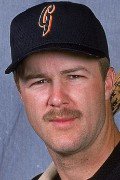
“We just don’t recognize life’s most significant moments while they’re happening.” - Moonlight Graham (Field of Dreams)
Archibald Wright "Moonlight" Graham (November 12, 1876 – August 25, 1965) was an American professional baseball player and medical doctor who appeared as a right fielder in a single major league game for the New York Giants on June 29, 1905. His story was popularized by Shoeless Joe, a novel by W. P. Kinsella, and the subsequent 1989 film Field of Dreams, starring Kevin Costner, and featuring Burt Lancaster and Frank Whaley, respectively, as older and younger incarnations of Graham.
As the movie suggests, somewhat tragically, Graham came close but never reached his dream. But Graham, played by Burt Lancaster, famously says,
“If I‘d only gotten to be a doctor for five minutes, now that would have been a tragedy.”

Once again, not sure what the voters are looking for. I think Kent checks all the boxes and yet he is on his next to last year on the ballot.
They made Ortiz's case on the same day. Why not, keeping Bonds out is good enough for most of the electors because they care more about how players treated the media than almost anything else.
HOF Candidate Spotlight
 | WAR: 55.5 Better than 36.4% of HOFers Black Ink: 0 Better than 0.0% of HOFers Gray Ink: 71 Better than 11.7% of HOFers HOF Monitor: 122.5 Better than 40.5% of HOFers JAWS: 45.62 Better than 35.0% of HOFers at 2B |
Jeff Kent enters his 9th year on the ballot. After hovering in the teens for most of his eligibility, he has made a jump in the last two cycles and peaked at 32.4% of the vote last year. Kent was an average starter for most of the 1990s, not finding his peak performance until joining the San Francisco Giants in 1997. During his 6-year Giants tenure he finished in the top 10 of MVP voting 4 times, including winning the NL MVP in 2000 over his teammate Barry Bonds.
Kent provided a lot of offensive value from a traditionally weaker position of second base. Kent hit 351 of his home runs as a second baseman, the record holder by a decent amount. Kent was not a top defender at the position, only surpassing 1.0 defensive WAR in his 1997 season. That being said, his total value was the best among 2nd basemen for a time. From 1997-2005, Kent recorded 42 WAR, with the next closest 2nd baseman being Craig Biggio with 32 WAR in that time span.

Luciano, Murphy lead next wave bound for Bay
Sounds like Luciano, Pomares & Matos replace Bart & Ramos, who need to produce at MLB level. No sleepy on Harrison (LHP) or the 5-9 C Aurebach. :)
When the smallish kids open eyes, that bears watching.

Thursday, December 23
Born This Day
1942: Jerry Koosman: 53.7 WAR (turns 79)
1978: Victor Martinez: 32.0 WAR (turns 43)
1980: Cody Ross: 13.5 WAR (turns 41)
1983: Hanley Ramirez: 38.0 WAR (turns 38)
1988: Roberto Perez: 7.5 WAR (turns 33)
from Farnam Street:
https://fs.blog/kahneman-better-decisions/
Daniel Kahneman’s Favorite Approach For Making Better Decisions
Bob Sutton’s book, Scaling Up Excellence: Getting to More Without Settling for Less, contains an interesting section towards the end on looking back from the future, which talks about “a mind trick that goads and guides people to act on what they know and, in turn, amplifies their odds of success.”
We build on Nobel winner Daniel Kahneman’s favorite approach for making better decisions. This may sound weird, but it’s a form of imaginary time travel.
It’s called the premortem. And, while it may be Kahneman’s favorite, he didn’t come up with it. A fellow by the name of Gary Klein invented the premortem technique.
A premortem works something like this. When you’re on the verge of making a decision, not just any decision but a big decision, you call a meeting. At the meeting, you ask each member of your team to imagine that it’s a year later.
Split them into two groups. Have one group imagine that the effort was an unmitigated disaster. Have the other pretend it was a roaring success. Ask each member to work independently and generate reasons, or better yet, write a story, about why the success or failure occurred. Instruct them to be as detailed as possible, and, as Klein emphasizes, to identify causes that they wouldn’t usually mention “for fear of being impolite.” Next, have each person in the “failure” group read their list or story aloud, and record and collate the reasons. Repeat this process with the “success” group. Finally use the reasons from both groups to strengthen your … plan. If you uncover overwhelming and impassible roadblocks, then go back to the drawing board.
Premortems encourage people to use “prospective hindsight,” or, more accurately, to talk in “future perfect tense.” Instead of thinking, “we will devote the next six months to implementing a new HR software initiative,” for example, we travel to the future and think, “we have devoted six months to implementing a new HR software package.”
You imagine that a concrete success or failure has occurred and look “back from the future” to tell a story about the causes.
[…]
Pretending that a success or failure has already occurred—and looking back and inventing the details of why it happened—seems almost absurdly simple. Yet renowned scholars including Kahneman, Klein, and Karl Weick supply compelling logic and evidence that this approach generates better decisions, predictions, and plans. Their work suggests several reasons why. …
As … upcoming events become more distant, people develop more grandiose and vague plans and overlook the nitty-gritty daily details required to achieve their long-term goals.
Weick argues that this shift is effective, in part, because it is far easier to imagine the detailed causes of a single outcome than to imagine multiple outcomes and try to explain why each may have occurred. Beyond that, analyzing a single event as if it has already occurred rather than pretending it might occur makes it seem more concrete and likely to actually happen, which motivates people to devote more attention to explaining it.
As Kahneman and other researchers show, most people overestimate the chances that good things will happen to them and underestimate the odds that they will face failures, delays, and setbacks. Kahneman adds that “in general, organizations really don’t like pessimists” and that when naysayers raise risks and drawbacks, they are viewed as “almost disloyal.”
Max Bazerman, a Harvard professor, believes that we’re less prone to irrational optimism when we predict the fate of projects that are not our own. For example, when it comes to friends’ home renovation projects, most people estimate the costs will run 25 to 50 percent over budget. When it comes to our projects; however, they will be “completed on time and near the project costs.”
Most times, not everyone on a team agrees with the course of action. Even when you have enough cognitive diversity in the room, people still keep their mouths shut because people in power tend to reward people who agree with them while punishing those who dare to speak up with a dissenting view.
The resulting corrosive conformity is evident when people don’t raise private doubts, known risks, and inconvenient facts. In contrast, as Klein explains, a premortem can create a competition where members feel accountable for raising obstacles that others haven’t. “The whole dynamic changes from trying to avoid anything that might disrupt harmony to trying to surface potential problems.”

from Farnam Street:
https://fs.blog/11-rules-for-critical-thinking/
A fantastic list of 11 rules from some of history’s greatest minds. These are Prospero’s Precepts and they are found in AKA Shakespeare: A Scientific Approach to the Authorship Question:

Dear Coaches:
Back in
February 2021, our SABR Chapter tried to organize an essay contest to benefit Dick
Lundy,
Lundy will be
a candidate to join Lloyd in the baseball Hall of Fame if they take another
shot at adding ex-Negro League players in 2021. He is reported to have missed election
the last time the Hall of Fame addressed Negro Leaguers in 2006. Lundy was not
only a great ball player, but a great mentor, manager and a person who worked
with Hall of Famer Effa Manley to try and salvage Negro league baseball as an
entity after they were raided of talent following the Jackie Robinson signing.
We would
like to elevate his profile locally and nationally through different
initiatives to assist his candidacy. I have been in contact with next of kin
and they feel like it is too late to affect this kind of change. Lundy is a
deserving Hall of Famer on and off the field, statistically and subjectively he
should be the next guy in.
I am afraid
that locally, we have done too little to help, and I communicated that to a
frustrated family. Please, please, please help me convince them that it is not
too late. Nationally, the candidacy is on solid ground, but there are
candidates whose local PR machine is greater than ours. We can change that,
even now.
I wish I had
essays from students to demonstrate to the family the potential of this
project. They have been beaten down by the past. Now we can be involved in
helping change baseball history. What could be better than that? Even a
one-page essay from students would help, I dare say, especially from HBCU’s
where he attended. This is a great diversity, equality and inclusion project
for students. He and others were rendered invisible by Jim Crow, we cannot
allow that crime to be repeated.
Please help,
time is of the essence and is now more an enemy than a friend to our effort. Thank
you for your consideration. I will help in any way I can.
Sincerely,
Charles
Slavik
(813)
335-8678
Founder of
John Henry “Pop” Lloyd SABR Chapter
https://twitter.com/theslav1959
https://twitter.com/Floridasabr
Research
Resources for Students:
http://sabr.org/bioproj/person/dick-lundy/
https://www.seamheads.com/NegroLgs/player.php?playerID=lundy01dic
http://www.banishedtothepen.com/who-is-dick-lundy/
http://www.cnlbr.org/Portals/0/Hero/Richard_Dick_Lundy.pdf

