
The pendulum swings and when it does it often goes too far in one direction before swinging back the other way. We are seeing that in baseball. This is an excellent article by The Atlantic, a non-baseball publication, that summarizes the landscape.
QOTY candidate:
QOTY candidate III:
===
theatlantic.com
The Simple Technology That Accidentally Ruined Baseball - The Atlantic
 "Moneyball"/RBC
The obvious answer—so obvious that its obviousness seems to dispel other explanations—is the rule against steroids. In the spring of 2006, Major League Baseball implemented a new drug policy, banning more than 100 substances and threatening one-year suspensions for two-time violators and lifetime bans for three-time offenders. You might say that performance-enhancing drugs were the chemical tailwind behind the home-run bonanza.
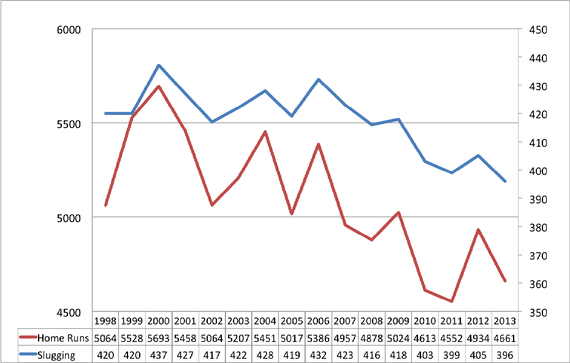
When baseball banished them, the tailwind died, and hitters' un-enhanced strength has proven inferior. Since 2006, the same year baseball introduced its drug policy, total home runs have fallen in a herky-jerky pattern. Total slugging, a more complete picture of power hitting, has eroded more steadily.
 baseballreference.com
Yes, steroids pumped up offenses, and yes, the rules against steroids have deflated them. But something else happened in 2006—something that baseball fans rarely talk about when they bemoan the offensive state of baseball. It wasn't something that baseball took away. It was, rather, something that baseball added.
A camera.
Umpiring the Umpires
Rather than deem the cameras a threat to league integrity, baseball embraced them. For years, Major League Baseball had been pressuring umpires to submit to performance standards. With the introduction of Pitch f/x, MLB finally had cameras in every stadium to umpire the umpires. In 2009, the league implemented a policy called Zone Evaluation (ZE), which tracked missed calls after each game and judged umpires by their accuracy. After ZE's first year, three senior umpires were fired for their mistakes behind the plate. Those with good performance could get promotions and earn up to $400,000.
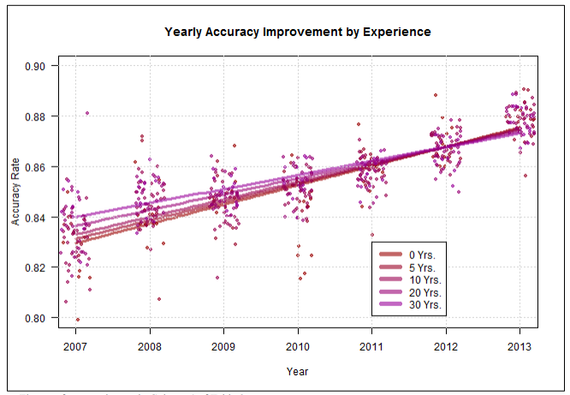
Better incentives make better workers. As economist Edward Lazear has shown, organizations become more productive when a job well done is rewarded with extra money and dumb mistakes are punished. So we shouldn't be surprised that, after the introduction of cameras, umpires have called the strike zone more consistently and more accurately each year since 2007, as Brian Mills explained in a brilliant paper.
 Mills
Mills
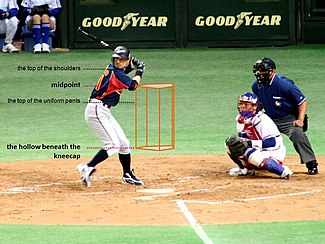
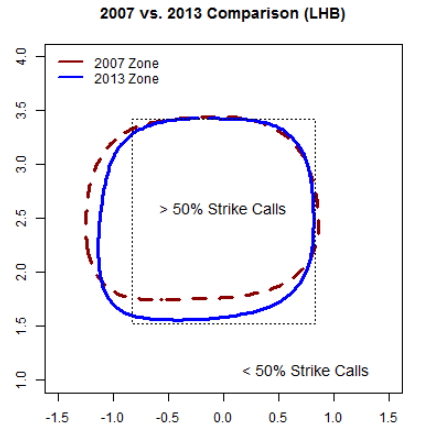
The strike zone morphed in the age of camera technology, as well. Before cameras, it turned out, umpires had been ignoring strikes around the knees. Pitches between 18 and 30 inches above the plate, which are technically in the strike zone, had been called balls for years. But the presence of cameras encouraged umpires to lower the strike zone.
As you're about to see, this swung the balance of power from the batters box to the pitching mound, shutting down baseball's thrilling home-run parade and inaugurating the Era of the Pitcher.
The New (Lower) Strike Zone
 The Atlantic/Mills
To review, a lower strike zone invited more low pitches, more low strikes, and more strike outs. These variables on their own explain a good chunk of baseball's offensive drought. But let's throw in one more variable in there: hitter psychology.
Batters are typically worse when they fall behind the count—that is, when there are more strikes than balls—because they have to defend the plate to avoid striking out. Hitters are much more successful on 2-1 counts (two balls, one strike) than on 1-2 counts. "Having a 1-1 pitch that was called a ball in 2008 suddenly get called a strike in 2013 changes the batting environment," Jon Roegele writes in an excellent paper on the rise of low strikes. Strikes hurt hitters even without strike outs by forcing batters to shift to a protect-the-plate strategy rather than a swing-for-the-fences strategy.
To illustrate this point, consider the Florida Marlins' Giancarlo Stanton, the MLB-leader in home runs and RBIs. Here are his numbers on each count and after each count:
Why Baseball's Going Down
But is that really baseball's highest goal? A perfect strike zone, at the expense of steadily evaporating offense?
Baseball has done all the right little things while perhaps ignoring the big thing: It needs hitters. It needs home runs. Sports thrive and grow when national stars thrive on national television as marketing ambassadors of the game. Today, baseball is a national pastime without a truly national star. Mike Trout, the historic and absurdly young center fielder for the league-leading Los Angeles Angels, has one-third the name recognition of Derek Jeter, a telegenic veteran that even this Yankees fan named Derek will acknowledge was never half as good as Trout.
So the league has pitched itself into a corner. Its own rules have destroyed the offensive power surge that had captured America's attention in the late-'90s and early aughts.
Umpires, empowered and/or cowered by technology, are better than ever. As a direct result, baseball has become a grind for fans who prefer sports with scoring.
QOTY candidate:
Batters are typically worse when they fall behind the count—that is, when there are more strikes than balls—because they have to defend the plate to avoid striking out. Hitters are much more successful on 2-1 counts (two balls, one strike) than on 1-2 counts. "Having a 1-1 pitch that was called a ball in 2008 suddenly get called a strike in 2013 changes the batting environment," Jon Roegele writes in an excellent paper on the rise of low strikes. Strikes hurt hitters even without strike outs by forcing batters to shift to a protect-the-plate strategy rather than a swing-for-the-fences strategy.QOTY candidate II:
The irony is that MLB did everything that an economist or corporate guru would have advised. Baseball embraced emerging technology rather than banish it. It used analytics to improve the work of its elite employees. It used reviews to encourage exceptional performance among umpires. And the league got exactly what they wanted: a more-perfect strike zone.
But is that really baseball's highest goal? A perfect strike zone, at the expense of steadily evaporating offense?
QOTY candidate III:
Great articleBaseball has done all the right little things while perhaps ignoring the big thing: It needs hitters. It needs home runs. Sports thrive and grow when national stars thrive on national television as marketing ambassadors of the game. Today, baseball is a national pastime without a truly national star. Mike Trout, the historic and absurdly young center fielder for the league-leading Los Angeles Angels, has one-third the name recognition of Derek Jeter, a telegenic veteran that even this Yankees fan named Derek will acknowledge was never half as good as Trout.
So the league has pitched itself into a corner. Its own rules have destroyed the offensive power surge that had captured America's attention in the late-'90s and early aughts.
Umpires, empowered and/or cowered by technology, are better than ever. As a direct result, baseball has become a grind for fans who prefer sports with scoring.
===
theatlantic.com
The Simple Technology That Accidentally Ruined Baseball
It's not the sort of accomplishment that ESPN is likely to crow about, but Philadelphia Phillies center-fielder Ben Revere is on track to set an astonishing baseball record—a mark that says as much about the game today as Barry Bonds's 73 home runs said about the swollen biceps that defined the early 21st century. Revere is currently batting just over .313, higher than any other player in the National League. That figure would match the lowest batting title in the NL's 138-year history and the fourth lowest in baseball since 1900.
Can't anybody hit, these days?
Baseball has become too boring is one of those popular but unfalsifiable statements about sports, like Curling is stupid and Americans should watch more soccer. But if you like guys crossing the plate and balls falling beyond the outfield walls, baseball's growing tedium is a straightforward observation. Both home runs-per-game and runs-per-game are down about 20 percent from their early-2000s highs. Strikeouts are up about a fifth. In the last decade, the number of players slugging higher than .500 has collapsed from 45 to 15.
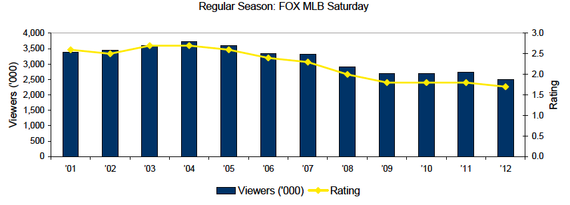
Defense wins championships, as coaches like to say, but offense wins sweeps. Fans aren't tuning in to the Era of the Pitcher. Across a range of networks including Fox's Saturday game, TBS, and ESPN, ratings have fallen by between 25 and 35 percent since baseball's collective hitting slump started in the middle of the last decade.
"Moneyball"/RBC
In short, baseball is getting quantitatively less exciting, and fewer people watch with each passing year. Why?
The obvious answer—so obvious that its obviousness seems to dispel other explanations—is the rule against steroids. In the spring of 2006, Major League Baseball implemented a new drug policy, banning more than 100 substances and threatening one-year suspensions for two-time violators and lifetime bans for three-time offenders. You might say that performance-enhancing drugs were the chemical tailwind behind the home-run bonanza.
When baseball banished them, the tailwind died, and hitters' un-enhanced strength has proven inferior. Since 2006, the same year baseball introduced its drug policy, total home runs have fallen in a herky-jerky pattern. Total slugging, a more complete picture of power hitting, has eroded more steadily.
The End of Offense
League-wide home runs and slugging percentage: 1998 - 2013
League-wide home runs and slugging percentage: 1998 - 2013
baseballreference.comYes, steroids pumped up offenses, and yes, the rules against steroids have deflated them. But something else happened in 2006—something that baseball fans rarely talk about when they bemoan the offensive state of baseball. It wasn't something that baseball took away. It was, rather, something that baseball added.
A camera.
Umpiring the Umpires
On October 4, 2006, the Minnesota Twins hosted the Oakland Athletics in a first-round playoff game at the Metrodome. When the first pitch left Esteban Loaiza's fingers, a first-of-its-kind camera tracked the pitch's speed, break, and location, and relayed the data points to broadcasters and online viewers. By 2008, cameras with this Pitch f/x technology were installed in every stadium, capturing 95 percent of all balls and strikes, according to Hardball Times.
Rather than deem the cameras a threat to league integrity, baseball embraced them. For years, Major League Baseball had been pressuring umpires to submit to performance standards. With the introduction of Pitch f/x, MLB finally had cameras in every stadium to umpire the umpires. In 2009, the league implemented a policy called Zone Evaluation (ZE), which tracked missed calls after each game and judged umpires by their accuracy. After ZE's first year, three senior umpires were fired for their mistakes behind the plate. Those with good performance could get promotions and earn up to $400,000.
Better incentives make better workers. As economist Edward Lazear has shown, organizations become more productive when a job well done is rewarded with extra money and dumb mistakes are punished. So we shouldn't be surprised that, after the introduction of cameras, umpires have called the strike zone more consistently and more accurately each year since 2007, as Brian Mills explained in a brilliant paper.
Cameras Made Umpires More Accurate
MillsThe strike zone morphed in the age of camera technology, as well. Before cameras, it turned out, umpires had been ignoring strikes around the knees. Pitches between 18 and 30 inches above the plate, which are technically in the strike zone, had been called balls for years. But the presence of cameras encouraged umpires to lower the strike zone.
As you're about to see, this swung the balance of power from the batters box to the pitching mound, shutting down baseball's thrilling home-run parade and inaugurating the Era of the Pitcher.
The New (Lower) Strike Zone
For both right- and left-handed batters, the strike zone has both narrowed and deepened. Since 2008, the strike zone has grown by about 30 square inches around a hitter's knees [see graph]. That is the equivalent of about five full baseballs placed side-by-side, according to Mills' research.
The New Strike Zone: Narrower and Lower
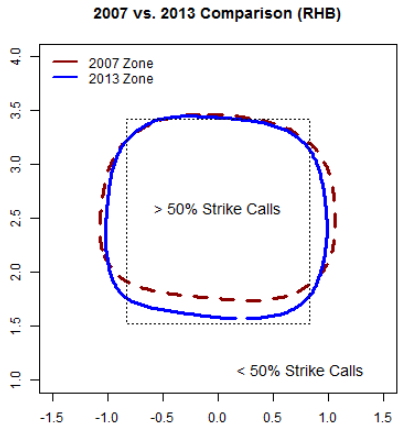
Since umpires opened up the basement of the strike zone, pitchers haven't just moved in. They've changed their permanent residence, painted the walls, and opened a co-op. The game of baseball has moved considerably closer to the plate in many ways ...
- The share of pitches thrown less than 2.5 feet over the plate (i.e.: a "low" pitch) has grown every year since 2009.
- In 2007, "low" pitches were 17 percent more common than higher pitches. By 2013, they were 43 percent more common.
- The sinker, a fastball pitch that breaks downward, has grown from 35 percent of all pitches in 2007 to 38 percent today.
- Hitters have swung at low pitches at a higher rate every year since 2009.
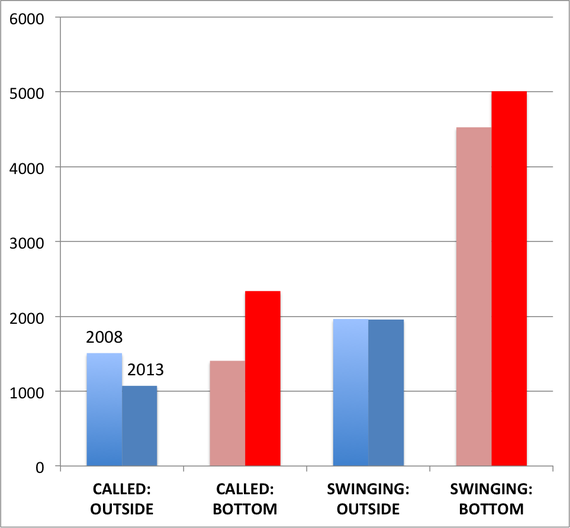
As the strikes moved down, the strikeouts went up. Swinging strikeouts are up 11 percent since 2008. Called strikeouts (on third strikes without a swing) are up 66 percent. The entire increase in strikeouts is happening on pitches between 18 and 24 inches off the ground.
The Rise in Strikeouts: It's All About Low Pitches
Y-axis: Annual strikeouts | "Bottom" = 18-24 inches above the plate
Y-axis: Annual strikeouts | "Bottom" = 18-24 inches above the plate
The Atlantic/MillsTo review, a lower strike zone invited more low pitches, more low strikes, and more strike outs. These variables on their own explain a good chunk of baseball's offensive drought. But let's throw in one more variable in there: hitter psychology.
Batters are typically worse when they fall behind the count—that is, when there are more strikes than balls—because they have to defend the plate to avoid striking out. Hitters are much more successful on 2-1 counts (two balls, one strike) than on 1-2 counts. "Having a 1-1 pitch that was called a ball in 2008 suddenly get called a strike in 2013 changes the batting environment," Jon Roegele writes in an excellent paper on the rise of low strikes. Strikes hurt hitters even without strike outs by forcing batters to shift to a protect-the-plate strategy rather than a swing-for-the-fences strategy.
To illustrate this point, consider the Florida Marlins' Giancarlo Stanton, the MLB-leader in home runs and RBIs. Here are his numbers on each count and after each count:
- 1-1: 34 at-bats; .529 average; 1.176 slugging
- 2-1: 38 at-bats; .385 average; .692 slugging
- 1-2: 91 at-bats; .176 average; .297 slugging
- After 1-1: 218 at-bats; .257 average; .459 slugging
- After 2-1: 119 at-bats; .261 average; .445 slugging
- After 1-2: 155 at-bats; .187 average; .297 slugging
Going from a 2-1 count to a 1-2 count has a staggering effect on Stanton's offense. On a 2-1 count, Stanton hits like Albert Pujols. On a 1-2 count, his slugging is worse than Ichiro Suzuki.
The upshot? When you add up the cumulative effects of a lower strike zone—more low pitches yielding worse hits, more strikes yielding worse counts for hitters, and more strike outs—they explain one-third of the offensive decrease over the last five years, Roegele found. Mills's research suggests that the figure is even higher: "As much as 40 percent of the decline in run scoring may be directly attributed to the increases in called strikes."
Why Baseball's Going Down
A bigger, lower strike zone might be the most important factor in baseball's offensive cold streak. That would not make it the only factor. For example:
- In the last decade, managers have gotten smarter about defense, and many runs have potentially disappeared into the maw of improved defenders and advanced fielding.
- The strategic deployment of hard-throwing middle relievers has blunted offensive power. The number of relief appearances since 1987 has doubled according to Joe Sheehan's newsletter, while the number of pitchers averaging a 95-mph fastball has increased from 11 to 25 since 2002.*
- There are reports that temporary inconsistencies in baseball manufacturing in the 1990s created a bounty of "juiced balls," which traveled further than ordinary baseballs. Jay Jaffe produced interesting anecdotal evidence of the juiced-ball theory.
- It's possible that baseball is going through a brief dry spell in home-run-hitting talent, or an extraordinary moment in pitching quality.
- Perhaps most importantly, the harsh 2006 rules against performance-enhancing drugs offer a compelling explanation for baseball's dearth of power—although it's odd that baseball's minor leagues haven't seen a similar decline in offensive performance since their own steroid policy was implemented.
But none of this rules out the astonishing impact that camera-technology and performance standards for umpires have had on baseball's hitters.
The irony is that MLB did everything that an economist or corporate guru would have advised. Baseball embraced emerging technology rather than banish it. It used analytics to improve the work of its elite employees. It used reviews to encourage exceptional performance among umpires. And the league got exactly what they wanted: a more-perfect strike zone.
But is that really baseball's highest goal? A perfect strike zone, at the expense of steadily evaporating offense?
Baseball has done all the right little things while perhaps ignoring the big thing: It needs hitters. It needs home runs. Sports thrive and grow when national stars thrive on national television as marketing ambassadors of the game. Today, baseball is a national pastime without a truly national star. Mike Trout, the historic and absurdly young center fielder for the league-leading Los Angeles Angels, has one-third the name recognition of Derek Jeter, a telegenic veteran that even this Yankees fan named Derek will acknowledge was never half as good as Trout.
So the league has pitched itself into a corner. Its own rules have destroyed the offensive power surge that had captured America's attention in the late-'90s and early aughts.
Umpires, empowered and/or cowered by technology, are better than ever. As a direct result, baseball has become a grind for fans who prefer sports with scoring.
Sent from my iPhone


