Showing posts with label HEALTH AND SAFETY. Show all posts

Saturday, August 18, 2018

Does Absence of Athletic Trainers Constitute Negligence? - Athletic Business

Does Absence of Athletic Trainers Constitute Negligence? - Athletic Business


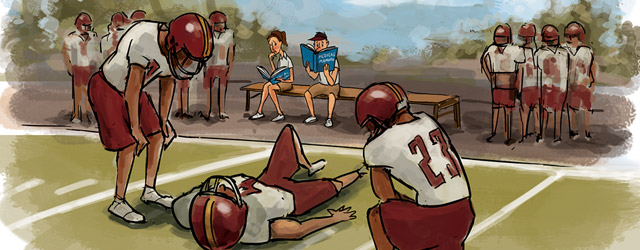
[Illustration by Arnel Reynon]

JACKSONVILLE - It seems like with what we know about the risks inherent in participation in football that this a really silly question to ask. Of course it does. Schools and programs at every level are weighing the economics versus the risks and shamefully are trying to save nickels and dimes while risking the long-term health of kids. 

The fact that the justice system is not stepping in makes the story even more reprehensible. And then we wonder why stories like the loss of life at the University of Maryland's football program happens to say nothing of the overall "toxic culture" that was mentioned there and elsewhere. You can make the argument that all of the toxic stories we hear about in college athletics recently including Michigan State and Penn State earlier, emanate from a system that values nickels and dimes over the health (physical, mental, emotional) of kids. 

Kids are not a commodity. We have to stop treating them as cogs in a machine.

from athleticbusiness.com
https://www.athleticbusiness.com/athlete-safety/does-absence-of-athletic-trainers-constitute-negligence.html

Does Absence of Athletic Trainers Constitute Negligence?


Intercollegiate football is an exciting but violent sport. A school can employ qualified coaches and medical personnel, and use injury waivers to protect itself from liability. However, failure to meet industry standards for student-athlete care will likely bring litigation in the event a player sues over treatment of injuries suffered on the field. This is evident in the ongoing case of Feleccia v. Lackawanna College, 156 A. 3d 1200 – Pa: Superior Court 2017.

The injuries On March 29, 2010, Augustus (Gus) Feleccia and Justin T. Resch participated in a tackling drill during the first day of spring football practice at Lackawanna Junior College in Pennsylvania. Both players were injured during a variation of the Oklahoma drill, during which an offensive player is isolated against a defensive player in a confined space. The offensive player tries to run past the defensive player without being tackled.
The Oklahoma drill is recognized as one of the most violent practice drills, especially the variation used by Lackawanna. This drill emphasizes proper pad level and ball security for the offensive player, and proper block shedding and tackling technique for the defensive player, but often results in a vicious collision.
While involved in this drill, Resch attempted a tackle with his head down and suffered a T-7 vertebral fracture. Normally the football program would have two certified athletic trainers assigned to its practices. However, this session had two non-certified "first responders" instead. Resch was evaluated by a Lackawanna first responder, then was transported by ambulance to a hospital.
The tackling drill continued. Feleccia suffered a "stinger" to his right shoulder during his first tackling attempt. A second Lackawanna first responder told him that he could return to practice once he began feeling better. Feleccia returned, made a tackle with his right shoulder, then suffered a brachial plexus avulsion on his right side.
After the players sued, the trial court entered a summary judgment in favor of the college. This ruling was supported by the fact that the players had signed injury waivers and assumed the risk of injury by participating in the violent sport of football. On appeal, the players asked the court to rule on two issues:
1. Is a Pennsylvania college required to have qualified medical personnel present at intercollegiate athletics events to satisfy a duty of care to the college's student-athletes?
2. Is an exculpatory clause releasing "any and all liability" signed in connection with participation in intercollegiate football enforceable as to negligence?

The issues First, the plaintiffs asked if the college is required to have certified medical personnel at practices. Led by athletic director Kim Mecca, Lackawanna hired Kaitlin Coyne and Alexis Bonisese in August 2009 to serve as certified athletic trainers.
At the time each was hired, neither Coyne nor Bonisese was licensed or credentialed as an athletic trainer. Mecca designated the two as first responders, but they were assigned job responsibilities typically granted to athletic trainers. Moreover, neither Coyne nor Bonisese had earned their athletic training credentials by the time of the athletes' injuries, yet court testimony revealed that Coyne, Bonisese and the football coaching staff represented the first responders as athletic trainers. In addition to being inexperienced and without credentials, the court heard testimony from a former professor and an internship supervisor that expressed concern regarding both Coyne and Bonisese's ability and potential work performance.
The college argued that there is no law in Pennsylvania or standard in the National Junior College Athletic Association requiring that certified athletic trainers be present at practices. The college also contends it did not have sufficient funds to hire qualified athletic trainers. In fact, Lackawanna Junior College president Dr. Ray Angeli said he was unwilling to pay an athletic director a salary higher than that of a first-year professor, but an athletic department budget analysis showed the funds were available.
Next, the plaintiffs questioned the validity of the waiver. To be valid, a waiver must not violate public policy, must be between persons relating entirely to their own private affairs, and each party must be a free bargaining agent. In common terms, a waiver is scrutinized based on its context and its content. The context refers to font size and where the waiver appears — a court may choose not to accept a waiver written in very small type and hidden within a large contract. The content refers to the language itself. The waiver should contain clear language that is easily understood by the participant.
Prior to spring football tryouts, both Feleccia and Resch signed the "Lackawanna College Waiver and Hold Harmless Agreement." Among its provisions, the signer relinquishes the right to sue "for any and all liability." The plaintiffs argued that the language is not clear that Lackawanna's negligent acts are included in the waiver.
Although Resch testified that he understood that the Oklahoma drill might be used during practices, the plaintiffs argued that the requirement to participate in the drill does not include the use of the non-certified first responders. The college still had the duty to use qualified personnel to assess and treat foreseeable injuries to meet a reasonable standard of student-athlete protection, according to the plaintiffs.
Lastly, the plaintiffs argued that the assumption of risk theory does not cover the acts in this case. Generally, the assumption of risk doctrine protects a defendant when a plaintiff encounters a known or obvious danger but voluntarily engages in the activity anyway. The plaintiffs argued that while they may assume the general risks of playing football, they were unaware of Lackawanna's failure to provide qualified athletic trainers. This act could not be considered a known or obvious danger of participating in football.
At the trial court, the defense argued that the assumption of risk doctrine eliminated any duty for the college. The plaintiffs are experienced football players (Feleccia had been playing since age 10, Resch since age six) and acknowledge that football is an inherently dangerous sport in which injuries occur. Neither player testified that they were forced to participate or coerced into participating in the Oklahoma drill.

The outcome The trial court entered a summary judgment for the defense. A summary judgment is appropriate only when the record clearly demonstrates that there are no genuine issues of material fact and the moving party is entitled to judgment as a matter of law.
The appellate court rejected that finding and stated that "colleges are expected to put a priority on the health and safety of their students, especially student-athletes engaged in dangerous sports." The summary judgment was overruled, and the case was remanded back to a trial court for a number of reasons.
Although courts generally accept a waiver for an inherently dangerous activity such as football, this specific waiver was rejected. First, the waiver did not state in clear and unambiguous terms that it would excuse Lackawanna's own negligent behavior.
Next, the waiver cannot be used as a shield against claims of recklessness or gross negligence. The Restatement (Second) of Torts (1965) states that recklessness is an unreasonable act that involves a risk of harm to others that is substantially more than negligent behavior. Thus recklessness is more similar to intentional conduct — which is not absolved via a waiver — than ordinary negligence.
Finally, the court stated the college's hiring and use of Coyne and Bonisese as athletic trainers fell below the applicable standard of care. This conduct should be considered gross negligence or recklessness.
Ultimately this court held that the college owed the players, who had engaged in school-sponsored and supervised intercollegiate athletics, a duty of care. This duty requires qualified medical personnel to assess injuries and adequately provide medical treatment when appropriate.
This case demonstrates that colleges owe a duty of care to student-athletes in terms of their safety and protection. Although a valid waiver may offer a school some protection, a court will also analyze the school's behavior and may determine that behavior to be more than simple negligence and thus allow the case to be heard at trial.

This article originally appeared in the July|August 2018 issue of Athletic Business with the title "Absence of actual athletic trainers may constitute negligence." Athletic Business is a free magazine for professionals in the athletic, fitness and recreation industry. Click here to subscribe.

Sent from my iPhone

Maryland Football Installs Cooling Stations - Athletic Business


Image result for maryland football cooling stations

JACKSONVILLE - This smacks of closing the barn door after the horses are gone, but it is better than nothing. Next up, the toxic culture.

from athleticbusiness.com
https://www.athleticbusiness.com/athlete-safety/maryland-football-installs-cooling-stations.html

Maryland Football Installs Cooling Stations
COLLEGE PARK — The University of Maryland football program opened a portion of Wednesday's practice to the media for the first time all summer, a noteworthy decision after the school took full responsibility for the death of former player Jordan McNair.
Two "cooling tents" were set up on the campus practice fields where there had been none before, and Matt Canada spoke for the first time as interim head coach, emphasizing how the players have weathered the recent period of turmoil.
"Our practices have been extremely crisp," Canada said. "The focus on our players' health and safety is No. 1. And our players are feeling that and understanding that, and that's our primary focus."
The Terrapins practiced for an hour and 46 minutes Tuesday with two breaks, Canada said, and a similar plan was in place for Wednesday's session. The practice was open to reporters from 12 to 12:30 p.m.
One cooling tent was located on each field, accessible to the offensive and defensive players, respectively. In addition to providing shade from the summer heat, they included fans, ice buckets and coolers with water, Gatorade and snacks. Training staff still drove utility vehicles around to hand Gatorade bottles to players, a practice that had been in place before, a Maryland spokesman said.
The updates and the effort for transparency came after a regrettable five days for the football program. Head coach DJ Durkin and other staffers were placed on leave Saturday after an ESPN investigative report brought light to allegations of excessive verbal abuse and a "toxic culture" under Durkin's tenure.
University officials released preliminary findings from the independent investigation into McNair's death, saying Tuesday that the 19-year-old was not properly treated for the heat illness he experienced before collapsing at a May practice.
Strength and conditioning coach Rick Court, the subject of many abuse claims, also announced his resignation Tuesday. Canada said assistant strength and conditioning coach Mason Baggett has taken charge of the weight room.
Canada first spoke to the Terrapins as their interim coach Saturday at a team meeting.
"I briefly addressed the football team and told them this was a challenging situation, we're all in it together, we're gonna work through it together and we need to consult with each other, talk to each other, lean on each other, be with each other, talk to your families," Canada said. "And whatever they needed from us as a staff, we were there. That was as brief as it was at the time."
The team's culture right now is "awesome," Canada claimed, and players are "loving each other" and still grieving for McNair.
"No matter what else comes out of this conversation, I want that to be echoed, that our players are special, they're doing a great job sticking together, they're excited to play football on Sept. 1 and we as a staff are really excited to get to watch them play," he said.
Canada also said he called Durkin to offer his support "in a situation that's really challenging," but he declined to give more details.
Maryland hired Canada in January after offensive coordinator Walt Bell left to take the same job at Florida State. Canada served as offensive coordinator at six other Division I FBS schools, most recently Louisiana State, before coming to Maryland. But this is his first time serving as head coach of any team an unusual way to take up that mantle.
Canada and athletic director Damon Evans arranged a parents' meeting Saturday, coinciding with a team scrimmage.
"I've talked to a couple parents and I've been very open and honest, which is the only way to be," Canada said. "Everybody's concerns right now are very wide-ranging. ... Our parents and our players want to have a good football season. That's what they're focused on."
Maryland opens its season Sept. 1 against Texas at FedEx Field.
Meanwhile, players and coaches who've associated with or played for Durkin continue to speak up about their experiences, leading to a mixed bag of support and criticism.
Local media at a Florida State practice asked Bell about his experience in College Park. Without directly mentioning Durkin or Maryland's program in his answer, Bell implied it was not a pleasant place to coach.
"I'm excited to be at a place where our kids smile at practice, they have a great time at practice, and they work for a head football coach (Willie Taggart) that kind of instills that family atmosphere in our organization," Bell said.
Cleveland Browns safety Jabrill Peppers played at Michigan when Durkin was the Wolverines' defensive coordinator. Peppers told "The Rich Eisen Show" that he thought Durkin used "extreme" tactics that he didn't like, describing it as "bully coaching."
On the other hand, some former players continue to say they had no problem with Durkin's style, even if it was demanding.
Will Muschamp, who had Durkin on his staff at Florida, was the first to defend the coach by accusing anonymous players cited in the ESPN story of wanting payback for lack of playing time. And Jim Harbaugh, Durkin's boss at Stanford and Michigan, declined to comment on Durkin's style when asked.


Sent from my iPhone

Wednesday, July 25, 2018

Here's the Pitch | training-conditioning.com

Here's the Pitch | training-conditioning.com
Image result for pitch counts in softball
http://www.stack.com/a/fastpitch-softball-pitch-count
JACKSONVILLE - Pitch Counts are coming to a softball field near you. Perhaps. Based on the Stack.com article linked above, they will resemble what goes on in baseball in name only.
The limit for maximum-effort pitches during a week should be around 400. Do not include any drills that mimic the pitching motion but are not maximum effort. 
But it's a start. Now at least we have evolved into Equal Opportunity Arm Abusers.

Hurray for us!!


from training-conditioning.com
http://training-conditioning.com/content/heres-pitch

Here's the Pitch

Although there are pitch counts for baseball players at many levels, the standard thought has been that the underhand toss utilized by softball players is safer than the overhand form used in baseball. However, new research says the potential for overuse injuries in softball pitchers is a factor that may be overlooked.

A news release from Washington University School of Medicine in St. Louis reports that research findings suggest softball pitchers show progressive pain, fatigue, and weakness relating to two- and three-day tournaments. This research was published in The American Journal of Sports Medicine.

"The dogma involving throwing athletes is that the underhand pitch is thought to be safer, but there have been biomechanical studies in recent years indicating that the stresses on the shoulder are very similar, regardless of whether one is pitching overhand or underhand," said Matthew Smith, MD, Assistant Professor of Orthopaedic Surgery at Washington University and one of the study's authors. "The idea that we should protect these softball pitchers hasn't really caught on.

"Because there aren't as many pitchers on most softball teams as there are on baseball teams, coaches tend to 'ride' the ones who are successful," he continued. "Most don't realize they're putting the pitcher at risk, but it turns out that the windmill style of pitching that girls use isn't as safe as some might think."

In the study, Dr. Smith and his colleagues recruited 100 athletes who were between 14 and 18 years old. They were each about to participate in a two- and three-day tournaments and scheduled to pitch each day of the tournaments.

In order to gauge fatigue, which relates to overuse injuries, the researchers measured the pitchers' strength. These assessments were correlated with the pitchers' reports of how they felt.

"We used a device called a dynamometer that allows us to test strength," said Dr. Smith. "They push against it, and it gives us an objective measurement of strength. We also asked them how they felt, how tired they were and how much pain they were in.
'We can correlate objective measures of strength and associate those with how the athletes say they feel," he continued. "Usually during a tournament, we compare these things at the beginning of a day playing to these same measurements at the end of the day. Then we ascertain their strength levels at the start of the next day and determine whether they recover their strength,"

The research team found that as pitchers continue playing, they don't get enough rest to recover. On top of that, most injuries were sustained during the first six weeks of the season. This could indicate that throwing a lot in a short amount of time (with little or no training beforehand) may contribute to the issue.

"On a fast-pitch softball team, the pitcher is the player doing most of the throwing," said Dr. Smith. "She's throwing 70 or 100 or 125 pitches in a game. Meanwhile, the center fielder may only throw at peak effort four or five times in a game. Our study focused on pitchers because they are the ones who most commonly come to the doctor's office with injuries. There is some data suggesting that fatigue is a precursor to injury. If we limit pitches, get them more rest and give them more time to recover, it's logical to think the injury risk will decline."

However, there hasn't been enough research on softball pitchers to have an estimate for how much rest pitchers may need to recover between games.

"Two and three-day tournaments are commonplace in youth fast-pitch softball with teams often using the same pitcher throughout the tournament," the authors write. "Our data clearly show that shoulder and elbow strength decline after a single day of competitive windmill pitching and continue to decline over consecutive days of pitching.

We also show that there are significant increases in subjective measures of shoulder fatigue and pain coinciding with this decline in strength. Importantly, pitchers did not recover to their baseline many of the tested muscle groups by the day following pitching indicating that there was an inadequate period of rest."


Sent from my iPhone

~;::::::;( )">   

Top 9 reasons pitchers are getting injured | Inside Pitch Magazine

Top 9 reasons pitchers are getting injured | Inside Pitch Magazine


JACKSONVILLE - I think the over-emphasis on "velocity enhancement" training programs fits in here someplace as well.

from insidepitchonline.com
https://insidepitchonline.com/top-9-reasons-pitchers-are-getting-injured/

Top 9 reasons pitchers are getting injured
article by Nunzio Signore
It's no secret that the numbers of youth injuries in baseball are staggering. Even with the implementation of pitch counts, youth injuries not only continue to rise but account for many of the injuries ball players eventually suffer later in their careers. An awful lot has been written about overuse among young pitchers that ultimately leads to injury. But I believe there are many other contributing factors that are often overlooked. Below is a summary of my top 9 leading causes of pitching injuries.

1. Previous / Lingering InjuryLet's start with what I believe to be the "numero uno." Common knowledge in the industry tells us that the #1 predictor of injury is a previous injury. A good example is an athlete who has had a lingering elbow issue from a prior year (or years) and is hoping that a shut down in the off-season has fixed the problem. This usually isn't the case with overuse injuries. Once throwing begins the symptoms return, and voila! another season on the bench. This is also a key reason why injuries are at their highest early on in the season.
2. Poor Pitching MechanicsThe question is "are we really fixing the problem or just relieving the symptoms?" Does the following scenario sound familiar?
-Pitcher's arm hurts
-He goes to Physical Therapist (PT)
-PT shuts him down for 6 weeks
-Pain goes away
-Pitcher starts throwing again
-Pitcher's arm hurts again…
Obviously if we stop throwing, the pain will go away but if it returns once throwing begins again it's generally a clear sign that something isn't right in the pitching delivery. For example, sequencing issues of the lower half can cause the athlete to overuse the arm to generate a higher velocity ceiling. This can cause pain in the anterior shoulder and medial elbow. Giving this athlete specific throwing correctives to help engage the lower half, and teaching him to create a more "hip dominant" back leg, will allow him to put more force into the ground while coming down the mound. The net result of all this will create lower half leverage in the delivery and take much of the stress off of the anterior shoulder by lowering the workload of the upper body and arm.
3. Inadequate StrengthIf quality weight room work—which is needed to maintain strength, mobility and stability—trails off, so will power on the mound. Pitchers are throwing harder at an earlier age, and many are writing checks that their bodies can't cash due to a lack of strength. Even with lower pitch counts, some young athletes are not strong enough to throw even 40 pitches let alone 60 or 70. It will likely leave an athlete vulnerable to a cavalcade of maladies including a gradual drop in velocity, control, and worst of all, injury as the season moves onward. When a young athlete gets to a certain age, strength training is no longer an option, nor is it something you should only do in the off-season.
4. Early Age OveruseThis is probably the most prevalent issue as well as the one that I believe has the biggest carryover to some of the other reasons we'll look at. We are starting to see the results of what these kids did to themselves beginning some 10 years ago. The excessive pitch counts in youth and high school baseball is starting to rear its ugly head. We all realize that baseball is part of being a kid, but we have a lifespan on our ligaments! When starting to throw at an early age (7-11), there are permanent structural changes to the growth plates in the arm, shoulder and elbow that change the kinematics of the joint. This is called humeral retroversion. While this acquired increase in external rotation allows for greater layback, it also comes with a higher risk for injuries associated with "little league elbow" such as:
-Epicondylitis and physeal plate (growth) fractures
-Osseous (bony) changes in the humeral head
-Calcification of the UCL and acromion
Many young athletes are injuring themselves as kids and don't even know it. This is why playing multiple sports and monitoring pitch counts is of the utmost importance at an early age.
5. Inadequate Rest between Outings"Fatigue is the enemy of motor learning." — Nick Winkelman
After each outing on the mound, there can be up to a 10-degree loss of glenohumeral internal rotation, losses in hip mobility and ankle stability, just to name a few. It goes without saying that if you don't perform proper maintenance and don't rest adequately between outings, you will experience a loss in total range of motion. This not only compromises movement patterns but also increases the risk of injury as well. Note: Many times, there are no warning signs of fatigue but if you know what to look for, fatigue can present itself in a variety of ways including mechanical issues on the mound (decrease in stride length, lack of trunk flexion or releasing the ball high and arm side). Here's a great chart (courtesy of Pitch Smart) to let you know where you stand:6. Lack of Mobility/StabilityWe need to help the body achieve more athletic positions in the delivery with mobility work. Mobility is "the ability to move freely into a desired position" and can be something that is lost fairly quickly. In fact, many athletes don't even realize they're losing it until they're injured. If you combine a loss of shoulder and hip mobility with the violence of the pitching movement, you can get a recipe for disaster. On the other hand, not all athletes need extensive mobility work. Those with laxity (excessive joint range of motion) need more stability to help them get into more athletic positions. For these guys some foam rolling, scapular stability work and good old-fashioned strength training may be just what the doctor ordered.
7. Insufficient Shutdown PeriodI am going to spend a minute on this one as it hits close to home. While there are many reasons why a 10-12 week shut down is paramount, I'll just list a couple big ones:
-Give "lay-back" a break – Pitchers should intentionally lose a few degrees of external rotation each off-season, this allows them to improve their stability on the anterior side of the shoulder and gain back some much-needed internal rotation.
-Allow time to get in some manual resistance cuff exercises: Manual resistance exercises are the single-best option for improving rotator cuff strength. We incorporate them when appropriate all season long in our programming. This allows us to emphasize eccentric strength. Bands are ok, but nowhere near as powerful. Cuff strength and scap stability work as well as mobility work should be included in every off-season training program.
Throwing year-round without a break works against many of these qualities we work so hard to achieve. This is especially problematic in younger populations, as they are generally weaker and skeletally immature. This is why we advocate a 10-12 week shut down annually. Sure, you'll be a bit rusty in the first few weeks but don't worry—you'll "figure it out" during the ramp-up of your throwing program.
8. Insufficient Pre-season Ramp-upSometimes too little of a good thing can be detrimental as well. Many older, more experienced players—especially the guys that already have commitments to schools—may be trying to save some bullets and start throwing a little later, and ramp up a little slower. Players go from a casual off-season progression to an excessive amount of high intensity pitches in a short amount of time. In the northeast, this is especially taxing since the season usually begins in 40-degree weather. It is a grind. If you are a high-level pitcher and you aren't familiar with Davis's Law, you should be: "Ligaments, or any soft tissue, when put under even a moderate degree of tension, if that tension is unremitting, will elongate by the addition of new material; on the contrary, when ligaments, or rather soft tissue, remain interruptedly in a loose or lax state, they will gradually shorten, as the effete material is removed, until they come to maintain the same relation to the bony structures with which they are united that they did before their shortening."
So, make sure you ramp-up properly for the spring load.
9. Poorly Designed Strength Training ProgramsThis one hits close to home as well. Most traditional baseball strength training programs either involve excessive coddling (no heavy lifting) or going to the extremes and doing the football team's workout. I read a great quote by Eric Cressey once where he stated, "baseball players can and should be pushed incredibly hard as long as the exercise selection is appropriate." I agree 100%.
Including a thorough assessment is a must to ensure individualized programming as well as coaching proper movement patterns to ensure that we're not allowing athletes to get really good at moving poorly. In addition, programming should reflect where the athlete is in their season and as always, avoiding things such as Olympic lifting (hard on the shoulders and wrists). Not placing heavy weights in unstable overhead shoulder positions will also go a long way in reducing wear and tear on the joints in the weight room.
Injuries continue to rise despite the greater focus on injury prevention. So, I have assembled below what I consider to be a Pitcher's Doctrine, I hope it's helpful:
1. Avoid early age overuse (7-14)
2. Improve overall strength
3. Improve and maintain mobility / stability year-round
4. Maintain an optimum weight level (lean muscle mass)
5. Identify and correct pitching mechanics for disconnects and stress
6. Get adequate sleep
7. Observe a minimum 10-weeks of shutdown during the year
8. Participate in a thorough pre-season ramp-up program
9. Avoid year-round baseball
10. Follow a proper nutrition program

Nunzio Signore is the owner and operator of Rockland Pitching Performance, author of the book Pitchers Arm Care, and Co-Director of the Pitching Lab. He has spoken at clinics like Be the Best and Inside Baseball as well as college exercise science majors at schools such as Springfield College, Cortland University and Montclair State. Nunzio is also a performance enhancement specialist certified through the National Academy of Sports Medicine, is certified in the Functional Movement Screen, and has done work with Cressey Sports Performance and Mike Boyle (Olympic Men's Ice Hockey, Boston Red Sox).


Sent from my iPhone

~;::::::;( )">   


Friday, July 06, 2018

Study: Half of all HS pitchers report pain in throwing arm | Coach & Athletic Director

Study: Half of all HS pitchers report pain in throwing arm
June 1, 2018 / Baseball • Sports Medicine & Nutrition
COLUMBUS, Ohio — More than half of high school baseball pitchers report experiencing pain in their throwing arms during the season. To better understand the cause of these injuries, researchers at The Ohio State University Wexner Medical Center conducted a new study to determine when and why overuse injuries are occurring.
"We found that the number of injuries peaked early — only about four weeks in — and then slowly declined until the end of the season," said James Onate, associate professor of health and rehabilitation sciences at the Jameson Crane Sports Medicine Institute. "We see a lot of kids who didn't prepare in the offseason and, when their workload goes through the roof, they're not prepared for the demand of throwing."
To accurately assess the timing and severity of their pain, 97 high school pitchers were asked to submit a weekly questionnaire via text message.
"Most of the pain reported was mild or moderate and players were actually continuing to play through it," said Mike McNally, research associate in Ohio State University's School of Health and Rehabilitation Sciences. "Part of the reason we think we're seeing a decline is because players start to get used to playing through the pain as the season goes on. So they likely still have that pain, it just doesn't affect them like it used to."
Researchers are also exploring the biomechanics behind overuse injuries. The research team developed a high-tech pitching mound that measures the amount of force being driven by the legs, trunk and arms when throwing, as well as a pre-season program to help pitchers properly prepare their bodies to avoid injuries.
"We're starting to pinpoint what's going to be the personalized approach to an individual to be able to throw, and then tweak it from there," Onate said. "The whole goal is to keep the kids safe to be able to do what they want to do."
Ohio State researchers are advocating that the high school baseball season be extended so that games postponed due to inclement weather can be spread out over several weeks. Pitchers typically throw their hardest during competition, while limiting their effort and number of pitches in practices, so playing too many games in close succession may lead to more injuries.
"Spreading out games is important in that it allows players to get some recovery time. Rainouts and postponements force kids to go from playing a few games a week to five or six games per week," McNally said. "When that happens, you have a high school kid that's essentially playing a major league schedule, which can accumulate and cause more pain and injuries."
The research team included Ajit Chaudhari from Ohio State's Wexner Medical Center, as well as Jingzhen Yang and Kevin Klingele from Nationwide Children's Hospital.


Sent from my iPhone

Friday, May 18, 2018

Not Adding Up | training-conditioning.com


You would have thought that the "experts" had accounted for "warm-up pitches" in their studies. This kind of throws my confidence in their research, and therefore in their conclusions, down a few notches.

Back to the drawing board fellas!!

from training-conditioning.com
Not Adding Up | training-conditioning.com:

Not Adding Up

April 18, 2018

Nationwide rules limiting pitch counts among high school athletes have not decreased pitching injuries as expected. Wondering why, a team of researchers from the University of Florida recently took a closer look at the issue.
In a cross-sectional study reported on by Orthopedics This Week, the researchers attended varsity high school baseball games for 34 Florida high schools during the 2017 season. The goal was to examine the total number of pitches thrown. Each researcher counted pitches from the mound in the bullpen before the game, warm-ups before the innings, and during the game. Long tossing in the outfield and throws made before warming up in the bullpen weren’t recorded. 
The study’s authors hypothesized that despite mandatory pitch counts during games, between 30 to 40 percent of pitches aren’t actually accounted for during outings. Additionally, the researchers expected to see a broad variation within the players’ number of bullpen pitches.
Both of these theories were supported by the study's results, which were published online by the Orthopaedic Journal of Sports Medicine. It showed that 42.4 percent of the 13,769 pitches observed for the study were not accounted for in the pitch count because they were thrown in the bullpen and during warm-ups. The study also showed a wide range in the number of bullpen pitches thrown.
“Our data revealed an unaccounted workload factor of bullpen and warm-up pitches not included in the total pitch count. We also found wide variation in the number of bullpen pitches thrown, making precise determination of pitch volume challenging among high school players,” the study’s authors wrote.
Although injuries weren’t recorded in this observational study, the findings may help explain why injuries haven’t decreased despite advances in monitoring pitch counts. Importantly, much of the prior research on pitching injuries hasn’t included bullpen and warm-up pitches in measuring throwing volume.
“Our study suggests there is a misunderstanding of the workload volume in the high school-aged baseball pitcher. Research has suggested that the occurrence of workload spikes (sudden increased volume relative to regular training volume) significantly increases risk for throwing-related injury,” the researchers wrote. 
Image by Staff Sgt. Jocelyn Rich.

'via Blog this'

Thursday, May 03, 2018

Study: Youth Tackle Football Linked to CTE Symptoms - Athletic Business

Image result for Youth Tackle Football Linked to CTE Symptoms


I believe that some day in the future folks will look back and say "What the hell were they thinking subjecting kids to that kind of abuse?"


from AthleticBusiness.com
Study: Youth Tackle Football Linked to CTE Symptoms - Athletic Business:

Copyright 2018 The Florida Times-Union

Florida Times-Union (Jacksonville)

A new study suggests a strong correlation between the age at which some athletes begin playing tackle football and the onset of behavioral and cognitive problems later in life, findings that become significantly more pronounced for those who take up the sport before age 12.
Researchers concluded that for every year younger an athlete begins to play tackle football, he could experience symptoms associated with Chronic Traumatic Encephalopathy 2 1/2 years earlier. Those who begin playing before age 12 could start experiencing symptoms more than 13 years earlier.
The study was published Monday in the Annals of Neurology journal and was conducted by researchers with the Boston University School of Medicine and the VA Boston Healthcare System, including some of the leading CTE researchers, such as Dr. Ann McKee, Dr. Robert Stern and Dr. Robert Cantu.
The study comprised 246 deceased football players who had donated their brains to the brain bank run by the VA, Boston University and the Concussion Legacy Foundation. Of that group, 211 were diagnosed with CTE.
While the research did not find a "statistically significant" connection between the age of first exposure and the severity of CTE later in life, the study says "youth
exposure to tackle football may reduce resiliency to late life neuropathology."
The researchers warned the results might not be representative of the broader population of football players. It did not include a control group and could suffer from ascertainment bias, meaning families might have been more likely to donate a loved one's brain posthumously if they suspected something was amiss.
The study results were not impacted by the level of play and included those who had played football in high school, college and professionally. Researchers found that even the former players who were not diagnosed with CTE experienced an earlier onset of behavioral and cognitive impairments the earlier they took up the sport, "suggesting that the relationship between younger [age of first exposure] to tackle football and longterm neurobehavioral disturbances may not be specific to CTE," the study says.
While CTE, like most neurodegenerative diseases, cannot currently be diagnosed in a living person, the symptoms surface earlier and become more pronounced as the person ages, often in the form of behavioral and mood issues followed by cognitive impairment.
"Youth exposure to repetitive head impacts in tackle football may reduce one's resiliency to brain diseases later in life, including, but not limited to CTE," McKee, the director of Boston University's CTE Center, said in a statement. "It makes common sense that children, whose brains are rapidly developing, should not be hitting their heads hundreds of times per season."
Research on traumatic brain injuries related to sports is a burgeoning field, particularly among youth athletes. Several recent studies have suggested head impacts before the age of 12 can be more damaging than those suffered by athletes who take up the sport later, though some research hasn't found that age of first exposure is necessarily a contributing factor to cognitive functioning later in life.
Read More of Today's AB Headlines
Subscribe to Our Daily E-Newsletter

May 1, 2018

'via Blog this'

Tuesday, December 12, 2017

Survey: 36 percent of parents would let 10-year-old play football - Coach and Athletic Director


Survey: 36 percent of parents would let 10-year-old play football - Coach and Athletic Director:

A coach who has spent more than a decade in a youth football league outside of Chicago said five years ago 266 kids participated. Today, there’s just 98.
Dr. Bennet Omalu, who discovered the degenerative brain disease CTE, said children should avoid football, ice hockey, rugby, lacrosse and soccer until high school, when the brain is more developed. Even then, contact sports come with great risk, he said.
Today.com’s survey also found that 88 percent of parents worry about concussions if their children participate in contact sports. 
Youth football participation has declined nationwide, but the drop also is an issue at the high school level. Since the 2009-10 school year, the sport has lost 53,663 high school players, but football still remains the most popular boys sport.


'via Blog this'

Thursday, May 11, 2017

Myths of Sports Specialization


Image result for Myths of Sports Specialization
Myths of Sports Specializationhttp://sportsscientists.com/2011/04/early-vs-late-specialization-when-should-children-specialize-in-sport/

This shouldn't even be much of a discussion anymore. It was left hanging by a thread by the example set by Tiger Woods. Now that he's not around as a shining example of the benefits of early specialization, I'm not sure what else is left. Most of the other outcomes are pretty negative versus a more rational approach, and yet we still debate and some choose a different path. WDIK?

Myths of Sports Specialization


THE BLOG 6 days ago | Updated 6 days ago
  • Scott Sailor President of the National Athletic Trainers' Association

Athletics can provide some of the most rewarding experiences in a young person's life. Sports participation is frequently considered a great way to develop leadership skills, goal setting, discipline, self-confidence, camaraderie and an appreciation for individual and team accomplishments. And yet, the way we go about pursuing athletic achievements can affect our outcomes.

We have a strong athletic culture in the United States, and we are proud to stand behind our athletes as they push for success. Some of our greatest stories, movies and rags-to-riches scenarios showcase how sports can help a young athlete gain access to a better quality of life, higher education or a professional athletic career. The opportunity to develop relationships with coaches, athletic trainers, teammates and others who share the athlete's' vision is invaluable. Each of these individuals can help to shape young athletes and challenge them to accomplish their mental and physical best on the playing field.

While it's easy to recognize all the positive benefits of sports participation, it's important to ensure balance. Athletes who specialize in a certain sport very early miss out on the benefits of cross training and rest, which are critical to ensuring young athletes reach important short and long-term goals. We read, see and hear too many times how sports specialization can sideline an athletic career -- whether at the youth, college or professional levels.

Let's examine some of the myths about sports specialization perpetuated in athletic culture and compare them with evidence-based research.

Myth 1: Most college athletes specialized in one sport as a child.
The American Medical Society for Sports Medicine (AMSSM) published results of a 2012 survey1 that found 88 percent of college athletes surveyed participated in more than one sport as a child.

Myth 2: The only way for my child to be "good enough" is for her/him to focus specifically on one sport early in life.
Recent studies2,3 suggest just the opposite: Children who play multiple sports are more effective than those who specialized in a single sport during childhood and adolescence.

Myth 3: Children need to play their sport year-round to avoid getting out of shape, which could lead to injury.
According to a study4 by Dr. Neeru Jayanthi of Loyola University, early sport specialization is one of the strongest predictors of injury in children playing sports. Athletes in the study who specialized in one sport were 70 to 93 percent more likely to be injured than children who played multiple sports. Females who specialized in one sport early in life were found to have a higher risk of anterior knee pain disorders including Patellofemoral Pain Syndrome, Osgood Schlatter and Sinding Larsen-Johansson. They may also be more likely to sustain an ACL tear.

Myth 4: Kids who spend their time learning one sport as a child are more likely to stay active throughout their lives.
Children who specialize in one sport early in life were found to be the first to quit their sport and ended up having higher inactivity rates as an adult5.

Myth 5: The only way to develop skills in a sport is to adopt that sport early and spend time training to be better in that specific sport.
Studies6,7,8,9 indicate that playing multiple sports actually results in longer playing careers, better confidence, motivation, motor control and athletic development, plus the ability to transfer these skills to other sports more easily.

Myth 6: The only way to learn to love a sport is to specialize early and focus on getting better in that sport.
Early specialization may lead to a greater risk for burnout due to stress, decreased motivation and lack of enjoyment10,11,12,13.

Research suggests that athletes can actually benefit from playing multiple sports by decreasing risk of overuse injuries and developing complementary skills. Consider the football player who had a higher chance of sustaining a shoulder injury had he not had a break from football during the baseball season, or the soccer player who developed the muscular strength and coordination necessary to avoid a serious knee injury by learning to jump as a basketball player. Had you asked these athletes to specialize early in life, the statistics tell us that at least one of them would have dropped out of sport completely due to burnout.

This sounds great hypothetically, but do these cases actually exist? Yes, they do. New England Patriots quarterback Tom Brady was drafted by the Montreal Expos out of high school. Olympic gold medalist soccer player Mia Hamm played football, basketball and baseball as a youth. Eight-time NBA All-Star Steve Nash grew up playing soccer and didn't even start playing basketball until age 12. Those are just a few of the current sports stars who grew up playing multiple sports.

How much specialization is appropriate?
The American Academy of Pediatrics (AAP) published recommendations14 to reduce the risk of overtraining and onset of potential overuse injuries:
  • Limit one sporting activity to five days per week.
  • Take one day off from all organized physical activities per week.
  • Take two to three months off from organized sport per year to engage in strength and conditioning, let lingering injuries heal and refresh the mind.
I believe the benefits of sport diversification in childhood have been shown to outweigh those found with sport specialization. Let's help children explore various sports rather than discouraging it. It will help them become well-rounded, well-conditioned, all-around athletes while promoting the importance of a balanced approach to athletics and life.

References: 1. DiFiori JP, Benjamin HJ, Brenner J, Gregory A, Jayanthi N, Landry GL, Luke A. Overuse Injuries and Burnout in Youth Sports: A Position Statement from the American Medical Society for Sports Medicine. Clin J Sports Med. 2014;24(1):3-20. 2. Abbott, A., Collins, D., Sowerby, K. & Martindale, R. (2007). Developing the Potential of Young People in Sport: A report for sportscotland by The University of Edinburgh, sportscotland: Edinburgh. 3. Fransen, J., Pion, J., Vandendriessche, J., Vandorpe, B., Vaeyens, R., Lenoir, M., & Philippaerts, RM. (2012). Differences in physical fitness and gross motor coordination in boys aged 6‐12 years specializing in one versus sampling more than one sport. Journal of Sport Sciences, 30, 379‐386. 4. Jayanthi, N., Pinkham, C., & Luke, A. (2011). The Risks of Sports Specialization and Rapid Growth in Young Athletes. 2011 Annual Meeting of the American Medical Society for Sports Medicine. April 30th-May4th, Salt Lake City, Utah. 5. American Medical Society for Sports Medicine (2013, April 23). Effectiveness of early sport specialization limited in most sports, sport diversification may be better approach at young ages. ScienceDaily. Retrieved from http://www.sciencedaily.com /releases/2013/04/130423172601.htm 6. Carlson, R. C. (1988). The socialization of elite tennis players in Sweden: An analysis of the players' backgrounds and Development, Sociology of Sport Journal, 5, 241‐256; 7. Côté, J., Lidor, R., & Hackfort, D. (2009). ISSP position stand: To sample or to specialize? Seven postulates about youth sport activities that lead to continued participation and elite performance. International Journal of Sport and Exercise Psychology, 9, 7‐17. 8. Russell, W.D., & Limle, A.N. (2013). The relationship between youth sport specialization and involvement in sport and physical activity in young adulthood. Journal of Sport Behavior, 36, 82‐98. 9. Weirsma, L.D. (2000). Risks and benefits of youth sport specialization: Perspectives and recommendations. Pediatric Exercise Science, 12, 13-22. 10. Gould, D., Udry, E., Tuffey, S. and Loehr, J. (1996). Burnout in competitive junior tennis players: A quantitative psychological assessment. The Sport Psychologist, 10, 322-340. 11. Côté, J. & Fraser‐Thomas (2008). Play, practice, and athlete development. In Farrow, D., Baker, J., & MacMahon, C. (Eds.), Developing Sport Expertise (pp. 17‐28). New York: Taylor and Francis.; 12. Jayanthi, N. (December, 2012). Injury risks of sports specialization and training in junior tennis players: A clinical study. Paper presented at the Society for Tennis and Medicine Science North American Regional Conference, Atlanta, GA.; 13. Law, M., Côté, J. and Ericsson, K.A. (2007). Characteristics of expert development in rhythmic gymnastics: A retrospective study. International Journal of Exercise and Sport Psychology, 5, 82-103. 14. Joel S. Brenner. Pediatrics Jun 2007, 119 (6) 1242-1245; DOI: 10.1542/peds.2007-0887.


Sent from my iPhone

Saturday, March 05, 2016

Former NFL WR Antwaan Randle El regrets ever playing football | Campus Sports Net

Former NFL WR Antwaan Randle El regrets ever playing football - Campus Sports Net
Image result for antwaan randle el baseball


That is a strong quote from someone who has been through the trenches at every level. While I am happy in the sense that here is a guy who now says he would have rather have played baseball over football, even though he succeeded at a very high level in football, it's heartbreaking to see what is happening across the country to kids playing a game.

Now when Randle El says he wouldn't be surprised if football isn't around in 20-25 years years, that is bound to get more attention than if I say it. And I have.

"The kids are getting bigger and faster, so the concussions, the severe spinal cord injuries, are only going to get worse," he said. "It's a tough pill to swallow because I love the game of football. But I tell parents, you can have the right helmet, the perfect pads on, and still end up with a paraplegic kid. 
"There's no correcting it. There's no helmet that's going to correct it. There's no teaching that's going to correct it. It just comes down to it's a physically violent game. Football players are in a car wreck every week."
"Right now," he said, "I wouldn't be surprised if football isn't around in 20, 25 years."

It's difficult to foresee a day when that may happen but I guarantee you that people would have said the same thing about boxing in the early 1980's and look at what has transpired since then.

Good for Antwaan Randle El and others for speaking out.  My guess is he would have had a great career in baseball as well. Provided he could hit the slider of course. That one will just crush your psyche though, not your spleen.

from campussports.net
http://m.campussports.net/former-nfl-wr-antwaan-randle-el-regrets-ever-playing-football/


Former NFL WR Antwaan Randle El regrets ever playing football

Former NFL wide receiver Antwaan Randle El regrets ever playing football after dealing with constant memory loss and barely being able to get down the stairs in his home. Randle El offered further detail to the Pittsburgh Post-Gazette as part of a Pittsburgh Steelers project, as Randle El spent five seasons with the team over two separate stints.
"I have to come down sideways sometimes, depending on the day," Randle El, 36, said. "Going up is easier actually than coming down."

"I ask my wife things over and over again, and she's like, 'I just told you that,' " Randle El said. "I'll ask her three times the night before and get up in the morning and forget. Stuff like that. I try to chalk it up as I'm busy, I'm doing a lot, but I have to be on my knees praying about it, asking God to allow me to not have these issues and live a long life. I want to see my kids raised up. I want to see my grandkids."

"If I could go back, I wouldn't," he said. "I would play baseball. I got drafted by the Cubs in the 14th round, but I didn't play baseball because of my parents. They made me go to school. Don't get me wrong, I love the game of football. But right now, I could still be playing baseball."
This is certainly heartbreaking to here, as Randle El is not even 40 years old and already dealing with the myriad number of physical problems that so many retired NFL players deal with regularly. Unfortunately, it isn't entirely a surprise.

Keep in mind that on top of high school football and NFL, Randle El played his college ball at Indiana and was not a wide receiver, but a quarterback. In four seasons with the Hoosiers, he threw for 7,469 yards and 42 touchdowns while also accumulating 3,895 yards and 44 scores on the ground. Needless to say, in the hard-hitting Big Ten, he surely took his fair share of punishment as a dual-threat quarterback.

Randle El then went on to play nine NFL seasons with the Steelers and Washington Redskins and take even more punishment as he posted 370 receptions for 4,467 yards and 27 touchdowns while also adding 4,316 yards on special teams.

And Randle El also sees firsthand how much of an effect football has on the younger generations, as he is now the athletic director of the school he founded in the Washington DC suburb of Ashburn, Virginia, Virginia Academy. The school had a football program, but was discontinued after two years for expense reasons. Still, Randle El offered another take.
"The kids are getting bigger and faster, so the concussions, the severe spinal cord injuries, are only going to get worse," he said. "It's a tough pill to swallow because I love the game of football. But I tell parents, you can have the right helmet, the perfect pads on, and still end up with a paraplegic kid. 
"There's no correcting it. There's no helmet that's going to correct it. There's no teaching that's going to correct it. It just comes down to it's a physically violent game. Football players are in a car wreck every week."
"Right now," he said, "I wouldn't be surprised if football isn't around in 20, 25 years."
Either way, no matter how one feels about the sport, Randle El's tale is a cautionary one. If he's only 36 years old and can't even walk down stairs without a struggle, then to say that football doesn't cause long-term injuries is just plain wrong.

Can't get enough of Campus Sports? Follow us on Twitter, Facebook and Instagram to stay updated with the latest news and exclusive giveaways!

*Featured Photo (above) credit to USA TODAY Sports


Sent from my iPhone

Giants Top Minor League Prospects

  • 1. Joey Bart 6-2, 215 C Power arm and a power bat, playing a premium defensive position. Good catch and throw skills.
  • 2. Heliot Ramos 6-2, 185 OF Potential high-ceiling player the Giants have been looking for. Great bat speed, early returns were impressive.
  • 3. Chris Shaw 6-3. 230 1B Lefty power bat, limited defensively to 1B, Matt Adams comp?
  • 4. Tyler Beede 6-4, 215 RHP from Vanderbilt projects as top of the rotation starter when he works out his command/control issues. When he misses, he misses by a bunch.
  • 5. Stephen Duggar 6-1, 170 CF Another toolsy, under-achieving OF in the Gary Brown mold, hoping for better results.
  • 6. Sandro Fabian 6-0, 180 OF Dominican signee from 2014, shows some pop in his bat. Below average arm and lack of speed should push him towards LF.
  • 7. Aramis Garcia 6-2, 220 C from Florida INTL projects as a good bat behind the dish with enough defensive skill to play there long-term
  • 8. Heath Quinn 6-2, 190 OF Strong hitter, makes contact with improving approach at the plate. Returns from hamate bone injury.
  • 9. Garrett Williams 6-1, 205 LHP Former Oklahoma standout, Giants prototype, low-ceiling, high-floor prospect.
  • 10. Shaun Anderson 6-4, 225 RHP Large frame, 3.36 K/BB rate. Can start or relieve
  • 11. Jacob Gonzalez 6-3, 190 3B Good pedigree, impressive bat for HS prospect.
  • 12. Seth Corry 6-2 195 LHP Highly regard HS pick. Was mentioned as possible chip in high profile trades.
  • 13. C.J. Hinojosa 5-10, 175 SS Scrappy IF prospect in the mold of Kelby Tomlinson, just gets it done.
  • 14. Garett Cave 6-4, 200 RHP He misses a lot of bats and at times, the plate. 13 K/9 an 5 B/9. Wild thing.

2019 MLB Draft - Top HS Draft Prospects

  • 1. Bobby Witt, Jr. 6-1,185 SS Colleyville Heritage HS (TX) Oklahoma commit. Outstanding defensive SS who can hit. 6.4 speed in 60 yd. Touched 97 on mound. Son of former major leaguer. Five tool potential.
  • 2. Riley Greene 6-2, 190 OF Haggerty HS (FL) Florida commit.Best HS hitting prospect. LH bat with good eye, plate discipline and developing power.
  • 3. C.J. Abrams 6-2, 180 SS Blessed Trinity HS (GA) High-ceiling athlete. 70 speed with plus arm. Hitting needs to develop as he matures. Alabama commit.
  • 4. Reece Hinds 6-4, 210 SS Niceville HS (FL) Power bat, committed to LSU. Plus arm, solid enough bat to move to 3B down the road. 98MPH arm.
  • 5. Daniel Espino 6-3, 200 RHP Georgia Premier Academy (GA) LSU commit. Touches 98 on FB with wipe out SL.

2019 MLB Draft - Top College Draft Prospects

  • 1. Adley Rutschman C Oregon State Plus defender with great arm. Excellent receiver plus a switch hitter with some pop in the bat.
  • 2. Shea Langliers C Baylor Excelent throw and catch skills with good pop time. Quick bat, uses all fields approach with some pop.
  • 3. Zack Thompson 6-2 LHP Kentucky Missed time with an elbow issue. FB up to 95 with plenty of secondary stuff.
  • 4. Matt Wallner 6-5 OF Southern Miss Run producing bat plus mid to upper 90's FB closer. Power bat from the left side, athletic for size.
  • 5. Nick Lodolo LHP TCU Tall LHP, 95MPH FB and solid breaking stuff.