Showing posts with label PITCH COUNTS. Show all posts

Wednesday, July 25, 2018

Here's the Pitch | training-conditioning.com

Here's the Pitch | training-conditioning.com
Image result for pitch counts in softball
http://www.stack.com/a/fastpitch-softball-pitch-count
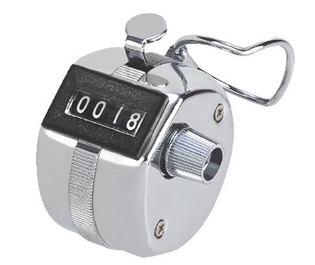
JACKSONVILLE - Pitch Counts are coming to a softball field near you. Perhaps. Based on the Stack.com article linked above, they will resemble what goes on in baseball in name only.
The limit for maximum-effort pitches during a week should be around 400. Do not include any drills that mimic the pitching motion but are not maximum effort. 
But it's a start. Now at least we have evolved into Equal Opportunity Arm Abusers.

Hurray for us!!


from training-conditioning.com
http://training-conditioning.com/content/heres-pitch

Here's the Pitch

Although there are pitch counts for baseball players at many levels, the standard thought has been that the underhand toss utilized by softball players is safer than the overhand form used in baseball. However, new research says the potential for overuse injuries in softball pitchers is a factor that may be overlooked.

A news release from Washington University School of Medicine in St. Louis reports that research findings suggest softball pitchers show progressive pain, fatigue, and weakness relating to two- and three-day tournaments. This research was published in The American Journal of Sports Medicine.

"The dogma involving throwing athletes is that the underhand pitch is thought to be safer, but there have been biomechanical studies in recent years indicating that the stresses on the shoulder are very similar, regardless of whether one is pitching overhand or underhand," said Matthew Smith, MD, Assistant Professor of Orthopaedic Surgery at Washington University and one of the study's authors. "The idea that we should protect these softball pitchers hasn't really caught on.

"Because there aren't as many pitchers on most softball teams as there are on baseball teams, coaches tend to 'ride' the ones who are successful," he continued. "Most don't realize they're putting the pitcher at risk, but it turns out that the windmill style of pitching that girls use isn't as safe as some might think."

In the study, Dr. Smith and his colleagues recruited 100 athletes who were between 14 and 18 years old. They were each about to participate in a two- and three-day tournaments and scheduled to pitch each day of the tournaments.

In order to gauge fatigue, which relates to overuse injuries, the researchers measured the pitchers' strength. These assessments were correlated with the pitchers' reports of how they felt.

"We used a device called a dynamometer that allows us to test strength," said Dr. Smith. "They push against it, and it gives us an objective measurement of strength. We also asked them how they felt, how tired they were and how much pain they were in.
'We can correlate objective measures of strength and associate those with how the athletes say they feel," he continued. "Usually during a tournament, we compare these things at the beginning of a day playing to these same measurements at the end of the day. Then we ascertain their strength levels at the start of the next day and determine whether they recover their strength,"

The research team found that as pitchers continue playing, they don't get enough rest to recover. On top of that, most injuries were sustained during the first six weeks of the season. This could indicate that throwing a lot in a short amount of time (with little or no training beforehand) may contribute to the issue.

"On a fast-pitch softball team, the pitcher is the player doing most of the throwing," said Dr. Smith. "She's throwing 70 or 100 or 125 pitches in a game. Meanwhile, the center fielder may only throw at peak effort four or five times in a game. Our study focused on pitchers because they are the ones who most commonly come to the doctor's office with injuries. There is some data suggesting that fatigue is a precursor to injury. If we limit pitches, get them more rest and give them more time to recover, it's logical to think the injury risk will decline."

However, there hasn't been enough research on softball pitchers to have an estimate for how much rest pitchers may need to recover between games.

"Two and three-day tournaments are commonplace in youth fast-pitch softball with teams often using the same pitcher throughout the tournament," the authors write. "Our data clearly show that shoulder and elbow strength decline after a single day of competitive windmill pitching and continue to decline over consecutive days of pitching.

We also show that there are significant increases in subjective measures of shoulder fatigue and pain coinciding with this decline in strength. Importantly, pitchers did not recover to their baseline many of the tested muscle groups by the day following pitching indicating that there was an inadequate period of rest."


Sent from my iPhone

~;::::::;( )">   

Friday, May 18, 2018

Not Adding Up | training-conditioning.com


You would have thought that the "experts" had accounted for "warm-up pitches" in their studies. This kind of throws my confidence in their research, and therefore in their conclusions, down a few notches.

Back to the drawing board fellas!!

from training-conditioning.com
Not Adding Up | training-conditioning.com:

Not Adding Up

April 18, 2018

Nationwide rules limiting pitch counts among high school athletes have not decreased pitching injuries as expected. Wondering why, a team of researchers from the University of Florida recently took a closer look at the issue.
In a cross-sectional study reported on by Orthopedics This Week, the researchers attended varsity high school baseball games for 34 Florida high schools during the 2017 season. The goal was to examine the total number of pitches thrown. Each researcher counted pitches from the mound in the bullpen before the game, warm-ups before the innings, and during the game. Long tossing in the outfield and throws made before warming up in the bullpen weren’t recorded. 
The study’s authors hypothesized that despite mandatory pitch counts during games, between 30 to 40 percent of pitches aren’t actually accounted for during outings. Additionally, the researchers expected to see a broad variation within the players’ number of bullpen pitches.
Both of these theories were supported by the study's results, which were published online by the Orthopaedic Journal of Sports Medicine. It showed that 42.4 percent of the 13,769 pitches observed for the study were not accounted for in the pitch count because they were thrown in the bullpen and during warm-ups. The study also showed a wide range in the number of bullpen pitches thrown.
“Our data revealed an unaccounted workload factor of bullpen and warm-up pitches not included in the total pitch count. We also found wide variation in the number of bullpen pitches thrown, making precise determination of pitch volume challenging among high school players,” the study’s authors wrote.
Although injuries weren’t recorded in this observational study, the findings may help explain why injuries haven’t decreased despite advances in monitoring pitch counts. Importantly, much of the prior research on pitching injuries hasn’t included bullpen and warm-up pitches in measuring throwing volume.
“Our study suggests there is a misunderstanding of the workload volume in the high school-aged baseball pitcher. Research has suggested that the occurrence of workload spikes (sudden increased volume relative to regular training volume) significantly increases risk for throwing-related injury,” the researchers wrote. 
Image by Staff Sgt. Jocelyn Rich.

'via Blog this'

Friday, June 16, 2017

Tenn Revises Pitching Rules | athleticmanagement.com

Tenn Revises Pitching Rules | athleticmanagement.com

Tenn Revises Pitching Rules

A year ago, all state associations were required by the NFHS to implement rules for pitcher safety. Some states are now tweaking their rules for next year. Tennessee is one of them. 
Changes rolled out by the Tennessee Secondary School Athletic Association (TSSAA) include:
  • Players can not pitch on three consecutive days.
  • The 120-pitch limit is a hard cap and pitchers will no longer be able to exceed it to finish off an at bat.
  • Counts for games in a doubleheader will be combined to determine the days of rest needed before a pitcher can return to the mound.
  • Adjusted pitch count numbers: 1-25 pitches for zero days' rest (can pitch the next day), 26-55 for one day rest, 56-75 for two, 76-105 for three and 106-120 for four.
According to an article from the Daily Post Athenian, some coaches feel the new rules are too stringent. Matt Ray, Baseball Coach at McMinn County High School, was not happy with the 26 pitches that would require a day's rest.
"That's not what I'd have liked," Ray told the Daily Post Athenian. "I'd have liked to have seen that changed. Just give me a few more pitches. Giving a guy 35 pitches for a couple of innings and coming back the next day would've been just fine."
More and more coaches are taking a collaborative approach when it comes to team rules and culture. With today's generation, buy-in happens more readily when players have a say in the development of the team.


Sent from my iPhone

Thursday, July 09, 2015

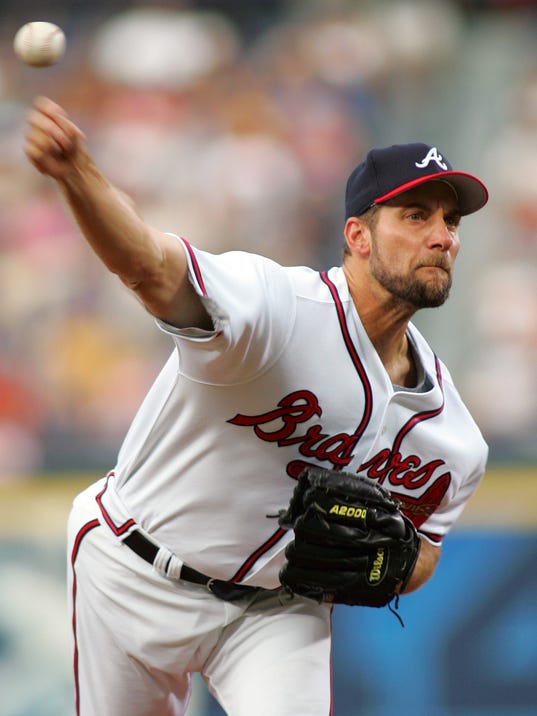
John Smoltz on Tommy John Surgery, Pitch Counts and Sports Specialization | USA Today

XXX _DEC 798.JPG S BBN USA GA
(Photo: Dale Zanine, USA TODAY Sports)

Well, well, well. Smoltz, Glavine and Maddux all against pitch counts. That's good enough for me. Leo Mazzone probably not a big fan of them either, nor is he likely to be in favor of a schedule that favors a lot of rest over a lot of throwing between starts.

It sounds decidedly "old-school" nowadays, but Smoltz is correct in that it has led us in the wrong direction as far as number of injuries. I'm not sure the bail-out from medical science is such a great thing either and I can't wait for Smoltz to use the Hall of Fame as a platform to get folks to re-think what we're doing and the direction we are going.


from USA Today:
John Smoltz worries he may be last Tommy John pitcher in Hall of Fame:

The problem with baseball today, and the reason for the soaring amount of Tommy John surgeries, Smoltz and famed orthopedist James Andrews say, is that pitchers and ball clubs have fallen in love with velocity. These players have never learned to really pitch. So when they blow out, they come back too quickly, throw as hard as they can, and are soon back on the operating table.
"We're not developing pitchers the right way,'' says Smoltz. "We're asking them to go as hard as you can, and as short as you can, and that's not good enough.''
"So when they come back from this, that's all they really know. It looks sexy,'' Smoltz said. "It feels good. And we fall in love with it. But these guys are not given the balance, or they're not given the proper time to figure out what kind of pitcher they are. I'm fearful and feel bad for a lot of these guys.''
The rash of surgeries and the neglect to teach the art of pitching leaves Smoltz incensed, and his passion will be reflected in his Hall of Fame speech.
"I really want to really capture how it happened for me, not just getting to the Hall of Fame, but how many different things I had to do to survive,'' says Smoltz, the only pitcher in baseball history to win more than 200 games and save 150 games. "People don't realize what's going on out there. I'm blown away with people not having a clue.
"We've asked kids to do too much, too early, and at a high velocity at a young age, and you're just not able to handle that over time.
"It's like RPM-ing your car. If you red-line it enough, you're going to blow your engine.''


...


 Smoltz, who had his surgery in March 2000, will ask parents to stop having their kids play year-round baseball, advising them to take a minimum of two to four months off a year, just as Andrews prescribes. He'll implore teams and the Tommy John patients to take at least 14 months off before returning to action, perhaps reminding them of Oakland A's pitcher Jarrod Parker, who has undergone three elbow surgeries before the age of 27.
Why, 276 players have undergone Tommy John surgery since 2000, according to MLB statistics, including 13 this year. There were 31 performed last year, including 11 who had their second surgeries within three years of their original procedure. Most alarming, says Stan Conte, the Dodgers vice president of medical services, a research study revealed that just 67% of those patients undergoing reconstructive elbow surgery return to even pitch another 10 games in their career. New York Yankees pitcher Chris Capuano is the only two-time Tommy John patient to make more than 10 major-league starts after his second procedure.
"The younger professional pitchers that we're seeing now at such an increased rate of injury,'' Andrews said on a conference call, "you'll find out that most of them had some type of elbow injury when they were playing youth sports. …The pitchers of today are throwing harder. They're bigger and stronger. And they are doing more, as I said, at a younger age. So their wear pattern on their throwing arm is greater before they get to that level.''
The trouble, Smoltz says, is that they only learn how to throw hard. Smoltz and former Hall of Fame teammates Greg Maddux and Tom Glavine feel like choking the folks responsible for implementing the idea of pitch counts.
'via Blog this'

Saturday, June 27, 2015

At Least All These Tommy John Surgeries Aren’t Rotator Cuff Surgeries | FiveThirtyEight

arthur-feature-tommyjohnsurgery-1


The rise in elbow surgeries is closely linked to the success rate of the surgery and the return to form of the pitchers that undergo the surgery. The success ratio of those that undergo shoulder surgeries have yet to catch up. A bad rotator cuff is still a near death knell for pitchers today as medical science has not come up with the equivalent of Tommy John Surgery for torn rotator cuffs or labrums.

from FiveThirtyEight:
At Least All These Tommy John Surgeries Aren’t Rotator Cuff Surgeries | FiveThirtyEight:
Having a bum elbow sure beats having a bum shoulder. Despite all the Tommy John surgeries, we’re living in a golden era of pitcher health.
It’s hard not to be anxious about a crisis when you look at data about just how many ulnar collateral ligaments are being repaired through Tommy John surgery. The number of surgeries in the past 10 years is 115 percent higher than it was the 10 years prior.
 That’s a huge spike, yes, but the intriguing thing is what’s happened as those elbows have flared up: Shoulders haven’t. Using data from Baseball Prospectus’s injury archive (maintained by Corey Dawkins), we can chart the escalating number of elbow surgeries over the past 35 years against the number of shoulder surgeries2: Right around 1998, the two paths diverge, and in recent years, shoulder surgeries are down.3

After a peak in 2009, when more than 40 operations were performed, shoulder surgeries seem to be fading toward extinction, with only 12 in 2014. Some have attributed the decrease in shoulder injuries to improved shoulder exercises. This explanation is consistent with the fact that shoulder injuries have disappeared for position players, as well.

The decreasing trend in shoulder problems matters because shoulder surgeries are more debilitating than the now-routine Tommy John. Whereas about 80 percent of major league pitchers in my data set4 returned from UCL reconstruction to pitch in the majors, only 67 percent came back from shoulder surgeries. (From here on out, I’m examining only the pitchers who were major leaguers at the time of their surgery.) Whether because of recency bias or some other factor, we tend to forget once-great throwers like Johan Santana, Brandon Webb, and Kerry Wood, all of whose careers were cut short because of shoulder ailments. Wood, in particular, is an instructive example. He came back from Tommy John early in his career only to be done in by a rotator cuff surgery several years later.


"Having a bum elbow sure beats having a bum shoulder. Despite all the Tommy John surgeries, we’re living in a golden era of pitcher health.

It’s hard not to be anxious about a crisis when you look at data about just how many ulnar collateral ligaments are being repaired through Tommy John surgery. The number of surgeries in the past 10 years is 115 percent higher than it was the 10 years prior.

That’s a huge spike, yes, but the intriguing thing is what’s happened as those elbows have flared up: Shoulders haven’t. Using data from Baseball Prospectus’s injury archive (maintained by Corey Dawkins), we can chart the escalating number of elbow surgeries over the past 35 years against the number of shoulder surgeries2: Right around 1998, the two paths diverge, and in recent years, shoulder surgeries are down.3


After a peak in 2009, when more than 40 operations were performed, shoulder surgeries seem to be fading toward extinction, with only 12 in 2014. Some have attributed the decrease in shoulder injuries to improved shoulder exercises. This explanation is consistent with the fact that shoulder injuries have disappeared for position players, as well.

The decreasing trend in shoulder problems matters because shoulder surgeries are more debilitating than the now-routine Tommy John. Whereas about 80 percent of major league pitchers in my data set4 returned from UCL reconstruction to pitch in the majors, only 67 percent came back from shoulder surgeries. (From here on out, I’m examining only the pitchers who were major leaguers at the time of their surgery.) Whether because of recency bias or some other factor, we tend to forget once-great throwers like Johan Santana, Brandon Webb, and Kerry Wood, all of whose careers were cut short because of shoulder ailments. Wood, in particular, is an instructive example. He came back from Tommy John early in his career only to be done in by a rotator cuff surgery several years later."

Image result for the rays way

from SI.com:
http://www.si.com/vault/2013/04/01/106303863/the-rays-way
Shields did more than gobble up innings. He devoted himself to the Rays' shoulder-strengthening program, a 30-minute workout using bands, dumbbells and weighted balls—the details of which the team prefers not to divulge. All teams have programs to promote shoulder health, but what the Rays have may be the secret sauce that keeps their pitchers remarkably healthy. "No matter where I pitch," Price says, "I'm taking the program with me. It's the best. I tell everybody that comes here, 'You probably won't be very good at these [exercises] for a year. It's tough on your arm at first. It makes you pretty sore. But once you get acclimated to it, it's great.' If I didn't do it now? I would feel it big-time."
Last September, when Price whiffed a batter to reach the 200-inning mark for the third time, he wheeled to look into the dugout at Shields. They made eye contact and smiled. "The 200-inning mark is such a big deal," Price says. "It's consistency. It's durability. Shields is the guy who started it with this program. The way he went about his work was the biggest thing.
'via Blog this'


Wednesday, October 29, 2014

Pitch Counts according to Bumgarner

Madison Bumgarner has a 0.29 career ERA in the World Series. (USA Today)
Madison Bumgarner has a 0.29 career ERA in the World Series. (USA Today)


He will be a hero to the old-school pitching coaches who do not buy into the pitch count revolution and believe that it, and not the lowering of the mound, has led to the disappearance of the dominant starting pitcher from the World Series scene. If they need him, he throws. He will have a lot of rest before his next pitch thrown in anger after tonight, so he gives them what he's got when he's asked.

from Yahoo Sports:
Giants' Game 7 hopes rest with Tim Hudson, and if not him, then Madison Bumgarner - Yahoo Sports:
Four outs from Peavy and 20 from the bullpen Tuesday night netted the Giants a 10-0 shellacking and an invitation to Game 7. Bumgarner threw 117 pitches just Sunday night, and he'd have two – really, by game time, nearly all of three – days off. Asked how many pitches he believed he could throw if called upon, Bumgarner half-smiled and said, "Maybe 200, I don't know. As long as you're getting outs. Pitch counts are overrated." Especially, presumably, on Oct. 29. "I think it's overrated all the time," he said.
'via Blog this'

Regardless of what happens tonight, Bumgarner has posted a stat line for the ages in this World Series and will leave Giants fans wishing that Bochy had been able to line him up for Games 1, 4 and 7 right from the get-go. Which is how it SHOULD have been done. This type of adjustment on the fly is awkward and clunky and has the whiff of a desperation move. ADVANTAGE ROYALS.  that we're even talking in terms of how quickly we can throw Hudson from the train and climb aboard the Bummer Express.

If the Royals see Bumgarner get the call from the bullpen, they get the chance to at best dirty up the pretty little stat line and at worst virtually erase it from the narrative of history. All it takes is a well-placed, well-timed bloop or a bomb. It would be hard to envision a scenario where Bummer gets the call without the Giants being behind in the score. At that point, the onus would be on Bumgarner to hold the Royals in place while the Giants bi-polar offense gets to work. Less a savior or a Superman coming out of a phone booth ( speaking of which, where's Posey been? ) and more of a place-holder.

This game will be very quickly move from "momentum is your next days' starting pitcher, more "2 out RBI's get you to heaven". It will be what heroes and goats are made of in the post-mortem.


Sunday, August 31, 2014

Japanese high school game spans four days and 50 innings | Big League Stew - Yahoo Sports


https://www.youtube.com/watch?v=BKSQ-SbvZr0

第59回軟式高校野球 中京vs崇徳の準決勝“50回”決着の瞬間


Extra Innings is a sign of bad umpiring - said every umpire who has ever umpired

今までumpiredたすべての審判 - 延長戦は悪いumpiringのサインです

That means this game had really, really really bad umpiring.

from Yahoo Sports:

Japanese high school game spans four days and 50 innings | Big League Stew - Yahoo Sports:
In a pitching duel to end all pitching duels, Chukyo High School and Sotoku High School were held scoreless for days — literally — during a semifinal matchup at the 59th National High School Rubber Baseball Tournament in Japan. It wasn't until the 50th inning — which took place on Sunday morning, four days after the game had started — that Chukyo finally broke through for three runs. Fortunately for them, and pretty much everyone involved, that would hold up, allowing them to advance to the finals later on Sunday. 
Amazingly and ridiculously, both starting pitchers went the distance during the marathon. Chukyo starting pitcher Taiga Matsui threw 709 pitches and allowed 26 hits over his 50 innings.  “This game was the physically hardest ever for me," Matsui said after the semifinal game. "But I showed my (fighting) spirit. As my teammates scored three runs (in the 50th inning), I was able to throw in a relaxed manner in the bottom of the inning. Ishioka was a good rival for me.” 
His counterpart, Jukiya Ishioka of Sotoku, totaled 689 pitches and allowed 22 hits. Ishioka said, “Though I was beaten in the end, it was a good experience for me to pitch until the last. I had fatigue not only today (Aug. 31) but also yesterday and the day before yesterday. But I asked our coach to use me as a starter today.”
'via Blog this'

I don't even know what this says about the American fixation with pitch counts. We say that we have a warrior mentality but in the Japanese culture, they live it. These guys were literally willing to "Come back with your shield - or on it".

私も、これはピッチカウントを持つアメリカの固定について言うのか分からない。私たちは、戦士の精神を持っていますが、日本文化に、彼らはそれを生きると言う。これらの人は、文字通り" - またはそれを盾に戻ってきて」に喜んでいた。

Perhaps some residual to the samurai warrior mentality detailed here:

http://www.bbc.co.uk/history/worldwars/wwtwo/japan_no_surrender_01.shtml

the end of hostilities

When Emperor Hirohito made his first ever broadcast to the Japanese people on 15 August 1945, and enjoined his subjects 'to endure the unendurable and bear the unbearable', he brought to an end a state of war - both declared and undeclared - that had wracked his country for 14 years.
......

 Japan's samurai heritage and the samurai code of ethics known as 'bushido' have a seductive appeal when searching for explanations for the wartime image of no surrender. The great classic of Bushido - 'Hagakure' written in the early 18th century - begins with the words, 'Bushido is a way of dying'. Its basic thesis is that only a samurai prepared and willing to die at any moment can devote himself fully to his lord.


Monday, July 07, 2014

Study finds pitching mound height affects throwing motion, injury risk


Maybe the answer lies more in the slope than the sleeve. Sometimes the answers are right there in front of our eyes. But then again, who profits from lowering the mound, groundskeepers?

Study finds pitching mound height affects throwing motion, injury risk
The study focused on determining if there is increased stress on the shoulder or the elbow based on the height from which the pitcher has thrown. A kinematic analysis provided information regarding pitching motion (position and velocity), while the kinetic analysis determined the forces and torques generated at the shoulder and elbow.
“We found that compared to flat ground, pitchers using a 10-inch mound experience an increase in superior shear and adduction torque in the shoulder – meaning there’s a greater amount of stress on the joint surface and surrounding structures. That greater stress may result in injury to the shoulder including tearing of the rotator cuff or labrum which may result in surgery and long-term rehabilitation. It also can make it difficult for the athlete to replicate the same throw and develop a consistent strike,” Dr. Raasch says. 
“The most notable kinematic difference was the increase in shoulder external rotation at foot contact. This probably represents a change in the timing of the foot contact relative to arm position, because the foot lands earlier in the pitch delivery during flat ground throwing than with a slope,” he says.
While the study did not result in enough data to recommend reducing the 10-inch mound height, which became standard in 1968 and also used in COLLEGE AND high SCHOOL baseball, Dr. Raasch says the findings give trainers information that can help them determine if pitchers would be better off practicing on flat ground especially after an injury.

Flat ground throwing was good enough for Nolan Ryan and that's good enough for me. Ryan is the gold standard in terms of throwing at at the highest velocity for the longest extended period of time with the minimum amount of time lost due to injury.

Therapists and trainers should do more of an analysis on the methods and best practices that helped guys like  Ryan, Tom Seaver and Mike Marshall did to throw at a high level and post unbelievable numbers relatively injury-free and spend less time on developing shiny new gadgets that have had no demonstrable or provable working value. You're asking parents, coaches and players to put a lot of faith in a speculative venture that is based entirely on theoretical underpinnings.


Wednesday, July 02, 2014

The Sleeve That Could Save Baseball: Exclusive Look at New MLB Technology | Bleacher Report


The Holy Grail of Pitching is certainly a bold statement. As is the "Sleeve that could save Baseball" since baseball at all levels has thrived during the same period that arm injuries have exploded, but here's hoping that they come close in the execution phase.

It's one thing to have the important and relevant information at players, parents, coaches fingertips. How that is used to influence decisions and behaviors when the game / the money / the future of the athlete is on the line has always been the limiting factor in bringing down the number of arm injuries in youth baseball. IMO.

The enforcement and penalty issues for overstepping the guidelines that "The Sleeve" provides are going to be crucial in the success. That's also assuming that there are no GIGO (garabge in - garbage out) issues with the data in "The Sleeve" in the first place.

from Bleacher Report:
The Sleeve That Could Save Baseball: Exclusive Look at New MLB Technology | Bleacher Report:
What we've lacked is a real weapon in this fight. Now, thanks to the work of Joe Nolan, baseball finally could have that weapon. Nolan and his company, Motus, a well-known provider of biomechanical analysis from Florida, has created what they very simply call the Motus Pitcher Sleeve. It could be the Holy Grail of pitching.
Over the past two decades, biomechanics has made giant advances, including markerless technology and portable units (including those used by Motus), but baseball has remained resistant to the use. Most of this is the glacial pace of change in baseball, but it's also the natural instinct to push against a change that feels generational.
'via Blog this'

Friday, May 11, 2012

The Science Of Baseball: What Is The Fastest A Pitcher Can Throw?

Bring the Heat The Tigers’ Joel Zumaya is one of the hardest throwers in baseball. Unoffically, his fastball has been clocked at 104 mph. G. Newman Lowrance/Getty images; Medi-Mation

Not sure, my guess would be that either Stephen Strasburg or Aroldis Chapman would be throwing it though.

The Science Of Baseball: What Is The Fastest A Pitcher Can Throw?:

"First, let's be practical about how blazing fast 104 MPH is.    A 90 MPH fastball, the go-to pitch and speed for the top echelon of pitchers, is travelling at 132 feet per second.   Since the ball is closer to the batter when it is released and because the batter is in the middle of the plate depth, we are really only talking about 55 feet to see a pitch rather than just over 60.    That means the batter has .4167 seconds to react.    Boosting that speed to 104 is bordering on unthinkable to hit (3) but it explains why a lot of pitchers can be so successful without triple-digit speed."

From POPSCI.com:

How it Works: The Fastball
The biomechanics behind throwing 100 mph without ripping your elbow apart


http://www.popsci.com/how-it-works/article/2008-07/how-it-works-fastball

The slingshot move of a pro pitcher’s shoulder is the fastest recorded action in sports. A pitch’s power, however, is generated by his entire body. For a right-handed pitcher, the chain of kinetic energy starts as soon as he lifts his left leg and faces third base. The energy of that foot landing transfers into the rotation of the trunk and then finally unleashes in the arm whipping around at the elbow. Glenn Fleisig, the research director of the American Sports Medicine Institute, has found that the hardest throwers rotate their pelvis toward home plate and follow with their trunk less than a tenth of a second later, snapping their bodies like a whip.

New Thinking: Conventional wisdom has long warned against young pitchers throwing curveballs for fear that the extreme stress it puts on the elbow can tear the ulnar collateral ligament [see below] or even break their growing bones. A new study published by Fleisig earlier this year in the American Journal of Sports Medicine showed that the fastball actually puts slightly more stress on the player’s arm than a curveball. The bigger risk factor, the study concluded, is how many pitches are thrown. Based on this research, Little League Baseball just instituted its first pitch-count limits: 50 pitches a day for eight-year-olds, scaling up with age.

Sunday, June 12, 2011

DR. MIKE MARSHALL ANSWERS QUESTION REGARDING LL DEATH


Some of Mike Marshall's ideas may seem about as old-school as they come, but in the area of youth sports and the way it is administered, he is always spot on. He addressed a question from one of his followers regarding the recent death of the Arizona Little Leaguer and, not surprisingly, came down far harder on coaches and administrators than I did. His comments and recommendations are posted below.

More importantly, he provides concrete examples of how coaches ought to be teaching the technique of bunting, but simultaneously, how to batters can protect themselves from the worst-case scenario, the high and tight fastball.


Marshall has long been an advocate for pitchers throwing daily as well, swimming against the tide of pitch count vigilantes. Maybe the recent shelving of Joba Chamberlain -- he of the Joba Rules -- will cause some to reconsider their positions in this area.

from the New York Daily News:
Joba Chamberlain's father admits 'reservations' about 'Joba Rules,' looking back on early years

http://www.nydailynews.com/sports/baseball/yankees/2011/06/10/2011-06-10_dad_regrets_joba_rules.html


from Dr. Mike Marshall's Pitching Coach Services - Question and Answer area:
http://www.drmikemarshall.com/Question-Answer2011.html


549.  Little League Death

Here is an article where a teenager died when a ball hit him in the chest.

My understanding is that this happens when a baseball hits a kid's chest with sufficient force between heart beats.

The story doesn't say whether a defibrillator was available at the scene.  Would you require such a device at all Little League games?

------------------------------------------

Arizona Little Leaguer, 13, killed after pitch hits chest

PHOENIX, AZ:  (AP) A 13-year-old Arizona boy was killed in a freak accident after a baseball hit him over the heart as he tried to bunt, officials in his Little League said Friday.

Hayden Walton went for the bunt during a game Tuesday night in the close-knit northern Arizona city of Winslow, said Jamey Jones, a Winslow Little League official.  "He took an inside pitch right in the chest," Jones said.  "After that he took two steps to first base and collapsed."  He died the next morning at a local hospital.

The boy's parents, who were at the game, are heartbroken, shocked and unable to speak to members of the media, league president and family spokesman Dale Thomas said.  "It's a hard thing to handle for everyone," Thomas said.  "When you're touched by something of this magnitude, it sends shock waves throughout the community."

Thomas said he grew up around the boy's family and described Hayden as "the epitome of what every little boy ought to be."  Besides participating in Little League, Hayden was a Boy Scout, loved to work on cars and helped neighborhood widows by mowing their lawns and doing odd jobs for them, Thomas said.  Hayden had a younger sister.

The league suspended games until Friday and has counselors available for players or parents who need them.  Stephen Keener, president and CEO of Little League Baseball and Softball, said in a statement that "the loss of a child is incomprehensible."

"Words cannot adequately express our sorrow on the passing of Hayden," he said.  "Our thoughts and prayers go out to Hayden's family, all the players and volunteers of the Winslow Little League, his classmates, and his friends, at this difficult time."


---------------------------------------------

     Sacrifice bunting is a very dangerous motor skill.  When batters sacrifice bunt, to get baseball batters to pop up the bunt, baseball coaches teach their baseball pitchers to throw the baseball high and inside.

     To sacrifice bunt, untrained baseball coaches teach their baseball batters to move their rear foot forward to parallel with their front foot and farther, which turns the body to face toward the baseball pitcher.

     In this position, baseball sacrifice bunters cannot rotate their head and body away from the pitched baseball.

     Instead, their only reaction is to move away from the pitched baseball and raise their arms.  This opens their face and the front of their chest.

     The person legally responsible for this young man's needless death is the untrained baseball coach that taught this young man this deadly sacrifice bunting technique.

     Whatever the motor skill, the first obligation of those that teach motor skills is to teach their athletes how to prevent motor skill technique injuries and avoid competition-generated injuries.

     This requires coaches to inform parents and athletes of the potential dangers of the motor skills they teach and,before they can participate, what preventive skills the athletes have to master.

     Therefore, the first baseball batting motor skill that athletes must master is how to avoid getting hit with a pitched baseball in the head or heart.

     Baseball pitching is an Initiator skill.  That means that nothing can happen until baseball pitchers throw the baseball.

     Baseball batting is a reaction skill.  That means that baseball batters have to wait until baseball pitchers throw the baseball.

     With tennis balls, batting helmets with face guards and protective eye wear, coaches need to teach baseball batters how to turn their head and chest away from pitched baseballs that are going to hit them.

     With regard to baseball batters avoiding getting hit in the head or heart with a pitched baseball, the critical factors are having their front foot on the ground, their body turned sideways to baseball pitchers and their rear foot on the ground in line with their front foot away from home plate.

     With the front foot on the ground, baseball batters have the ground contact that they need to rotate their head and body away from the pitched baseball.

     As they rotate their body away from the pitched baseball, baseball batters need to turn their head away and bend their neck downward to hide their face behind their front shoulder and look at their rear heel.

     Simultaneously, they need to tuck their front arm across the front of their chest, thereby covering their heart.

     With my baseball batting technique, baseball batters start with their front upper arm vertically downward in contact with their Rib Cage, their front forearm diagonally across the front of the chest.

     This means that, without having to move their front arm at all, they are protecting their heart from pitched baseballs.

     I do not voluntarily give away outs.  Therefore, I do not ask my baseball batters to sacrifice bunt.  Instead, I prefer to teach my baseball batters how to hit the baseball on the ground.

     To advance base runners, I have my base runners run and my baseball batters hit the baseball on the ground.

     However, with base runners on first and second bases with no outs, I do have my baseball batters assume the appropriate sacrifice bunting position.

     The baseball sacrifice bunting position starts with the same body position as my baseball batting position.

     To assume the sacrifice bunting position, baseball batters:

01.  Stand as far away from home plate as the batters box and their reach permits them to have the end of their bat in the middle of home plate.
02.  Have their rear foot in line with or slightly behind their front foot.
03.  Turn their upper body to forty-five degrees toward the baseball pitcher.
04.  Bend their knees.
05.  Move both hands up the baseball bat.
06.  Hold the bat at the top of their strike zone at a slight upward angle.

     As I said, I never sacrifice bunt.  However, if I were to ask my baseball batters to sacrifice bunt, I would teach my baseball sacrificing bunters to:

07.  Always bunt the baseball to the right side of the infield.

     The reason why I would always have baseball sacrifice bunters bunt to the right side of the infield is that, when they try to bunt the baseball to the left side of the infield, they have to turn their bat toward the left side of the infield.

     This means that, if the baseball contacts the top edge of the baseball bat, the baseball can hit the sacrificing baseball bunter in the face.

     Remember, the first rule of coaching:  Never teach a motor skill that can injure the athletes.

     I suppose that those in charge of youth baseball games could require the umpires that they hire to know how to resuscitate people in need and bring a defibrillator with them.

     However, the best answer is to teach and train athletes how to avoid injuries.

     This is another reason why college educated and trained athletic coaches should be in charge of youth athletic programs.  We learn that our first responsibility is to teach our athletes how to perform injury-free motor skills and how to prevent competition-generated injuries.

     Unfortunately, with regard to baseball pitching, except for this Kinesiologist, those in charge of designing an injury-free baseball pitching force application technique have failed.

     My recommendation is for these parents to sue those in charge of this league for every cent that their insurance policy covers.  I prefer to have no leagues than leagues operated by incompetents that have no idea what they are doing, but want the money.
 
<"( );::::::;~ ~;::::::;( )">

Giants Top Minor League Prospects

  • 1. Joey Bart 6-2, 215 C Power arm and a power bat, playing a premium defensive position. Good catch and throw skills.
  • 2. Heliot Ramos 6-2, 185 OF Potential high-ceiling player the Giants have been looking for. Great bat speed, early returns were impressive.
  • 3. Chris Shaw 6-3. 230 1B Lefty power bat, limited defensively to 1B, Matt Adams comp?
  • 4. Tyler Beede 6-4, 215 RHP from Vanderbilt projects as top of the rotation starter when he works out his command/control issues. When he misses, he misses by a bunch.
  • 5. Stephen Duggar 6-1, 170 CF Another toolsy, under-achieving OF in the Gary Brown mold, hoping for better results.
  • 6. Sandro Fabian 6-0, 180 OF Dominican signee from 2014, shows some pop in his bat. Below average arm and lack of speed should push him towards LF.
  • 7. Aramis Garcia 6-2, 220 C from Florida INTL projects as a good bat behind the dish with enough defensive skill to play there long-term
  • 8. Heath Quinn 6-2, 190 OF Strong hitter, makes contact with improving approach at the plate. Returns from hamate bone injury.
  • 9. Garrett Williams 6-1, 205 LHP Former Oklahoma standout, Giants prototype, low-ceiling, high-floor prospect.
  • 10. Shaun Anderson 6-4, 225 RHP Large frame, 3.36 K/BB rate. Can start or relieve
  • 11. Jacob Gonzalez 6-3, 190 3B Good pedigree, impressive bat for HS prospect.
  • 12. Seth Corry 6-2 195 LHP Highly regard HS pick. Was mentioned as possible chip in high profile trades.
  • 13. C.J. Hinojosa 5-10, 175 SS Scrappy IF prospect in the mold of Kelby Tomlinson, just gets it done.
  • 14. Garett Cave 6-4, 200 RHP He misses a lot of bats and at times, the plate. 13 K/9 an 5 B/9. Wild thing.

2019 MLB Draft - Top HS Draft Prospects

  • 1. Bobby Witt, Jr. 6-1,185 SS Colleyville Heritage HS (TX) Oklahoma commit. Outstanding defensive SS who can hit. 6.4 speed in 60 yd. Touched 97 on mound. Son of former major leaguer. Five tool potential.
  • 2. Riley Greene 6-2, 190 OF Haggerty HS (FL) Florida commit.Best HS hitting prospect. LH bat with good eye, plate discipline and developing power.
  • 3. C.J. Abrams 6-2, 180 SS Blessed Trinity HS (GA) High-ceiling athlete. 70 speed with plus arm. Hitting needs to develop as he matures. Alabama commit.
  • 4. Reece Hinds 6-4, 210 SS Niceville HS (FL) Power bat, committed to LSU. Plus arm, solid enough bat to move to 3B down the road. 98MPH arm.
  • 5. Daniel Espino 6-3, 200 RHP Georgia Premier Academy (GA) LSU commit. Touches 98 on FB with wipe out SL.

2019 MLB Draft - Top College Draft Prospects

  • 1. Adley Rutschman C Oregon State Plus defender with great arm. Excellent receiver plus a switch hitter with some pop in the bat.
  • 2. Shea Langliers C Baylor Excelent throw and catch skills with good pop time. Quick bat, uses all fields approach with some pop.
  • 3. Zack Thompson 6-2 LHP Kentucky Missed time with an elbow issue. FB up to 95 with plenty of secondary stuff.
  • 4. Matt Wallner 6-5 OF Southern Miss Run producing bat plus mid to upper 90's FB closer. Power bat from the left side, athletic for size.
  • 5. Nick Lodolo LHP TCU Tall LHP, 95MPH FB and solid breaking stuff.