Monday, December 18, 2017

Rangers Give Up Little In Prospects To Add Matt Moore | BaseballAmerica.com

Image result for sam wolff texas rangersImage result for israel cruz texas rangers
Sam Wolff and Israel Cruz

Wolff is the # 27 prospect on mlb.com Giants Prospect list for 2017, Julian Fernandez, the Rule 5 draftee comes in at #28. http://m.mlb.com/prospects/2017?list=sf  Sounds like all three are potential bullpen pieces at best, and set-up guys more than closers. Although 100 MPH, if the light ever comes on as far as command and control....well, who knows?

from Baseball America:

Rangers Give Up Little In Prospects To Add Matt Moore | BaseballAmerica.com:
Giants acquire:
Sam Wolff, RHP (Triple-A Round Rock)
Age: 26
The Rangers didn't give up much to get Moore. Wolff turns 27 in April and reached Triple-A for the first time last year as a reliever, running his fastball into the upper-90s. He posted a 2.38 ERA in 24 appearances at Round Rock but he tore his flexor tendon in his right elbow in August. He is expected to be out until the all-star break.
Israel Cruz, RHP (Rookie-level Arizona League)
Age: 20
Cruz is an athletic righthander whose progress stalled in his third professional season, as he got hit hard in the AZL to the tune of a 5.91 ERA. He has yet to pitch above Rookie-ball in four professional seasons, doesn't have a plus pitch and needs to improve his command of a fastball that sits in the low-90s.

from mlb.com

Wolff is already 26 years old, so hardly prospect material. This is intriguing though:
 Wolff has a quick arm that produces consistent mid-90s fastballs when he works in relief. He can touch 100 mph and has some armside run on his heater. His hard slider is his best secondary pitch and he'll mix in a curveball as well. He also has a changeup from his days as a starter but doesn't use it as much coming out of bullpen.
The Rangers made Wolff a full-time reliever in 2017, and he was pushing for a big league promotion when he got hurt again in August. His control has slipped since he began dealing with the rash of injuries, but he could fill a late-inning role if he stays healthy and delivers more strikes.
Fernandez, on the other hand is only 22 years old:
The Rockies clocked Fernandez as fast as 104 mph and he generates consistent upper-90s fastballs with little effort. While he has a quick arm, impressive athleticism and little effort in his delivery, he has trouble controlling his heater. When he has to dial it down to throw strikes, it tends to get hit.
Fernandez also has a powerful slider in the upper 80s but has even more difficulty keeping it in the strike zone. He also has a changeup with similar velocity but it's not very effective and he's more of a two-pitch reliever. Despite his impressive radar-gun readings, Fernandez actually has averaged less than a strikeout per inning as a pro and will need to add considerable polish to stick in San Francisco.


 'via Blog this'

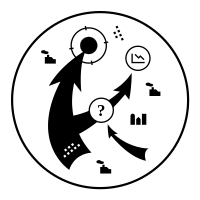
Help us determine if this mysterious pitcher silhouette is a righty or lefty | MLB.com

main image

I saw lefty first, then righty. 

from mlb.com

Help us determine if this mysterious pitcher silhouette is a righty or lefty | MLB.com:

10:32 PM

Help us determine if this mysterious pitcher silhouette is a righty or lefty


Remember "The Dress," the photo of a striped dress that looked like it was black and blue to some, but white and gold to others? That provided a case study of the fact that optical illusions are catnip for the internet.
In what may well be baseball's first foray into the internet optical illusion craze, MLB.com's Jordan Bastian provided Twitter with an image he encountered in Crocker Park outside of Cleveland:


'via Blog this'

Saturday, December 16, 2017

The Moneyball Mistake - The Danger of Managing to the Metric

Image result for managing to the metric

It's a long way to go, but well worth the trip. - CS

http://news.wustl.edu/news/Pages/27028.aspx

Incentive gaming is when people manipulate pay-for-performance schemes in ways that increase their compensation without benefitting the party that pays.


“It’s an example of how innovative people can be when there are financial rewards involved,” Pierce said.
What top officials at the VA may have overlooked, however, was a test of their system before implementing it.
“Designers of incentive-based compensation systems must think carefully about unintended consequences, putting themselves in the shoes of their employees and asking, ‘If I were given these incentives, what might I do to game them?’ ”
“Managers and policymakers need to understand that humans are clever and often opportunistic,” Pierce said. “If you give them an incentive system, many of them will figure out how to manipulate it to maximize pay and minimize effort.”
Pierce noted that the allegations involving the VA, as in frequent cases of standardized test gaming by teachers, are particularly striking for two reasons.
First, it shows the difficulty of inserting financial incentives into a setting where they are not traditionally used — the federal government.
“Many people erroneously see financial incentives as a panacea for perceived examples of government inefficiency such as education, health care or procurement,” he said.
Second, it shows that financial incentives can overwhelm even values that often are represented as routine.
“If even small financial incentives can overwhelm strong societal values such as educating children and caring for those who served our country, then such problems can occur anywhere,” Pierce said. 


The Dangers of Managing to Metrics | BOMGAR

Strategy Topics


Support centers run their business and make critical decisions based on metrics.  However, often times the metrics are not giving leadership a true representation of the state of the business due to both unbalanced and self-reported (biased) metrics.
Whether or not you have kids in school, there's a good chance you've heard plenty of arguments against the practice of "teaching to the test," where teachers are forced to focus on preparing students for standardized tests, rather than teaching a well-rounded curriculum for the grade level and subject matter.  Higher scores on the standardized tests lead to better teacher ratings and school rankings, but do not necessarily promote the entire education experience required for the student to be successful at the next level.  Imagine if you would, a football coach who only practices punt returns or a basketball coach only focused on free throws.  The team would be great at these single tasks, but would they ever be able to actually win a game? 
It may not be seen as "teaching to the test," but the same practice occurs in many support centers around the globe when management does not use a balanced scorecard. Instead, agents are encouraged to focus on just one or two metrics, such as Average Handle Time (AHT), Customer Satisfaction (CSAT), Quality, or Issue Resolution (IR).  The agents quickly learn to do well based on the metrics they are being measured against and neglect the rest of what is important to both the business and the customer.  Below are a few examples I've seen.
  • Focus on AHT - A particular computer tech support call center I worked with had dissatisfied customers because of long wait times to reach an agent.  Management realized that agent call handle times were extremely long, so they shifted focus from quality to AHT.  The agents were given shorter talk time targets, which were reported weekly.  The agents knew their performance evaluations would be based on their reported AHT, so their solution was to "fix" the majority of issues by telling the customers to reinstall the operating system and call back if they needed help after the reinstall was complete.  Most of these issues, it turned out, did not need an OS reinstall. This caused a lot of unnecessary churn for the customers (not to mention data loss), simply because the agents did not want to take the necessary time to troubleshoot the true issue.  In the end, handle times were great - but to the detriment of repeat calls, issue resolution and customer satisfaction - costing the company more money than they were saving by shortening handle times.
  • Focus on CSAT - Customer loyalty is very important to the long term success of any business, as dissatisfied customers will not only share their negative experience with others, but also not be repeat customers themselves.  However, singular focus on CSAT can easily drive up costs unnecessarily.  One customer service call center was seeing an increase in negative customer satisfaction surveys.  In response, the primary goal became raising CSAT scores.  As a result, agents began abusing concessions available to them to pacify customers.  They weren't resolving the issues or reason for complaint at a higher rate. They were simply giving customers more free products and coupons for future purchases, while specifically telling them to be sure to give favorable scores on the email survey they would receive.  Not only did this behavior cause higher costs in concessions, but it also drove up repeat calls once the customers realized their issues were not really resolved over time.
Equally as dangerous in managing to metrics is the practice of self-reported metrics, which is the equivalent of the fox guarding the hen house.  Businesses need to have methods for ensuring efficiency and effectiveness, but it is possible for departments or groups to "game the system" in order to ensure good scores for rankings, ratings and even compensation.  Below are two examples of the negative impact of self-reported metrics.
  • Quality Monitoring - Team managers in support centers are rated by the quality of their agents.  Some support centers have a quality team, but many times the team managers are responsible for evaluating and coaching their own agents.  Low scores not only cause extra work for the manager by forcing them to coach the poor performers but also force managers to report the poor quality of their own team.  This can lead to falsely elevated quality scores, which can ultimately drives lower CSAT and issue resolution, as well as higher handle times and repeat calls when undesirable agent behaviors are not corrected or improved.  If agents are given false high quality scores, they will continue performing at the same level.  It is important to ensure that quality and customer satisfaction scores are correlated by coaching and managing to appropriate levels.
  • Issue Resolution - Often times IR is measured by agents reporting whether or not they believe the issue was resolved - not if the issue was actually resolved from the customer's perspective.  I've seen many instances of agents claiming that the issue was resolved when it was out of their scope of support and they were unable to resolve it, claiming that they should not be scored against something out of their control.  Again, the issue was not resolved and in the end will drive other metrics to be out of balance.
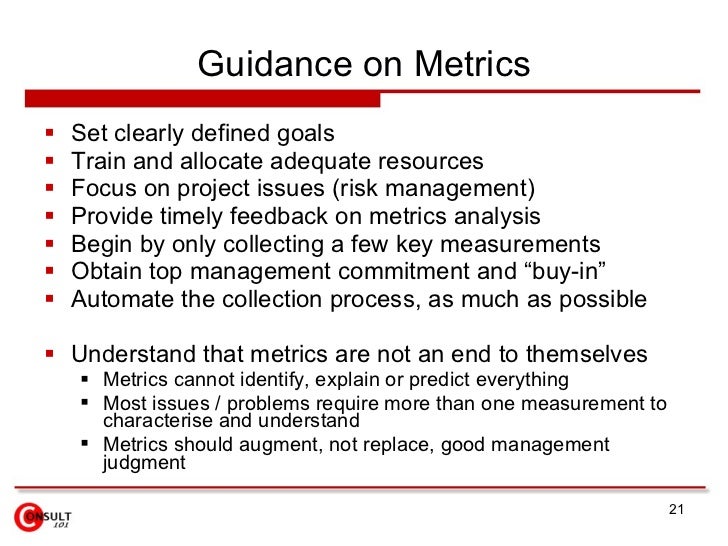
Design of a balanced scorecard ultimately is about the identification of a small number of financial and non-financial measures and attaching targets to them1.  This should include the measures and targets for both inputs (i.e. contact volume, staffing levels) and outputs (service levels, abandon rates, issue resolution).  Focus on balanced metrics can help a business quickly see where further analysis and improvements are need.
In order to collect unbiased feedback, care should be taken to ensure that everyone in the population being surveyed has an equal chance of being selected.  For example, only surveying customers whose issues have been resolved eliminates feedback from customers with unresolved issues, missing opportunities for improvement.  Also, when monitoring agent quality, sampling should occur at different times of the day.  Agent behaviors can vary throughout the day, so using random times of the day can net varying opportunities for coaching and feedback.
Ultimately, a balanced score card measured by unbiased methods is critical to ensure a true picture of how the business and individual teams are performing. Without focus on both, agents are driving to undesirable performance and the business could be making unfavorable decisions.

GAMING INCENTIVES

September 16th, 2010
A couple of weeks ago, I listened to a very funny story about economic incentives on NPR. (Something funny on economic incentives?!)
The story was about an economics professor who decided to use incentives to shape the behavior of his children. He devised an incentive program for potty training–which his toddler gamed.
So when the time came to potty train his daughter, B., he designed what seemed like an economically rational incentive: B. would receive a jelly bean every time she went to the toilet.
Once the new policy was in place, B. suddenly had to go to the toilet really, really often.
A few years later, B.'s younger brother needed to be potty trained. And Gans decided to expand the incentive system: Every time B. helped her brother go to the bathroom, she would get a treat.
"I realized that the more that goes in, the more comes out," says B., who is now 11. "So I was just feeding my brother buckets and buckets of water."
I see lots of incentive programs like that–so obvious they could be gamed by a child. What are the people who devise these programs thinking? Sadly, when the simple incentives produce undesired results, they come up with ever more convoluted ways to elicit the desired behavior. (There's also a tendency to blame the people who gamed the incentive.  Its as if the logic is: "We tried to manipulate you but you figured it out. Now we think you are a bad person for not cooperating with our attempt to manipulate you.")
Rather than try to manipulate adults in the workplace, why not appeal to intrinsic motivation? Tell people why something you want them to do is important, how it connects to the mission and financial results of the company. Then remove disincentives and barriers to doing the right thing.
Anyone contemplating trying to shape behavior with measurement and incentives should read Austin's Measuring and Managing Performance in Organizations.  And then, consider that there might be a more congruent way to achieve the desired outcome.
- See more at: Gaming Incentives


The Problem with Popular Measures

The most useful statistics are persistent (they show that the outcome of an action at one time will be similar to the outcome of the same action at another time) and predictive (they link cause and effect, predicting the outcome being measured). Statisticians assess a measure's persistence and its predictive value by examining the coefficient of correlation: the degree of the linear relationship between variables in a pair of distributions. Put simply, if there is a strong relationship between two sets of variables (say a group of companies' sales growth in two different periods), plotting the points on a graph like the ones shown here produces a straight line. If there's no relationship between the variables, the points will appear to be randomly scattered, in this case showing that sales growth in the first period does not predict sales growth in the second.
In comparing the variable "sales growth" in two periods, the coefficient of correlation, r, falls in the range of 1.00 to –1.00. If each company's sales growth is the same in both periods (a perfect positive correlation), r = 1.00—a straight line. (The values need not be equal to produce a perfect correlation; any straight line will do.) If sales growth in the two periods is unrelated (there is zero correlation), r = 0—a random pattern. If increases in one period match decreases in the other (a perfect inverse correlation), r = –1.00—also a straight line. Even a quick glance can tell you whether there is a high correlation between the variables (the points are tightly clustered and linear) or a low correlation (they're randomly scattered).
The closer to 1.00 or –1.00 the coefficient of correlation is, the more persistent and predictive the statistic. The closer to zero, the less persistent and predictive the statistic.
Let's examine the persistence of two popular measures: EPS growth and sales growth.
The figures above show the coefficient of correlation for EPS growth and sales growth for more than 300 large nonfinancial companies in the United States. The compounded annual growth rates from 2005 to 2007, on the horizontal axes, are compared with the rates from 2008 to 2010, on the vertical axes. If EPS and sales growth were highly persistent and, therefore, dependent on factors the company could control, the points would cluster tightly on a straight line. But in fact they're widely scattered, revealing the important role of chance or luck. The correlation is negative and relatively weak (r = –0.13) for EPS growth but somewhat higher (r = 0.28) for sales growth. This is consistent with the results of large-scale studies.
Next, we'll look at the predictive value of EPS growth and sales growth by examining the correlation of each with shareholder returns.
In the figures above, adjusted EPS growth and sales growth are on the horizontal axes. The vertical axes are the total return to shareholders for each company's stock less the total return for the S&P 500. Adjusted EPS growth shows a reasonably good correlation with increasing shareholder value (r = 0.37), so it is somewhat predictive. The problem is that forecasting earnings is difficult because, as we saw in the previous analysis, EPS growth in one period tells you little about what will happen in another. Earnings data may be moderately predictive of shareholder returns, but they are not persistent.
Using sales growth as a gauge of value creation falls short for a different reason. While sales growth is more persistent than EPS growth, it is less strongly correlated with relative total returns to shareholders (r = 0.27). In other words, sales-growth statistics may be somewhat persistent, but they're not very predictive.
Thus the two most popular measures of performance have limited value in predicting shareholder returns because neither is both persistent and predictive.
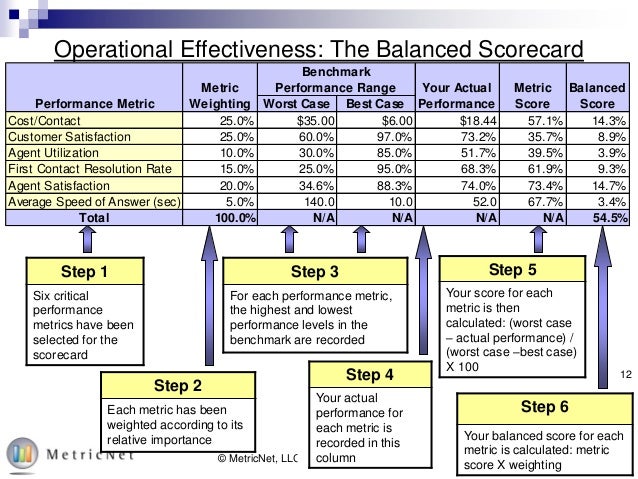
Image result for managing to the metric

~;::::::;( )">  ¯\_( )_/¯

'Skunk in the outfield' -- How the most epic trick play in history broke baseball


'Skunk in the outfield' -- How the most epic trick play in history broke baseballThis is what you'll see in HS baseball. Happened to me when I was on the bases for a varsity game in IL with a "more decorated" partner who had the play rule wrong. Luckily, he didn't interject during the play, only together during conference. He thankfully left it to me to explain it to the coach whose team butchered the play on defense. That was the easy part. He didn't like it, thought I was wrong, but if he did his research of the rule book after the game, he would have, and probably did, found out he was wrong. I only hope my partner that day got his nose a little dirty in the rule book. But a lot of those "more decorated" types seem to have an aversion, almost an allergy, to the rule book. 
          This article was a trip down memory lane. With great graphics. 

'Skunk in the outfield': How the most epic trick play in history broke baseball


For two minutes and 32 seconds of pure chaos, a high school state championship game in Rhode Island entered a parallel universe -- and unleashed the longest hardball stalemate of all time. Todd Detwiler

The Portsmouth High Patriots, like almost every high school baseball team, kept a trick play in their pocket.

Theirs was called the "phantom pickoff throw": The pitcher would spin as if making a pickoff attempt but keep the ball tucked in his glove. His fielders would act as if the throw had gone wild, make a lot of noise and chase after it, and the runner -- tricked -- would start to run to the next base. The pitcher would casually throw him out.

This play worked. Pitcher Brendan Solecki remembers using it twice, once when he was on the freshman team and once as a sophomore on the varsity. Both times the runner fell for it. "Against Woonsocket, the parents were not very happy," he says. "Like, 'That's not baseball, that's bush league.'"

But high school baseball, and maybe only high school baseball, is built for trick plays. At levels lower than high school, everybody is just trying to have fun, trying to learn, and it seems cruel to try too hard to humiliate your opponent. At higher levels, a play like that would never work. High school is the intersection between childhood and adulthood: The young men on the field are good enough to throw in the high-80s, strong enough to play on full-sized fields in front of major league scouts, polished enough to speak in clichés. They're also young enough to fall for a trick play straight out of "Little Big League."

In 2005, a parent approached Portsmouth coach Dave Ulmschneider about an interesting book he'd found. It turned out to be more of a pamphlet:
There were 16 plays, with a page or two of explanation for utilizing and defending each. A lot of the plays were clearly cheating, such as the runner going from second to home, skipping (or "cutting") third base when the umpires were looking the other way. Some were just plain baseball, stuff every team did, like a delayed steal. Some didn't seem likely to work, and some didn't seem realistic. Then there was a play called "skunk in the outfield."

That's how it came to be that Portsmouth sophomore named Johnny Pedrotty stood in right field in Game 2 of the Rhode Island state championship series, and a crowd of a thousand fans erupted into profane chaos, and a star infielder almost blacked out from the stress, and Ulmschneider found himself unsure of how to stop what he'd unleashed. It's how, for two minutes and 32 seconds, baseball broke.


LET'S DEFINE A baseball play like this: It is a sequence of actions during which events in progress cannot be stopped by a timeout. A runner is actively attempting to advance or retreat, or he is exposed and the defense is chasing after him. The ball is live. The only way for the play to end is for the runner to advance, retreat or become the next out.


A play can take only so much time. The physical space of the field is confined, and baserunning is a closed circuit that takes only about 15 seconds to complete. Barring a rundown -- when a baserunner goes backward -- it takes only that long before the runner scores or is tagged out, and is no longer advancing or retreating or being chased. A baseball game has no clock, but a baseball play has its own internal countdown, as the sprawl of defenders progresses toward order, funneling all the wide-open ambition of a baseball field into an ever-smaller space.

A typical stolen base is over within four seconds; a typical single within eight; a typical triple within 12. The most elaborate and disorienting plays might get to 20 seconds. I have found a play that took 26 seconds, and one that took 29 seconds, but I have never seen a play that took longer. But I've heard one, and it sounds like this:
"Bracey checks his runners. From the stretch, he delivers and gets that outside corner again and gets ahead of Jimmy Ayars no balls, two strikes."
The East Greenwich Avengers knew the Patriots well. In 2002, Portsmouth's Little League team had won the state championship, moving past East Greenwich in the state's final four. (East Greenwich would watch Portsmouth play in the regional finals on ESPN.) Three years later, many of the players met again in the semifinals of the 2005 state high school championship; Portsmouth knocked East Greenwich out after a miraculous comeback. You had to cross two bridges to get to Portsmouth from East Greenwich, so it was far enough away to be The Other. But it's Rhode Island. You see the same faces, over and over.

On June 17, 2006, East Greenwich ace Dan Bracey was on the mound at McCoy Stadium -- the Triple-A home of the Pawtucket Red Sox, a glamorous setting for a state tourney. East Greenwich's home bleachers sat 50; there were a thousand fans, maybe more, for this game. East Greenwich students had been let out early to go to it. The team had chartered a bus. "At that point it's 100 percent the biggest moment of our lives," says second baseman Matt Streich.

The Patriots were favored. They had brought back all but one starter from the previous season and added two sophomores: Ryan Westmoreland, a budding superstar; and Pedrotty, whose home run in the Little League regionals had pushed Portsmouth to within one game of Williamsport. The Patriots had the best regular-season record in the division; they had already won the first game of the three-game championship series, and they led 2-0 in the sixth inning of Game 2. They were three outs away.
Bracey's 100th pitch of the night put him ahead 0-2 on Portsmouth's No. 9 hitter, Jimmy Ayars. There were two outs. Pedrotty was on first and Solecki was on third. Bracey set and looked in for the sign, when, suddenly, everybody started yelling.

"Look at John Pedrotty, running out toward right field. And Bracey is walking toward second base and John Pedrotty is standing in shallow right field, out of the baseline. No call has been made yet. East Greenwich doesn't know exactly what to do."
PEDROTTY WAS THE skunk.
In the rulebook, the baseline is not -- contrary to what most people think -- the line between two bases. Rather, it's a straight line between wherever the runner is and the base he's going for when a tag is attempted. As the MLB rulebook puts it:

Any runner is out when: (1) He runs more than three feet away from his base path to avoid being tagged. ... A runner's base path is established when the tag attempt occurs and is a straight line from the runner to the base he is attempting to reach safely.

If no defender is attempting to tag the runner, there is no baseline, and the runner can go anywhere he wants. He can walk into right field if he wants.
"What I decided to do was to run him out on the grass to try to get somebody to chase him," Ulmschneider would explain after the game.
"One, they've got, out deeper there, a longer throw. They're running towards him -- they have to stop, throw off a turn, throw off balance, and I like our chances in that scenario. Or we're looking for them to throw to somebody. If they make a throw, we just try and score from third."
First-and-third situations are breeding grounds for gimmick plays in high school. Often, the runner on first will attempt to steal second, hoping to draw a throw that will allow the runner to score from third. But defenses will rarely make that throw, so offenses have designed ways to tempt the defense into going after the trail runner while letting the lead runner sneak home. Sometimes, when the pitch is delivered, the base stealer will stop halfway and try to get in a rundown. Sometimes he'll start walking to second base while the pitcher still has the ball. There's a balk/steal play, where the runner takes off sprinting once the pitcher gets set, the goal being to startle the pitcher so that he'll make an illegal move off the mound in reaction.

These plays -- and "skunk in the outfield" -- all have the same paradoxical premise: It's more valuable to the team that's at bat for the runner to be on first base. If he wanted to go to second, he could just steal. But as long as he's on first -- or, at least, not yet on second -- he might be able to ignite something weird. When Ulmschneider had his team run the play in practice for the first time just before the championship series, his pitcher on the mound -- Solecki, coincidentally -- immediately balked and then started yelling that the runner can't do that.

"Bobby Downey [of East Greenwich] is one of the best coaches I've ever coached against," Ulmschneider says now. "If we do a walk-off steal there, if we steal a base and slide short, get in the rundown -- they'll defend it." Indeed, East Greenwich practiced their reactions to these plays all the time. "I go, 'If Solecki's reaction is what it was, what's to say Bracey's won't be?' So I gave the sign."

Westmoreland was in the on-deck circle, and he saw the sign from Ulmschneider, who served as the third-base coach. "I was speechless. I couldn't believe it, to do it in Game 2 of the state final. I remember thinking to myself in the on-deck circle, 'I wouldn't be surprised if we lost this game.'"

"They will walk over toward third base and keep Brendan Solecki near the bag, and the ball will go back to the mound and they will ignore Pedrotty, out there in shallow right field, trying to draw some attention. Bracey has the ball in his hand behind the mound and he's waiting to see what happens."
STEP 1 HAD been to make Bracey panic. He didn't. He stepped off the rubber and walked down to the flat grass area behind the mound, so if he had to make a throw it wouldn't be on a slope. East Greenwich fans tried to get the umpire to call Pedrotty out of the baseline, but by the rulebook he wasn't. Bracey tried to call a timeout -- as he'd be allowed to do when any other baserunner was taking a lead -- but at some undefined point Pedrotty had taken more than a lead.

"There wasn't a Step 2," says Portsmouth's catcher, Nick Grande.
"I don't think we really practiced what you did once you're out in right field," Solecki says. "The initial part of it was, like, 90 percent of it. Get the other team to do something stupid or balk."

"To be honest, I didn't know what to do," Pedrotty says. "I didn't know the rules. I didn't know, if I deviated from my path, would I get called out? If I went to second base, I didn't know if I'd get called out. It was awkward: You're standing there, just you and the pitcher, looking back and forth, like, what am I supposed to be doing here?"

So Pedrotty just stood there, hands on his knees, staring into the eyes of an increasingly agitated Bracey. The pitcher could have simply gone back to the mound and delivered a pitch, let Pedrotty have second, but this situation was so wrong that it felt like they had to do something to put things back in place. Bracey was making pump throws, faking like he was going to run the ball at Pedrotty -- but the ball never left the area behind the mound. Coach Downey was yelling, "Ice, Dan, ice!" That was their designated instruction for delayed steals, and it meant: Throw the ball to the second baseman. But everybody was yelling. Even Bracey was yelling.


Meanwhile, East Greenwich first baseman Steve Salvator was trying to counter the play with his own trick play. Recalls Streich, the second baseman: "Salvator, it was like he's crawling through the Vietnam jungle, getting low to the ground and taking a parabolic angle behind this kid. Like nobody sees what he's doing, like we're going to do a quick throw. He's showing me his hand, like, 'Throw me the ball,' and our coach is yelling, 'Don't throw him the ball!'"

Solecki, on third base, kept bluffing toward home, but the ball was closer to the plate than he was.

Bracey finally looks toward Downey, arms outstretched, furious: What do you want me to do? Downey tells him to give the ball to Streich, the second baseman, who had the best arm in the infield. Bracey didn't want to -- in this moment, he's the only person he trusts to make a throw home.
"I don't blame the kid," Streich says. "I didn't want me to have it, either. What am I going to do, just stand there? I was praying to God that the kid did not run home, because I would have thrown the ball five rows into the stands, my hands were so sweaty. No chance I could have made that throw."

Streich doesn't even remember taking the ball -- "I think I blacked out for a good minute or two" -- but eventually Bracey handed it gently to him. "I told him, 'Don't screw this up,'" Bracey says. "Like if your dad gives you $20 to go out, and he gives you that look, like, 'I'm trusting you, don't let me down.'"

The longer the play got, the darker it all started to feel. At first it was funny, but as time ticked by nobody seemed to be having fun. The players in the Portsmouth dugout were starting to feel embarrassed, some guys complaining in real time that it was a stupid play. After about one minute, says Streich, "It was like a snap of the finger, and the whole mood [in the stadium] totally changed -- pure chaos!" East Greenwich fans were screaming across the stands at Portsmouth fans.

"It was an interesting evolution from that puzzlement to the anger," says Bracey's father, Jim, whose downturned camera caught some of the audio. "I had a good friend of mine there who had no real direct interest in the game, but he was a great athlete, his kids were great athletes, and oh my God, was he fired up. He was pissed, he was yelling. What ended up happening was Coach Ulmschneider became the target of it."

"This is a show! I can't believe this is going on! Dave Ulmschneider has to be loving this!"

EVERYBODY IN RHODE Island baseball called him Umpy, a nickname he'd inherited from his dad when the younger Ulmschneider started coaching in 1993. He was a volunteer assistant coach at first, earning his first paying job in 1998 and his first head-coaching job in 2000. In 2002, a bunch of incoming Portsmouth freshmen came to him and told him they were going to win Ulmschneider a state championship. Those freshmen were seniors in 2006.

"There were very few situations where he put us in a situation to fail," Pedrotty says. "I have the utmost respect for him."

He was a player's coach. He didn't try to mess with guys' swings or pitching mechanics. He let leaders emerge among the players so they could learn from each other.

"He was a really good coach," says Bobb Angel, a Rhode Island Radio Hall of Famer and the play-by-play broadcaster for the 2006 championship series. "Totally understanding of the ins and outs and all the angles. My guess is he just put one and one together."
The trick plays book had ways to defend the skunk play. The most ingenious defense is a huddle play, where the pitcher, second baseman and shortstop all huddle near the mound. One of them takes the ball, but the offense can't see which one. Then the shortstop goes toward the runner on third, and the second baseman goes toward the runner in right field. Both runners have to retreat, not knowing whether he's in danger of being tagged out.

But Ulmschneider knew East Greenwich had never seen this play and wouldn't know those defenses. He might even have foreseen that in a worst-case scenario, where Bracey doesn't panic and East Greenwich doesn't make a mistake, he'd end up in a stalemate like this. What he hadn't foreseen was how it would feel.
It felt terrible. Totally unexpectedly, he felt embarrassed, for himself and for Pedrotty and for his opponents and for his team. But until you do something, until you see the way it changes the atmosphere, the way that reactions pick up momentum, it's hard to know. He could have been the hero.
"It's a fine line," he says. "I remember saying after the fact -- you know, we've all seen where somebody has done something, and they're legendary coaches and they can do it. But believe me, I was no legend. I was just a D-II high school coach in Rhode Island."

"The ball is in the hands of the second baseman, Matt Streich. Pedrotty now is gonna go back to first base, because nobody's going to throw over there. And now we are back the way we were. That was wild! East Greenwich fans don't like it. The Portsmouth fans are loving it. And John Pedrotty's back on first base."
THE LONGEST PLAY ever, and it's not even a line in the play log. Nothing happened. "I just remember being, like, I'm over this," Pedrotty says.

"It was like an Andy Kaufman routine, but not quite long enough," Bracey says. "Long enough to get everybody mad, not long enough for them to get the joke."

Nine years later, Dave Ulmschneider was inducted into the Rhode Island Baseball Coaches Association Hall of Fame. Bob Downey, the East Greenwich coach, gave the introductory speech. Downey called Umpy beforehand and mentioned he was going to bring up the Pedrotty play.

"I said, 'Please don't, Bobby.' He was going to, and I said, 'Bobby, please,'" Ulmschneider says.

Bobby didn't. And given what happened after the play, it might have seemed like gloating if he had.

BRACEY GOT BACK on the mound to throw his 101st pitch of the night. "I was fine if all the ligaments in my arm broke on that pitch," he says. "I really wanted to strike him out." Just before the pitch gets to the plate, a fan screams "See ya!" Ayars hits a routine grounder to Streich, and the same fan again yells, "See ya!"

Bracey stomps off the mound, pumping his fist. He steps over the foul line just as Ulmschneider is jogging toward him on the way to the first-base dugout. Bracey, out of character, gives him a dirty look, might have even said something. East Greenwich's reserves empty out of the dugout to give Bracey fives and fist bumps, but Bracey keeps his arms down and he shoulders through his teammates. He's furious.

So is the rest of the team. They'd been battling against a team that, in their hearts, they secretly knew was better than them. As one Avenger puts it, "We were well-rounded. They were well-rounded and they had superstars."

East Greenwich kids had been losing to Portsmouth kids since Little League. But for two and a half minutes, Portsmouth had treated them like clowns, and that was over the line.

"I think they thought they were totally in control of this situation," Streich says, but by running that play the emotions of the game got out of control. "In that situation, you let a sleeping dog lie. Once Dan got that guy out and gave the biggest roar and fist pump I've ever seen, I'm pacing in the dugout and I said to our backup catcher, 'I'm going to hit a home run in this inning, I don't care.' I don't swing for the fences, but if somebody gets on in front of me, we're winning because I'm going to hit a home run. I was irate. That was the most emotional I've ever been on a playing field. We didn't like them to begin with, and they're trying to make us look bad, trying to make us s--- ourselves, and we didn't do it. That's what sparked the rally."

Solecki, who had been the runner on third for the Pedrotty play, went back to the mound. He'd thrown only 76 pitches and allowed only four hits. But Nick Rossetti hit a pinch-hit single and Salvator followed with a single to right; Pedrotty bobbled the ball for an error, allowing Rossetti to score. Brandon Palmer singled to tie the game, and Streich came up. On the second pitch, he homered into the bullpen. In just four minutes, East Greenwich had turned the series around. They would add another run and win 5-2.

"Somebody said they think that fired 'em up," Ulmschneider said in a radio interview after the game. "You know what? In a state championship, you're down 2-0 in the seventh, you're down to the last three outs -- they're gonna come out guns blazing and leave it all on the field."
He might be the only person at the field that day who believes that. "It definitely rattled us," Westmoreland says.

Says Pedrotty: "I just felt like we did something that was probably the only thing we could have done to swing momentum in that situation."
The Patriots woke up the next morning and saw Downey quoted in the local paper, crediting the play with helping inspire East Greenwich's comeback.

"For East Greenwich," the writer wrote, "successfully defending the play was about more than preventing a run. It was about finally beating the Patriots."

THE NEXT DAY, Portsmouth won Game 3 and the championship. They were the better team. Westmoreland threw a three-hitter, struck out nine, and in a lot of ways it was his coming-out party. He was already great, but the next two years he was the state's best player, carrying Portsmouth until the Red Sox drafted him and gave him a $2 million signing bonus.
An East Greenwich fan at Game 3 had a big sign that read "UMBRAGE." It was a response to Ulmschneider's postgame interview, when he explained the play, disputed that there was anything controversial about it, but added, "I guess some fans took umbrage."

After the Pedrotty play, Ulmschneider spent a lot of time thinking about umbrage, and it started to change his coaching style. "There's a school of thought among a lot of people that you get to the run rule" -- a mercy rule -- "so you can save pitching whenever you can. But I think I'm more cautious now about being the guy on the other end. We're not going to rub anybody's face in the game. We're not going to run when we're up by five. All anybody wants, whether you win, lose or draw, is to be respected by people for being a good guy and being knowledgeable. I kind of felt after this that I had put winning a game in front of that. I try to be more considerate of what it's like on the other end."

This is good. It's also, though, a little bit of a loss. There was nothing wrong with the Pedrotty play. It was within the rules, and it was easy enough to defend. "Bush league" is usually a slur teams throw around to try to convince another team to act against their own interest.

"You know, really -- it was not bush," says Jim Bracey now. "We just defined it that way. He was intelligently exploiting the rules. He ultimately blinked." And Ulmschneider blinked because the crowd yelled "Bush" at him.


A few weeks after the game, Dan Bracey started dating one of the girls who'd been in the stands that day. (They're now married.) He pitched even better as a senior, topping 90 mph, which is plenty to dominate in high school. He committed to pitch for Columbia University. In the final high school game of his career, his team lost -- on a walk-off phantom pickoff throw.

Coach Downey told the seniors what a sham it was for a team to pull such a bush-league play and end their high school careers that way. "In the heat of the moment," Bracey says, "I was pissed.

"But looking back, it was brilliant."


Giants Top Minor League Prospects

  • 1. Joey Bart 6-2, 215 C Power arm and a power bat, playing a premium defensive position. Good catch and throw skills.
  • 2. Heliot Ramos 6-2, 185 OF Potential high-ceiling player the Giants have been looking for. Great bat speed, early returns were impressive.
  • 3. Chris Shaw 6-3. 230 1B Lefty power bat, limited defensively to 1B, Matt Adams comp?
  • 4. Tyler Beede 6-4, 215 RHP from Vanderbilt projects as top of the rotation starter when he works out his command/control issues. When he misses, he misses by a bunch.
  • 5. Stephen Duggar 6-1, 170 CF Another toolsy, under-achieving OF in the Gary Brown mold, hoping for better results.
  • 6. Sandro Fabian 6-0, 180 OF Dominican signee from 2014, shows some pop in his bat. Below average arm and lack of speed should push him towards LF.
  • 7. Aramis Garcia 6-2, 220 C from Florida INTL projects as a good bat behind the dish with enough defensive skill to play there long-term
  • 8. Heath Quinn 6-2, 190 OF Strong hitter, makes contact with improving approach at the plate. Returns from hamate bone injury.
  • 9. Garrett Williams 6-1, 205 LHP Former Oklahoma standout, Giants prototype, low-ceiling, high-floor prospect.
  • 10. Shaun Anderson 6-4, 225 RHP Large frame, 3.36 K/BB rate. Can start or relieve
  • 11. Jacob Gonzalez 6-3, 190 3B Good pedigree, impressive bat for HS prospect.
  • 12. Seth Corry 6-2 195 LHP Highly regard HS pick. Was mentioned as possible chip in high profile trades.
  • 13. C.J. Hinojosa 5-10, 175 SS Scrappy IF prospect in the mold of Kelby Tomlinson, just gets it done.
  • 14. Garett Cave 6-4, 200 RHP He misses a lot of bats and at times, the plate. 13 K/9 an 5 B/9. Wild thing.

2019 MLB Draft - Top HS Draft Prospects

  • 1. Bobby Witt, Jr. 6-1,185 SS Colleyville Heritage HS (TX) Oklahoma commit. Outstanding defensive SS who can hit. 6.4 speed in 60 yd. Touched 97 on mound. Son of former major leaguer. Five tool potential.
  • 2. Riley Greene 6-2, 190 OF Haggerty HS (FL) Florida commit.Best HS hitting prospect. LH bat with good eye, plate discipline and developing power.
  • 3. C.J. Abrams 6-2, 180 SS Blessed Trinity HS (GA) High-ceiling athlete. 70 speed with plus arm. Hitting needs to develop as he matures. Alabama commit.
  • 4. Reece Hinds 6-4, 210 SS Niceville HS (FL) Power bat, committed to LSU. Plus arm, solid enough bat to move to 3B down the road. 98MPH arm.
  • 5. Daniel Espino 6-3, 200 RHP Georgia Premier Academy (GA) LSU commit. Touches 98 on FB with wipe out SL.

2019 MLB Draft - Top College Draft Prospects

  • 1. Adley Rutschman C Oregon State Plus defender with great arm. Excellent receiver plus a switch hitter with some pop in the bat.
  • 2. Shea Langliers C Baylor Excelent throw and catch skills with good pop time. Quick bat, uses all fields approach with some pop.
  • 3. Zack Thompson 6-2 LHP Kentucky Missed time with an elbow issue. FB up to 95 with plenty of secondary stuff.
  • 4. Matt Wallner 6-5 OF Southern Miss Run producing bat plus mid to upper 90's FB closer. Power bat from the left side, athletic for size.
  • 5. Nick Lodolo LHP TCU Tall LHP, 95MPH FB and solid breaking stuff.