The Slav's Baseball Blog - BASEBALL 24-7-365

The Slav's Baseball Blog - BASEBALL 24-7-365 The Slav's Blog about anything relating to the great game of baseball - and other less important issues from outside the diamond. The best baseball blog that you have never heard of.

Pages

  • Home
  • Eagle Baseball Club Information
  • Eagle Baseball Club Nutritional Guidelines
  • Eagle Baseball Club: Pitching Mechanics
  • Eagle Baseball Club: Speed Improvement Drills
  • Favorite Clubbell Exercises for Baseball

Thursday, May 24, 2018

Bill James on Baseball, Facts, and the Rules of the Game | Time: 1:02:20

baseball%20numbers.jpg

http://www.econtalk.org/archives/2018/01/bill_james_on_b.html

Bill James on Baseball, Facts, and the Rules of the Game | EconTalk 

Baseball stats guru and author Bill James talks with EconTalk host Russ Roberts about the challenges of understanding complexity in baseball and elsewhere. James reflects on the lessons he has learned as a long-time student of data and the role it plays in understanding the underlying reality that exists between different variables in sports and outside of sports. The conversation closes with a discussion of our understanding of social processes and the connection to public policy and the ideologies we hold.


Sent from my iPhone

---


Bill James on Baseball, Facts, and the Rules of the Game

EconTalk Episode with Bill James

Hosted by Russ Roberts

Baseball stats guru and author Bill James talks with EconTalk host Russ Roberts about the challenges of understanding complexity in baseball and elsewhere. James reflects on the lessons he has learned as a long-time student of data and the role it plays in understanding the underlying reality that exists between different variables in sports and outside of sports. The conversation closes with a discussion of our understanding of social processes and the connection to public policy and the ideologies we hold.

"Four Thoughts about the Creation of Facts," by Bill James. Bill James Online, October 10, 2017.

Additional ideas and people mentioned in this podcast episode:
Science versus expertise; crime
"The Note," by Bill James. Bill James Online, October 30, 2017.
"Battling Expertise with the Power of Ignorance," by Bill James. Bill James Online, April 14, 2010.
"Use of defensive shifts in baseball is spreading--because it works," by Zach Helfand. Los Angeles Times, July 19, 2015.
Steroid use in baseball
"Joe Morgan: Keep Steroid Users Out of Baseball Hall of Fame," by Victor Mather. New York Times, Nov. 21, 2017.
Arthur De Vany on Steroids, Baseball, and Evolutionary Fitness. EconTalk. March 2010.
Chuck Klosterman on But What If We're Wrong. EconTalk. August 2016.
David Skarbek on Prison Gangs and the Social Order of the Underworld. EconTalk. March 2015.
"Trump, as in Rump," by Bill James. Bill James Online, February 23, 2016. Essay on self-righteousness.

A few more readings and background resources:
Sportometrics, by Robert Tollison. Concise Encyclopedia of Economics.
Sports, by Gerald W. Scully. Concise Encyclopedia of Economics.
Crime, by David D. Friedman. Concise Encyclopedia of Economics.
Friedrich Hayek. Biography. Concise Encyclopedia of Economics.
A few more EconTalk podcast episodes:
Michael Munger on Sports, Norms, Rules, and the Code. EconTalk. July 2013.
Other prior EconTalk discussions of Bill James, baseball, etc.
Andrew Gelman on Social Science, Small Samples, and the Garden of the Forking Paths. EconTalk. March 2017.
Jonah Lehrer on Creativity and Imagine. EconTalk. June 2012.
Gary Belsky on the Origin of Sports. EconTalk. April 2016.
Leigh Steinberg on Sports, Agents, and Athletes. EconTalk. March 2013. Firsthand sports interview.
Michael Lewis, Moneyball, etc.
Michael Lewis on the Hidden Economics of Baseball and Football. EconTalk. January 2007.
Skip Sauer on the Economics of Moneyball. EconTalk. October 2006.


0:33
Intro. [Recording date: December 1, 2017.]

Russ Roberts: I want to encourage all listeners to fill out your end-of-year survey where you can vote on your favorite episodes of 2017. Please go to econtalk.org and you'll find a link in the upper left-hand corner.

0:48
Russ Roberts: My guest today is Bill James, the man who brought serious data analysis to baseball and who has revolutionized how we see the sport. His perspective has since spread to other sports. He has reduced ignorance and spread light. And in my case, helped me teach my children about how the world works, using baseball--which they love--to help them understand the challenges of thinking about uncertainty and probability. He is the author of numerous books on baseball and outside of baseball, including crime.... Our topic for today will be baseball, but we're going to cover a lot of other stuff, because you have a lot to say about other stuff. So, I want to start with a general point you made in your recent essay. You quote, you said the following,

Daniel Patrick Moynihan liked to say that everybody is entitled to his own opinion, but not to his own facts. This has become a trope, and we hear it every day now.

I think it's kind of a silly thing to say, actually.
Why? What's silly about that statement? Isn't everybody entitled to their own opinion, but not facts?

Bill James: That statement by Moynihan has become a cudgel that people use to try to beat up anyone who tries to disagrees with them about what the underlying facts are. In the tax debate, each side will do an analysis of what the effectiveness will be. And these are just facts. And if you disagree with their conclusion based on their facts, then you are ignoring the facts. The reality is that there are a number of situations in which the facts are absolutely clear-cut, and the conclusion you would draw from them is clear-cut, is pretty limited. And the generalization that everybody should share the same facts is of limited use.

Russ Roberts: Well, you make the point--there are a lot of facts. As one listener, EconTalk once wrote me, and I'll put his name in the transcript offhand [Sam Thomsen--name supplied by Russ Roberts; Econlib Ed.], but he said, 'There are a lot of dots in the universe. You can connect them up to make any shape you want. But the question is: Why did you leave out some of the other ones?' And I think that's the big challenge in any kind of use of data.

Bill James: Exactly. That's stated better than I could.

Russ Roberts: You recently made suggestions for speeding up baseball. Baseball's got a big problem, I believe. I'm a huge fan. But, as I get older, and I see what young people are interested in, and what keeps their attention, baseball appears to be a game that's designed for not being popular in the 21st century--other than the fact that you can, I guess, text and surf the Net on your phone in between innings and in between pitches. But, baseball is very concerned about this. And they are trying to speed up the game. And they haven't been very successful. And most of the suggestions have not been very successful. You recently wrote an essay on this, and you suggested a very different approach. Why--what were some of your ideas, and why do you think that approach is better than the sort of standard ones of timing people with a clock and penalizing them and that kind of thing?

Bill James: The problem is that we've been trying to attack a--we're trying to keep the lawn in order not by mowing the lawn but by pulling up the biggest weeds. And that's never going to work, because there's always going to be another weed. We're trying to say, 'We're going to control this particular abuse, and it doesn't have any impact at all and never will have any impact at all, because there's always going to be some other abuse.' What you have to control is not the, a specific problem, but the general problem: Which is, people time to their selfish benefit within the game but not to the benefit of the game itself. It's often in the hitter's interest to slow things down so that he's in control of the at-bat. Or, in the pitcher's interest to slow things down so that he's in control of the at-bat. But it's not in the interest of the game itself. You have to put an overall control on it of some kind, such as an economic incentive to a team to play their games in a--an unlearnt manner. Otherwise, you are never going to solve the problem.

Russ Roberts: And so, what do you suggest?

Bill James: Well, there are a lot of things you can suggest. And, the Red Sox don't like them, so I'd better be careful.

Russ Roberts: You're a consultant to the Red Sox, that's why you say that, right?

Bill James: That's right. But you could put into the system rewards to a team that played their games in a quick fashion. What you can do is you can say a game which has this many half-inning breaks, and this many play appearances, should be played in this amount of time. Right? And if the game is played in that amount of time then the team receives some sort of incentives or alert play. Whereas if a game is not played in that amount of time, then for every 5 minutes you go over, there is a disincentive. And there are a million things you could use as incentives. For example, you could use draft picks as incentives. Or you could use disbursements from the MLB [Major League Baseball] television funds as incentives. Or you could use roster rules as incentives. Or, a lot of things you could use as incentives. But you would have to--if you really want to solve the problem you would have to manage the incentives involved rather than managing the details of it.

Russ Roberts: I think you mentioned even home field advantage? Was that one of your ideas?

Bill James: That's right. You could have a system in which if a team doesn't play attention to the clock and plays slowly, that they could give up a, one or two, home series a year. Which would be, of course, a tremendous disincentive to slow play.

Russ Roberts: Couldn't it just be simpler? Couldn't it be, um--and I'm sure people have proposed this--the pitcher takes more than 25 seconds, a ball is called automatically? A batter that takes so many seconds, a strike is incurred? What's wrong with that?

Bill James: What's wrong with it is it won't work. Because, if you punish one delay-of-game, another one will appear. There are many, many different ways that a player can waste time within a baseball game, throwing to first base; commercial breaks; the batter stepping out; pitchers taking too long; the fielder is moving around on the field; defensive positioning. We have tried, since at least 1960 to regulate the problem by regulating one of these or another. But, if we can persist in trying to regulate specific behaviors, what's going to happen is we're going to get into fights about whose fault that was. Was it the pitcher's fault, but he took too long between pitches? Was it the batter's fault, but he didn't get ready until the last instant? I mean, I'm not saying that that approach could not make any progress. For example, if you could convince the umpires not to call 'Time' when the batter asked for 'Time,' you would make progress. It's actually--in a certain sense, a really simple problem in that it's simple--it's obvious what the solutions are: Stop calling 'Time'. But we don't have the determination to do those kind of brutal things, like order the umpires to stop, not call 'Time.' So, the problem will persist until we change the incentives.

8:53
Russ Roberts: It's a beautiful example of public policy generally--that, you fix one thing here, you monitor one thing here, and you cause an unintended consequence somewhere else that doesn't, that actually will often make things worse. And it reminds me that--I think you were an economics major in college, is that correct?

Bill James: I was. Yes.

Russ Roberts: So, one of the great themes of economics, some of the themes of economics that I think about all the time are, we just mentioned one: Incentives. There's: The seen and the unseen. There are tradeoffs; opportunity costs. And your work, to a large extent, or applications of those ideas: You wanted to measure whether stolen bases were good for a team, you didn't just look at the stolen base; you looked at the fact that sometimes people were caught stealing--the unseen. You noticed that people walked. And that was boring to most people. And they didn't, their statistics of the day didn't account for it; they just used batting average not on base percentage. And, as a result we learned that getting on base was extremely important no matter how you did it. Did the study of economics affect you in any conscious way? You are clearly--you think like an economist--one of the reasons I've always found your work so interesting. But, I'm curious if it ever consciously affected you?

Bill James: Tremendously. I mean, yeah. Yes, absolutely it consciously affected me. In fact, all that I've done throughout most of my professional life is applied the principles of economics as best I understood them to baseball-related questions. One definition of economics is that economics is the science of value. And what I have done is try to figure out the value of everything on a baseball field: What is the value of a stolen base? What is the cost to be caught stealing? What's the value of a walk? And what's the cost of a walk to a pitcher? Essentially, what I've brought in to baseball, I brought directly from the study of economics; and I would never have done the things that I did had I not studied economics. There's no question about that.

Russ Roberts: I just want to mention that you and Bill Belichick, who was also an economics major, are my two favorite economists who don't do formal economics. And having grown up in Boston, I've been the beneficiary of both of your expertises and understanding.

11:16
Russ Roberts: And I just used the word 'expertise.' You recently wrote about the difference between science and expertise, which I thought was really interesting; and I think we are in a watershed moment in how we look at science and expertise. So, what's the difference between the two in your mind?

Bill James: Expertise establishes validity by the credentials of the person who speaks about it. And, I think I was writing about handwriting analysis.

Russ Roberts: You were.

Bill James: And, handwriting analysis--you know, crime--it has few characteristics consistent with being a science. In science, something is known to be true by methods that are shared and known to lots of people; and other people can follow the same steps and determine that this is in fact true. Whereas, in something like handwriting analysis which is based not on science but on expertise, the only way that we know that this is true is that an expert tells us that this is true. And this is problematic--very problematic in areas that rely on--we all have to rely on expertise, right?

Russ Roberts: All the time--

Bill James: I get described as an expert; you do. And, you know, we do tend to know things that others don't. But the problem with expertise is that experts tend to agree on a certain number of things that aren't true. Every field gets to be infected by accepted principles of knowledge that do not stand the test of time. So that, the scientists in one generation know that the scientists in the previous generation were wrong about hundreds of things. Science is a method of rooting those things out and discovering, and replacing them with more solid analysis. Whereas, expertise passes those things along from generation to generation.

Russ Roberts: Well, a reporter once asked me some questions about international trade; and then suddenly in the middle of the interview she had a moment of unease, and she said, 'You are an expert, aren't you?' And I was thinking about it--I'm not sure how to answer that--and I said, thinking I'd reassure her, 'Well, I wrote a book in international trade.' And she immediately said, 'Oh, okay. Fine. Thanks. Oh, that's great.' Because for her, that meant I was uttering truth. And I think in areas that are highly controversial--climate change, economic policy of various kinds, whether there should be a designated hitter in both leagues--the key central questions of life--people do tend to look to experts, and just--they want to be reassured that, 'Oh, okay.' Because they know that--we all know we can't figure everything out for ourselves. We need some help. And that credentialing thing--I find it deeply disturbing in economics, actually. You know, that people--one version of this is people say, 'Well, you know, Hayek'--who I happen to respect greatly and have learned a lot from--'Hayek was in favor of Social Security.' As if I'm therefore supposed to be in favor of Social Security myself. Because Hayek was. And I always say, 'Well, he's not a prophet. He didn't get his words from Mt. Sinai. I'm allowed to disagree with him.' It's crazy.

Bill James: And, in a true science--I think true scientists understand that. If a Junior High or an undergraduate physicist is able to prove that Albert Einstein is wrong about something, then, he's supposed to be taken seriously despite his lack of credentials. Of course, it's difficult for that to happen. But, it's supposed to happen.

Russ Roberts: And, it can, and does. And, of course, as you say--I did an interview with Chuck Klosterman on But What If We're Wrong? Because there are thousands of things, as you point out, that we're wrong about. Right now. We just don't know what they are. It would be great if we could just get an expert to tell us which are the wrong things. And we should have the right ones.

Bill James: Exactly.

Russ Roberts: Now, you were writing about a ransom note for JonBenét Ramsey in that story. And what was your conclusion? A lot of people had speculated that that ransom note had been written by her mother. What was your thought on the evidence?

Bill James: It could not be more obvious that it was not written by her mother. And no expert will go into court and swear that it was written by her mother. But many experts will opine, not in court, that it was written by the mother. And, the problem is that the construction of the letters is identical between Patsy's handwriting and the ransom note. The way that they construct letters is the same. But, the individual execution is just totally different. So the question is whether you focus on the construction of the letters or the execution of the letters. And the way the letters are executed is different with every letter. I mean, the way she makes her 'a's is different; the way she makes her 'b's, her 'c's, her 'd's--the construction is always the same but the same but the execution is always different.

Russ Roberts: And is this an example--which is true in economics constantly--of people who want to believe something, so they convince themselves that it must be true, and only note it and cherry-pick the things that are similar?

Bill James: Right. Right. You construct a narrative, and then you fill in facts that fit your narrative.

Russ Roberts: Yeah. We all do that, of course. How did you get interested in crime? Is it a natural outgrowth? Is it a search for truth? Is it the elusiveness of truth and how challenging it is?

Bill James: I think so. Crime stories are by their nature puzzles, because crime--one old definition of murder is: A murder is a killing done in secret. Since it's done in secret, it creates a puzzle. And puzzles bother me. I've been interested in crime stories since I was less than 10 years old--as soon as I started reading the newspaper. Newspapers are full of them. And the way that I tried to figure out the world as a young person was through the newspapers.

17:46
Russ Roberts: Now, you've changed how a lot of people thought about baseball. Not everybody. There are still some holdouts. And, because of Michael Lewis, and the book Moneyball, which was an application of your thoughts and insights and analysis, you changed how people think about a lot of things. Not just baseball, but people talk about taking a 'moneyball approach,' by which they mean some hidden advantage that's being missed; some opportunity that the data might illuminate. What's your--are there areas of sports, and maybe in baseball, where you think that's been taken too far? And, are there are areas you think are ripe for application that have not been done yet?

Bill James: Well, I wouldn't say that it's taken too far. We do have a lot of problems in our area, and one of those is that people discover an advantage and want to rush toward the exploitation of that advantage, often without stopping to consider whether the negatives of doing that might outweigh the positives. A few years ago, the relevant example was defensive shifts. Once we had good charts, scientific charts, of where batters hit the ball, people immediately wanted to start moving the fielders to where the balls were hit, without stopping to prove that this was actually, I was going to say[?], more hits. And I was--I got on the wrong side of that debate, because I kept saying, 'Let's hold on. Let's hold on. Let's make sure what we are doing is right.' But, it turned out that there were more benefits than costs to shifting in a lot of cases. Thus, you know, I was on the wrong side of the issue. But we're in a similar debate now about how soon you go to the bullpen. What is called 'bullpenning,' which means playing the entire game with pitchers pitching just a couple of innings at a time. I mean, there is an advantage in that, in that a relief pitcher pitching just a couple of innings has the same advantage that a sprinter does, as opposed to a marathoner. You can pitch more effectively in a short burst than you can in a more sustained effort. And there's no question about that. The thing is that: Can you apply that without limit--without causing yourself other problems that are greater than your benefits?

Russ Roberts: Well, it slows down the game a lot--

Bill James: yes--

Russ Roberts: the use of the bullpen, right? Because that--

Bill James: It can.

Russ Roberts: It can. And has. Recently, I think.

Bill James: That's another thing that's going to--you know, if you regulate how rapidly the pitcher changes, then that's another thing that consumes the time that you saved.

Russ Roberts: Yeah. They'll figure that one out easily.

20:39
Russ Roberts: That reminds me of a question that's bothered me for a long time. I don't know if you've ever written on it. Which is: I've often noticed that after a successful--it just seems to my intuition that this is more of a problem in baseball than other sports. After a successful season, a World Series run, for example, that the pitchers the year after struggle to be as effective. And, it could be just luck: They won the World Series because they happened to have a good string of luck. And then it's reversion to the mean. But, it's also possible to me--and I assume this is true--that in situations of high import--crucial at-bats, crucial innings, crucial games, pitchers reach back for a little bit extra and damage themselves to some extent. You think there's any truth to that? They try harder. With certain batters. With certain innings. With certain games. They try harder.

Bill James: There could be some truth to that. But, pitching is a perilous activity by its nature. And, the more of it you do, the more likely you are to encounter some sort of negative [?] free arm and take a step backward. So, it has not been established that I am aware of that there is a special risks associated with [?] in play. Although a lot of people believe that there is. But I don't think it's clearly established.

Russ Roberts: I guess one way to think about it is whether a fastball gets faster in those crucial situations. I'm not thinking of "trying harder"--which I think is a bizarro concept for professionals--that somehow, you know, I love this when they say, 'They never quit.' It's kind of their job to do their job. I don't even think--it's bizarre that people would say that. But, rearing back for a little bit extra has always seemed to me to be a real thing. But I don't know.

Bill James: Right. I think it is a real thing. But it's also, particularly in baseball, a dangerous thing. But also you see that in basketball. In basketball, with the game on the line with 2 minutes to play, score a tie, one of the things the coach is going to tell the players is, 'Don't try to be a hero here. Don't try to do something that is not within your skillset just because the game is on the line. That won't work.' Instead, you have to have--the coach has to have something in his back pocket that he's worked on and planned for to pull out at that moment.

Russ Roberts: Yeah. When you get to the--I don't know if you didn't want to answer, or just forgot--but are there are other areas of sports that you think are ripe for the sabermetric approach? The sabermetric approach being the phrase that you coined to describe the application of data and facts to the question and facts, of baseball?

Bill James: There are so many of them that it's beyond anyone's understanding. My belief is the things that we don't know outnumber the things that we do know. Not by 10% or 20%, but by ratio of billions to one. Consequently, when you remove a little bit of ignorance from the world, it doesn't have any impact on the amount that remains, because it's the ratio--because of the ratio. Just last night, I was watching a football game; and there was a play in which a quarterback, Kirk Cousins, threw a flat pass that was tipped[?] at the line of scrimmage and then intercepted. So, I went on Twitter, and asked my Twitter followers: What's the data on this? Is throwing a flat pass, because it may be tipped at the line, is throwing a flat pass more likely to be intercepted than a pass that has some loft to it? And, the answer I got was: Nobody knows. It's never been studied. There are millions of things like that: just, you know, that seem obvious. It's an obvious question you'd think someone knows the answer. But nobody does.

Russ Roberts: Do you follow other sports? With anything close to the intensity with which you used to follow baseball? And I don't know how much you follow baseball now. I assume still quite an intense amount.

Bill James: Yeah. I'm a huge college basketball fan. I live in Florence, Kansas, the home of the JHawks. I go to every JHawk home game. The Jhawks play in Allen Fieldhouse, which is an historic fieldhouse. I've seen more than half the games that are played in Allen Fieldhouse. It's--I've been to games for a long time. And, it's a big part of my life.

Russ Roberts: Well, I think you are 5 years older than I am. I'm 63. According to my father, when I was 3 years old and we lived in Ames, Iowa, my dad was going to--I was [?] for grad school, we saw, and I was [?] played Kansas. Which would have been Wilt Chamberlain's time.

Bill James: That's right.

Russ Roberts: So, I guess that was probably an away game. You probably weren't there. But I like to think we were kind of close there.

25:33
Russ Roberts: Is there anything that you've changed your mind about? And why? Importance? Is there anything that you mocked in your mind, at least, the traditionalist, or the older approach to baseball that you later conceded to yourself or to the public that, 'Yeah, they were right about that?'

Bill James: Well, there--I'm wrong about so many things that it's hard to pick one. I mean, every book is, in essence, a review of what we wrote of last year of what we were right and what we were wrong. How can we improve what we did? But, about an answer to your question: There is a whole area called chemistry and character--

Russ Roberts: Yep--

Bill James: that--and the problem with it--and I used to, I'm sure I used to write derogatorily about people who referred to these things. I would so write mockingly about anyone who pretended to understand these things. But, what I understand, as an old person that I did not understand as a young person is that a problem with these concepts is not that they are false, but that they are too broad. The problem with the concept, the chemistry, is not that it's a real thing, but that it's so ubiquitous that it encompasses hundreds of different things. And, in order to understand it, we have in front of us, a long, long path that we have to walk of breaking down that huge concept in chemistry or in individual character into components; and gaining an understanding of each of those components, before we have any, before we should be discussing the overarching concepts of that makes them exempt[?].

Russ Roberts: Yeah, I just don't--I'm skeptical about our ability to measure those in any useful way, right? I think--again, as a Red Sox fan, John Farrell and Terry Francona, I think, ran a good clubhouse. That's the impression I got, whatever that means. As you said, I don't know exactly what that means. Then there came a time when they weren't. When Francona wasn't running a good clubhouse. Evidently, the players, they chicken. Suddenly things went off the rails, in between innings or something. But, it clearly--it matters. But I can't imagine we'll ever have much insight into it. But, you disagree?

Bill James: No. Ten years ago I would have agreed with you. But now I think we can gain a--I think we can improve our understanding of those areas. I think, you know, we might be 100 years away from truly understanding the bunt. But I think that we can improve those, our understanding. I think we could--I think I have an idea now, which I didn't 10 years ago, about how you could approach those problems.

Russ Roberts: You're going to keep that to yourself, I assume.

Bill James: No; I've written about it. But I'm too old to benefit from it anyway, right? We're not going to--[?]-- until I've been dead for a long time. So, there's no benefit to me.

Russ Roberts: Well, I thought you'd share with the Red Sox and not let anyone else have it. That's what I was thinking.

Bill James: Nah. It's too big a subject. The Red Sox aren't going to figure it out, either. I mean--Terry Francona knows something. Right? Anybody who thinks Terry Francona doesn't know anything that we don't know in our field about managing the clubhouse or to keep the right game chemistry--anybody who thinks he doesn't know anything is wrong. He does. But, creating a systematic equivalent of that is a big task.

29:25
Russ Roberts: So, one of the things I emphasize on this program is humility--with respect to knowledge, especially statistical data-based questions that appear to be solved by some approach. And you seem pretty good at that, too--at least that's my reading of your understanding, that you are happy writing, 'I was wrong about this,' unlike many professional economists who that phrase has never been uttered by them in their lives. Is there anything you thought you were pretty sure about, maybe even totally sure about, that you had to go back on and realize, 'What was I thinking?'

Bill James: Well, one thing that we definitely took too hard a stance on in the 1980s--I say 'we,' but I should say myself--is clutch hitting.

Russ Roberts: That's what I was thinking about. Yeah.

Bill James: There was early analysis in sabermetrics which suggested that there was probably no such thing as a clutch hitter. And I had bought into that analysis, and endorsed it, and seconded it.

Russ Roberts: So fun. Because it's so contrarian to the received wisdom.

Bill James: Right. What we know for certain, now, is that the concept of clutch hitting was enormously overstated by previous generations. Anyone who says it knows that it's not what it was once believed to be. But: The conclusion that it doesn't exist at all and that no one has an ability to step forward in a key situation was reached too early by bad methods. And, we should have known better.

Russ Roberts: Yeah. It's--it's the same issue of the hot hand in basketball, it's the same [?] challenge. It's actually a surprisingly difficult question to analyze carefully. A lot of people criticize me for being too skeptical about data. And yet, I'm very passionate about the application of data to baseball. And I feel that way because it's a pretty closed system--the relationship between performance and outcomes. It's not perfect, of course. There's uncertainty; there's all kinds of random elements that enter in. But I think of it as a closed system, as opposed to, say, the economy, where people are trying to measure, say, the effect of stimulus spending. Do you agree with that? Do you think that's true?

Bill James: Oh, absolutely. That is why baseball fascinates us, I think--is that it's a miniature universe which is small enough that one could figure out what is happening within that miniature universe. I mean, all of the things that we argue about in baseball have parallels in real life. But, in baseball, the universe is small enough and closed enough that we have a chance to figure it out. Whereas, real life is so messy and so complicated that we have little chance to figure it out. I mean, what we were just talking about--team chemistry--it's not a baseball issue. It's an issue that affects every business and the economy and society in general. But, in the society in general it's so complicated that we're not talking about a hundred years to figure it out, but thousands. In baseball, the universe is small enough--it's a closed universe, so you've got a chance to figure out what's happening there.

Russ Roberts: Even in that small universe, of course--well, there's one other important point which is that baseball has a lot of individual activity, individual interactions. So, where I'm pretty sure Tom Brady is a really good quarterback; but I'm not so sure that if he had to play for the Cleveland Browns from Day 1 that he'd be anybody.

Bill James: Right.

Russ Roberts: I'm pretty sure Bill Belichick's a good coach; but there's a lot of randomness in sports outcomes--people complain, my fellow Patriots fans complain, 'We could have won 7 Super Bowls.' Yeah, and we could have lost all 5 that we won, too. All of them were close games where little, small things here and there could make a difference. Whereas, in baseball, it's true that if you're lucky you might get to bat a little more often against mediocre, bad pitchers in the course of a year. But it's 162 games--it's really hard to argue that José Altuve is not a good offensive baseball player. But you could argue that a lot of other things in the real world--they are just not as--a lot of the other variables aren't present; and I think that's the closed/open aspect of it that's relevant.

Bill James: Right. By the way, [?] the small issue: we wondered for years whether it was true that some players might have good years because the team just doesn't face a lot of good pitchers.

Russ Roberts: By random luck of the rotational way it plays out.

Bill James: Right. But we finally reached a consensus that, no, that's not true. It's not a big variable in whether teams have good years or not. You know, you might explain a two-game variation; but the standard deviation of luck based on who you face in terms of starting pitchers is probably less than a game a year.

34:54
Russ Roberts: You went from being--crazy guy in the basement who had this self-published thing called the Bill James--the Baseball Abstract, I think it was called originally. Which I loved. 1977. It was like an exhilarating thing, when I found it; and when I got it every year. And now, you are a consultant to the Red Sox; you've been involved, I think for some time in arbitration cases. What most surprised you in that move from outsider to insider about what baseball is actually like, once you got on the inside? That you can share, at least? The most surprising thing was an understanding of how many people contribute to a championship. And it literally is impossible to explain to an outsider how many people it requires doing how many different jobs at a high level in order for a baseball team to win a World Championship. And, the number of streams--the number of little streams that feed into that river, is--it's almost incalculable. You'd have to--if you [?] on a single player--let's say, Dustin Pedroia--you have to look at everybody who had a big influence on Dustin Pedroia, which may include your Minor League managers, your Minor League coaches; it may include the scouts--the first scout who focused on him and the other scouts who focused on him. But it also includes, you know, his father, and his high school coaches. And, all of those people had some impact on the Red Sox's eventually winning World Championships in 2007 and 2013.

Russ Roberts: So, I can appreciate that. Why did that come to your mind? You could have understood that in 1977: that, for Dustin Pedroia to have a good year in 2007, he had to have had all kinds of good things happen. What made that insight so vivid to you?

Bill James: Just seeing it in--what makes it vivid is seeing it in action. When you work around the team, you see these people come and go. And, you run into a lot of people who are trying to claim their little acre of credit or their little inch of credit. And they are all right. They are all correct. They all deserve it. So, you just--I don't think I could have understood it in 1977 because it runs counter to the other point we were just making: which is, we were talking about being a closed universe. And it is a--it does appear to be a closed universe. In a sense it is. But, it also draws upon a much larger and more open community.

Russ Roberts: So, when I watch football players after a game, from each side, they swarm the middle of the field; and usually they're smiling as they face these people who have been trying to rip their head off for the last 2, 3 hours. And it's always struck me that those of us outside football have no understanding whatsoever of what it's like to be a football player. We think we do, because we see, 'Oh, he got knocked down; that must have hurt.' But, you know, they hurt for days after a game. Now we're starting to get some appreciation of it because of the worries about concussions. But I think there's a camaraderie about what they experience, literally as warriors, that we on the outside don't know. Is there anything like that in baseball that you observed that is--I'll give you an example. Fans will cry after a loss. Some players will, too, of course; and some go out and have a good time. Are there things like that in terms of the psychology of a player who has to play 162 games that have, that you notice?

Bill James: Well, I'm not all that close to what happens on the field, so my ability to observe that is limited. There is a world there that we can't enter. I mean, no matter what you--an awful lot of people approach a Major League player and try to buy his respect for my, their understanding of what he's going through. And, it's a futile task, because you cannot enter their world unless you are one of them. And it's never going to happen, right? I think that you get a little bit of a sense of that if you have a child who does karate or tae kwan do or something. There you get a little bit of a sense of that--that these young people will try to knock each other flat; and they actually are enjoying doing it. And they create a little universe in themselves--there's a shared experience that is meaningful to them and you can't share it.

Russ Roberts: I remember--it's probably 1979 Baseball Abstract--where you talked about Butch Hobson; and you said he played baseball like a football player. And as a result, his elbow had about 900 chips floating in it--bone chips--and he couldn't throw. And so he--he was not just a below-average fielder, he was perhaps the worst fielder of maybe the 20th century. And you wonder whether a lot of players are like that; and you want to say, 'Don't crash into the wall. It's not worth it.' I just wonder if that kind of advice is not receivable by the recipient.

Bill James: Yeah. I don't know. But I have said in meetings with scouts in which the scouts would talk about a player having a football mentality. And, it's the same observation that I had about Butch Hobson. The scouts will sometimes say, 'This guy's got a football player's mindset. He wants to dominate every play.' But, in baseball there are too many plays. You can't win by trying to dominate every play. You'd just wipe yourself out. You've got to look at the long, the big picture. And so, it is an observation that other people make as well.

41:22
Russ Roberts: Recently, Joe Morgan suggested that steroid users should never be allowed in the Hall of Fame. They don't belong in the club. I don't know if you've written about that. I apologize if I haven't seen it. But, have you written about it? What are your thoughts on that? And have you thought about whether steroids actually made a difference or not? We've had Art de Vany on this program, who suggests that Barry Bonds and Sosa, McGwire, were just extraordinary home-run hitters; and we were fooled by the fact that they had big muscles into thinking that's why they hit home runs.

Bill James: Well--you'd have some distance to go to convince me about that one. I mean, I don't have any question in my own mind, that these steroids did have a huge impact. Where I think that--look, I--I'll end this up by talking about respect for the other side's opinion on this. This is the way I see this: Rules have to be enforced in order to be rules. If they are not enforced, the essential nature of their being rules is lost. There has to be a written policy, and a specific set of guidelines that say: If you do this, we will find you and this is how we will find you and this is what will happen. Baseball, in the steroid [?] didn't have any of those things. So, players could use steroids without any consequence. And, a player has massive incentives to succeed. So, of course, players did use steroids to help them succeed because there were massive incentives to do so, and in reality there was no rule against it. People come along after the fact and say, 'That was outside the rules.' And it's very much like the illegal immigration debate--

Russ Roberts: Yeah--

Bill James: And, if you don't enforce that rule at the time that you are supposed to enforce it, which is at the place where you are supposed to enforce it, it becomes very hard to say, after the fact, that we--that this--

Russ Roberts: They are a cheater--

Bill James: They are a cheater. Because we didn't enforce the rules. I don't think that's--I don't think you can do that. I don't feel that any action against McGwire or Bonds or Clemens or any of those other people accused of using steroids is--if it was in the period when there were no rules, and no rules were being enforced, I don't feel that there's a justification for that. That's my opinion. On the other hand, I do know that Mr. Morgan and others merely want for the game to be--it is better for, if we play the game without those things. Right? It's better if we can play baseball without using substances that may harm us. And without using artificial things that create statistical illusions. It's better if we can do that[?]; and I know that these people merely wanted to keep the game healthy, wanted to keep it pure; and did not want anyone to get unfair advantage. And so there is general perspective on the issue. But I do disagree with it.

Russ Roberts: Yeah. We're not doing this over video; but when you said that thing about rules that aren't enforced aren't rules, I spread my arms and looked to the heavens. So, I can't document that. But, long-time listeners will know that we make a big distinction on here, on the program, between law and legislation. Legislation are the things that are decreed by the--by government policy and statutes; but law is what is actually what people follow. And there are a lot of laws that aren't legislation. And, there's a lot of legislation that aren't laws. And what you are saying is that: There is no norm. There is no norm to--it's like the--there's so many rules in baseball that aren't written down. There's so many rules in prisons that aren't written down. We had an episode with David Skarbek on that, which I recommend to listeners because it's so fascinating. But it's an enormously important point, which you said very well.

Bill James: Thank you.

Russ Roberts: Is there any--we're talking a little bit about the Hall of Fame, there, implicitly. Is there any--and you wrote a very thoughtful book on the Hall of Fame--do you have a personal player that you feel strongly about who deserves to be in the Hall of Fame? Are there any that you have an emotional attachment to? Like, for me, it's Jim Edmonds. I think Jim Edmonds was an extraordinary player. But he's not--I don't think he's going to make it.

Bill James: He's not going to make it this year. Or he's not going to make it in the next 10 years. He was an extraordinary player; eventually there may be more recognition of that. The guy who you sought[?] was Minnie Minoso--that was a long time ago. And Minnie played in the 1950s. Minnie was not--he was a player of--you know, he was Cuban, but he was quite dark. And he was discriminated against first in an absolute manner: 'You can't play because you are black.' But later, in a lesser level, so that he didn't get to play in the Majors until he was halfway through his career. Then he had an extraordinary career anyway. And I feel that Minnie should be in the Hall of Fame. But he's not anywhere near going in.

47:01
Russ Roberts: Do you believe the data on catchers being able to frame pitches? And have, you think umpires have responded to those claims in any way? And, finally, do you think we are going to go to a world where umpires aren't out there but electronics are, for accuracy, for balls and strikes?

Bill James: It's kind of a Schroedinger's Cat problem. That, once you expose that this, this is being done--and you demonstrate that it is being done--that it can't be done any more. Because people know that you are trying to do that. I do think we have reached--I think a corner has been turned. Whereas, 5 years ago, some catchers were really good at framing pitches. Now, it is dangerous for a catcher to grab a pitch and draw it back into the strike zone, because the umpire will see that movement and will decide that the ball was outside the strike zone--or he would be trying to drag it back in. The, uh, so, I believe in it; but not too much. You know.

Russ Roberts: You think there are make-up calls in sports like that? Also, where you get one wrong, you realize you [?] one later?

Bill James: Umpires say that they are able to not, to learn not to do that. I suspect that probably they are. And again, it relates earlier question about how do you see things different after your profession or when you are an amateur? When you are an amateur, you tend to think that nobody will get to that level at which your emotion doesn't cloud your judgment. But you do. You do reach that level when you are making decisions about baseball players that you stop being a fan enough to know that a play on a different team really is better--I'm not going to say it is better than Dustin Pedroia because it might cause problems. But, you do reach the point at which you realize that there are players on other teams that are better than your players. And you learn to judge them without that deep, deep fans' bias. And I suspect that umpires do learn to discard that bias.

Russ Roberts: However, there is a study--that could be true. I'm not going to say, 'Studies show,' because I don't believe in that phrase--it's my least kind of phrase, probably in the discussion of these kind of things. But there is an interesting study that suggests that basketball referees favor the home team. And, of course, it would be, it could be--I'm not suggesting that there is a decree. But, if it's good for the game that home teams then do better--not infinitely, not always win, but do better--I could see that in sports you would favor the home team to make sure that you get the good--you find that that leads to get the better assignments. I just think it's interesting how--at least it from a fans' perspective, how little careful analysis there is of the accuracy of referring? And calls of course in football have become a big issue with replay; and now a little bit in baseball with replay. But, I think it would be interesting to go back and look at some of the old calls and see if there was systematic bias there. I suspect there is; maybe there isn't.

Bill James: Um, yeah. There could well be. But that touches on an issue which is a bugaboo for me, which is: journalists will not talk about umpires deciding a game, or referees deciding a game. In college basketball, in the tournament, there are an astonishing number of games which are decided in the tournament by calls by umpires that aren't necessarily right. And I don't believe that it's right not to write about those things. Of course, the players are banned by the leagues from commenting on their officiating--which I think is wrong. I don't think they should be banned; and I don't think legally they could be banned, if somebody would fight it. And, but also, the journalists cooperate in that; and they think 'We don't want to make the umpire in the story here, so we'll write about the players.' And they skip over the umpire. But it's not right; and it allows some standard umpiring to flourish, because nobody calls it out. So, I feel strongly about that issue--that journalism is on the wrong side of that subject.

Russ Roberts: Well, it's interesting to me about coaches. I think coaches do this for different reason than pursuit of truth: they'll say, 'Oh, that call didn't cost us the game. There were 40 other plays.' And 'We could have averted that being a decisive play.' And, I think they do that on purpose: they would certainly have an interest in doing that to keep their team from whining as a strategy. And, of course, many coaches do whine incessantly as a way of--I think soccer, it's a lot of control; I think it's really unfortunate. And it's true in basketball, too, the tendency to try to draw a foul call by doing something that's dishonest--deceptive is a better word; it's not dishonest. What do you think of that?

Bill James: Um, for a couple of years I coached one of my son's Little League Baseball teams. And, these were just 8- and 9-year-old kids. But that actually is one of the keys to having a good year--is, you've got to get the kids not to focus on the umpire. What 8-, 9-year old kids will do is: A call will go against them; they'll start complaining about the umpiring. And, you've got to tell them, 'Guys, we are not blaming the umpires for this. This is on you. It's not on them.' And, of course professionals have been told that since they were 8 years old, so they have a different perspective on it. But, I do think that--a coach has a legitimate reason that he has to keep his players focused on what they're doing rather than on what the umpire is doing.

Russ Roberts: For sure. Did those 8- and 9-year olds know who their coach was?

Bill James: No, they didn't have a clue.

Russ Roberts: Because if I'd been the dad of one of those kids, I'd want to say, 'Guys, we're going to mop up this league. We've got the greatest baseball thinker of all time in our dugout.'

Bill James: You ought to try that. There were people who--I don't know how many of the parents would argue with me about this, that, and the other. And you can't say this, of course, but you're thinking, 'Do you guys have any idea who you are arguing with?'

Russ Roberts: Right. 'I'm an expert. I am an actual expert.'

Bill James: Right.

Russ Roberts: Having been a Little League coach myself--which is one of the great character-building exercises of all time--I'm very sympathetic.

54:03
Russ Roberts: But it reminds me of another thing I wanted to ask you, as a consumer of sports commentary--which has improved immensely over the last 40 years, because of you, and others like you. There's been a huge improvement in the thoughtfulness and analytical nature of sports writing. But there's still quite a bit that's not very analytical, not very thoughtful. And one of the ways that manifests itself in my--there's a lot of ways, but one of them is that a manager will make a decision, or a coach, and it doesn't turn out well. And the fans go nuts. And they can't understand why so-and-so pinch hit for that guy, or didn't pinch hit for that guy; why Pete Carroll called that passing play--it was so obvious a run was better. And I'm struck, as an outsider, and I would love to hear your perspective, of how ignorant we are of what goes into those kind of decisions. It goes back to the chemistry point--the care with which a manager will take not to discourage a player; that they're looking ahead to other situations. I just have the feeling that many of the things that are called 'stupid' are not.

Bill James: Right. And within an organization I will tell you that it does become tremendously important that you not second-guess your manager on an hour-to-hour basis. Because, once you start permitting it to happen, then everybody in the front office is second-guessing the manager 10 times every game. And it does interfere with the operation of your franchise. So, you just can't allow that to happen. But, there is an area in which, as a professional, I have an entirely [?] outgrow it when it gets to [?]. I mean, I can stay on the page when it comes to the Red Sox. I don't second-guess Red Sox managers, even in my own mind. But, when it's not the Red Sox, and I do. An example is Dave Roberts' going to the bullpen: in my view ridiculously early and for no damn good reason, for no good reason, in the World Series. Roberts went to the bullpen early, and ran out of pitching. And I was like any other fan: I thought, 'Why in the world would he do that?'

Russ Roberts: Does it make you try to think of why it might be true? Why it might have been a good decision?

Bill James: Well, it started a debate--in this case it started a debate on that issue.

Russ Roberts: Well, Dave Roberts is one of those people who, one of the millions of people who made that Red Sox championship possible--with one single play. Ironically, a stolen base, right?

Bill James: --right.

Russ Roberts: that you and I are very skeptical about, in general. For me it's the Joe Maddon use of the bullpen the year before--keeping Chapman in for as long as he did. It was driving me crazy. I was--despite my having two Cardinals fans in my family, having made the mistake of living in St. Louis and they don't like the Cubs. I was rooting for the Cubs. And I just--he was killing me. But, they managed to somehow win the game.

Bill James: Right. Despite some decisions that didn't work out, in the end it did. And everybody--if it works out in the end then everybody forgets the interim decision--

Russ Roberts: Any stella[?] genius. Thank goodness. Right.

Bill James: But are you saying it's a mistake to let him [?]?

Russ Roberts: Well, it was obviously was. Because if I hadn't, my kids wouldn't have been Cardinal fans. And we've had a lot of pain in my family, because I have two children who are very, very intense Cardinal and St. Louis general Rams fans, now, LA Rams fans. But, you know, unfortunately, the Red Sox and the Cardinals, the Patriots and the Rams, went head to head more than once. Which is--it's tough. It's tough. I've got to pretend I don't care.

Bill James: Well, in one company, John Henry, owner of the Red Sox, grew up as a Cardinals fan and was a passionate Cardinals fan. And he told me that in 2004, when the Cardinals were playing the Red Sox in the World Series, it was hard for him to root for the Red Sox. Although he obviously did. But that tug of, to see those Cardinals come through was still there.

Russ Roberts: Wow. That's fascinating.

58:22
Russ Roberts: Now, you were, at least, a lifelong--at some point in your life--a Royals fan. Are you still a Royals fan? Does being associated with the Red Sox make--is that hard for you?

Bill James: Well, being a Royals fan was hard no matter where you were.

Russ Roberts: They had a few great years.

Bill James: Yeah. The Red Sox offered me a job in 2002, and this was after 10 years of, in which the Royals had lost something like a thousand games--it wasn't a thousand, but it seemed like it. And it was really, really tough being a Royals fan, anyway. Once I had a reason not to be a Royals fan, it was really, really easy to give that up. So, I still--I mean, I watch the Royals and I root for them because my mother-in-law does, and she uses [?], and you like to see her have a good day; you like to see your other friends have a good day. But, I don't care that much, honestly.

Russ Roberts: Wow. That's interesting. I wouldn't have thought that. So, if it was Red Sox against Royals, to get into the World Series, you'd root for the Red Sox? Or, do you care about anybody?

Bill James: The Red Sox--

Russ Roberts: Or maybe you don't have any teams you care about?

Bill James: No, no. If the Red Sox fired me tomorrow, I'd still root for the Red Sox for the rest of my life. It's--I'm committed.

Russ Roberts: Back in February 2016 you wrote a really provocative essay on self-righteousness, and that we've become, 1) a nation of whiners--which we alluded to earlier, and 2) we don't stand up for ourselves, and 3) we're overconfident about a bunch of stuff. What was your argument? What do you mean by--and of course we've seen it play out on college campuses a lot on speech. What was your argument about self-righteousness?

Bill James: Self-righteousness is the great problem that afflicts our political culture. And, the problem is that large numbers of people on both ends of the political spectrum are so convinced that they are correct and that failings to see their correctness are moral failings, that we have lost much of our ability to communicate from one end of the spectrum to the other. And, there's no justification for it on either end. None of us understand the world. The world is vastly more complicated than the human mind. No one understands whether these policies are going to have the intended effects, or whether the unintended effects are going to be greater than the intended effects. No one knows the answers to those questions. And the people who are convinced that they know the answers to those questions are just wrong. And it's become a huge concern, because people are so angry, based on their self-righteousness, that we are: anger repeatedly expressed--anger building on anger, building on anger eventually leads to violence. And we need to get people to back away from the conviction that they are right and see that they may be wrong not about something but about everything.


Sent from my iPhone
Posted by Charles Slavik at 6:53 AM No comments:
Email ThisBlogThis!Share to XShare to FacebookShare to Pinterest
Labels: Bill James, Daniel Patrick Moynihan, Data Analytics, EconLib, Hall of Fame, Little League, Politics, Scouts versus Stats Debate, Statistics, Steroids

Manchado el legado de Robinson Canó | El Nuevo Día

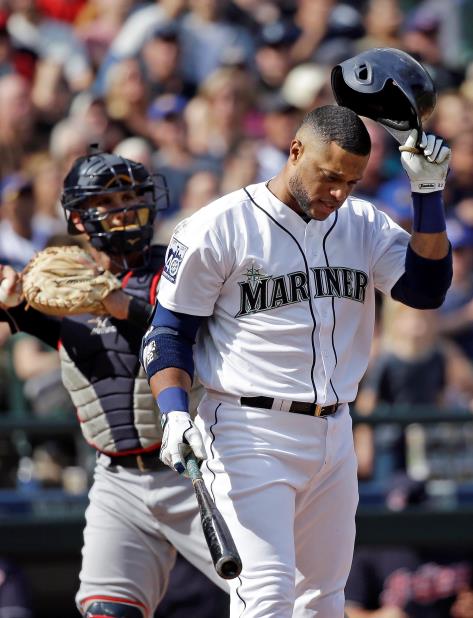
Robinson Canó, de los Marineros de Seattle,  fue suspendido por 80 partidos tras  violar la política antidopaje del béisbol de las  Grandes Ligas. Canó no será elegible para jugar en la postemporada en el caso de que su equipo avance a las series. (AP) (vertical-x1)

from elnuevodia.com
https://www.elnuevodia.com/deportes/beisbol/nota/manchadoellegadoderobinsoncano-2422469/


Manchado el legado de Robinson Canó

Sus posibilidades de entrar al Salón de la Fama son mínimas

Robinson Canó, de los Marineros de Seattle, fue suspendido por 80 partidos tras violar la política antidopaje del béisbol de las Grandes Ligas. Canó no será elegible para jugar en la postemporada en el caso de que su equipo avance a las series. (AP)


El extraordinario legado de Robinson Canó quedó manchado, y difícilmente pueda limpiar su imagen, tras lo que el segunda base dominicano justificó como "un error".

Canó, uno de los mejores intermedistas en la historia de las Mayores, fue suspendido ayer por 80 partidos por violar la política antidopaje del béisbol de las Grandes Ligas. Canó dio positivo a furosemida, un diurético. En un comunicado divulgado por medio del sindicato de peloteros, Canó señaló que recibió la sustancia en su país natal y que no sabía que estaba prohibida.

El 'pecado' de Canó tendrá grandes repercusiones en la carrera del jugador y en sus aspiraciones de ingresar al Salón de la Fama, luego de su retiro.

Uno de los que piensa de esa forma es el reputado periodista dominicano Leo López, quien suma cuarenta años de experiencia, incluyendo cobertura de Grandes Ligas.

"Canó iba a ser un Salón de la Fama cinco años después de su retiro. Ahora, tú sabes que hay muchos miembros adscritos a la Asociación de Escritores que toman en consideración ese tipo de uso de sustancias sobre todo en esta época. Porque antes del 2003 te lo podían aceptar porque no estaba prohibido y no había ningún tipo de regulación. Pero ya desde 2003 no hay ningún tipo de justificación", dijo López a El Nuevo Día desde la República Dominicana.

"Su carrera, sin dudas, va a quedar afectada y su posible exaltación al Salón de la Fama también. Son muchos casos de jugadores que no dieron positivo. solo sospechas, y se les ha apuesto difícil entrar al Salón de la Fama de Cooperstown."

Canó, un bateador de .304 de por vida, está a 583 imparables para arribar a la mítica cifra de los 3,000. Tiene contrato vigente hasta el 2023.

Desistió de una apelación

Una vez el intermedista arrojó positivo y por ser una sustancia diurética, MLB y la Asociación de Peloteros contrataron a Thomas Martin, administrador del programa antidopaje, para determinar si el uso de furosemida fue un intento de "reemplazar, diluir, esconder o adulterar una muestra o de alguna manera alterar un control", según reza el reglamento.

En el deporte, comúnmente, los atletas utilizan este diurético para enmascarar el uso de algún estimulante o esteroides.

Luego de que Martin llegara a una conclusión, el sindicato presentó un recurso el mes pasado. El caso debió ventilarse ayer en Seattle ante el juez de arbitraje Mark Irvings, pero el sindicato informó a MLB el viernes pasado que Canó quería desistir de su recurso.

"Esta fue la decisión más difícil que he tomado en mi vida, pero finalmente fue la decisión correcta dado a que no discuto haber recibido la sustancia", dijo Canó en un comunicado. "Me disculpo con mi familia, mis amigos, fanáticos, mis compañeros de equipo y la organización de los Marineros", agregó.

"Dicho medicamento me lo dio un doctor con licencia en la República Dominicana para curar una dolencia médica. No me di cuenta enese momento que me dieron un medicamento que estaba prohibido, obviamente ahora deseo haber sido más cuidadoso". indicó.

Cero justificación

Sin embargo, López indicó que ningún pelotero puede alegar desconocimiento en estos tiempos en que los jugadores están bien informados sobre la política antidopaje.

"Realmente no lo entiendo y estoy sorprendido. En esta época no hay excusas. Las reglas del uso de sustancias prohibidas están muy claras. No te vas a tomar un calmante si tienes dolor de cabeza sin consultar un médico sobre lo que vas a tomar. Nadie, absolutamente nadie, puede venir a decir en esta época: 'nada fue un error que cometí'. La reglas están bien escritas y tienes que estar apegadas a ellas", agregó el veterano periodista con firmeza sobre el jugador, que fue inactivado hace unos días tras sufrir una fractura en la mano derecha.

"Creo que es un error lamentable que acaba de cometer. No solo se hace daño él como persona, a su figura y a su legado dentro del juego, le hace daño también a su organización que en estos momentos está en disputa en la tabla de posiciones y que en caso de poder llegar a la postemporada, aunque haya cumplido su sanción no va a poder jugar".

Los Marineros no tardaron en emitir un comentario y respaldaron a su intermedista estrella luego de aceptar sus disculpas.

"Robinson cometió un error. Nos explicó lo ocurrido, aceptó el castigo y se ha disculpado con los fanáticos, la organización y sus compañeros. Apoyaremos a Robinson para superar esta desafío", dijo el equipo.

Empero, la credibilidad del jugador queda en entredicho y despertará serias dudas por el resto de su carrera. "Nadie puede decir lo contrario. Una vez hablaste mentiras ya prácticamente la mitad de tu vida te has pasado en esas... hablando mentiras. Cuando te atrapan no hay forma de justificar o decir que no lo habías hecho antes. Es muy difícil que puedas alegar que antes no lo habías usado. Es cuestión de credibilidad", apuntó.

Consternación en Dominicana

Por último, López indicó que la noticia ha consternado al pueblo dominicano. "Realmente es una noticia devastadora, ya que Robinson no solo es uno de los peloteros más populares que hay en el país, sino que también es un pelotero que hace ayuda comunitaria, como por ejemplo en formación de escuelas en San Pedro de Macorís. Uno de los tipos más carismáticos del béisbol de República Dominicana. Estamos consternados. Es una noticia que nos ha sorprendido de mala manera".


Sent from my iPhone
--

Stained the legacy of Robinson Canó

Your chances of entering the Hall of Fame are minimal

Robinson Cano, of the Seattle Mariners, was suspended for 80 games after violating Major League Baseball's anti-doping policy. Cano will not be eligible to play in the postseason in the event that his team advances to the series. (AP) (vertical-x1)

Robinson Cano, of the Seattle Mariners, was suspended for 80 games after violating Major League Baseball's anti-doping policy. Cano will not be eligible to play in the postseason in the event that his team advances to the series. (AP)

The extraordinary legacy of Robinson Canó was stained, and can hardly cleanse his image, after what the second baseman justified Dominican as "a mistake."

Canó, one of the best middlemen in the history of the majors, was suspended yesterday for 80 games for violating the anti-doping policy of Major League Baseball. Cano tested positive for furosemide, a diuretic. In a statement released through the players' union, Canó said he received the substance in his native country and did not know it was prohibited.

The "sin" of Cano will have great repercussions in the player's career and in his aspirations to enter the Hall of Fame, after his retirement.

One of those who thinks that way is the renowned Dominican journalist Leo Lopez, who adds forty years of experience, including Major League coverage.

"Canó was going to be a Hall of Fame five years after his retirement, and now you know that there are many members of the Association of Writers who take this kind of substance use into consideration especially in this era. 2003 they could accept it because it was not forbidden and there was no regulation, but since 2003 there is no justification whatsoever, "López told El Nuevo Día from the Dominican Republic.

"His career is undoubtedly going to be affected and his possible exaltation to the Hall of Fame as well." There are many cases of players who did not test positive, only suspicions, and they have been hard-pressed to enter the Hall of Fame in Cooperstown. "

Cano, a .304 batter for life, is 583 hits to reach the mythical figure of 3,000. Has a current contract until 2023.

He gave up an appeal

Once the middleman tested positive and as a diuretic substance, MLB and the Players Association hired Thomas Martin, the anti-doping program administrator, to determine whether the use of furosemide was an attempt to "replace, dilute, hide or adulterate a sample." or in some way alter a control ", according to the regulations.

In sports, commonly, athletes use this diuretic to mask the use of some stimulant or steroids.

After Martin reached a conclusion, the union filed an appeal last month. The case had to be heard yesterday in Seattle before the arbitration judge Mark Irvings, but the union informed MLB last Friday that Canó wanted to desist from his appeal.

"This was the most difficult decision I have made in my life, but it was finally the right decision given that I do not dispute having received the substance," Cano said in a statement. "I apologize to my family, my friends, fans, my teammates and the Mariners' organization," he added.

"This medication was given to me by a licensed doctor in the Dominican Republic to cure a medical condition." I did not realize at the time that they gave me a drug that was prohibited, obviously now I wish I had been more careful. Indian.

Zero justification

However, Lopez said that no player can claim ignorance in these times when players are well informed about the anti-doping policy.

"I really do not understand it and I'm surprised, there are no excuses at this time, the rules of the use of forbidden substances are very clear, you will not take a sedative if you have a headache without consulting a doctor about what you are going to take. Nobody, absolutely nobody, can come to say at this time: 'Nothing was a mistake that I made.' The rules are well written and you have to be attached to them, "added the veteran journalist firmly about the player, who was inactivated a few days after suffering a fracture in the right hand.

"I think it's a regrettable mistake that he just made, not only does he hurt himself as a person, his figure and his legacy in the game, it also hurts his organization that is currently in dispute in the standings and that in case of being able to reach the post-season, even if he has fulfilled his sanction, he will not be able to play. "

The Mariners did not hesitate to issue a comment and endorsed their star second-in-command after accepting their apologies.

"Robinson made a mistake, he explained what happened, he accepted the punishment and he apologized to the fans, the organization and his teammates, and we will support Robinson to overcome this challenge," the team said.

However, the credibility of the player is compromised and will arouse serious doubts for the rest of his career. "Nobody can say the opposite, once you've told lies and practically half of your life you've been in those ... talking lies, when you get caught there's no way to justify it or say you have not done it before. You can claim that before you had not used it, it's a matter of credibility, "he said.

Consternation in Dominican

Finally, Lopez indicated that the news has dismayed the Dominican people. "It really is a devastating news, since Robinson is not only one of the most popular players in the country, but also a player who makes community assistance, such as training schools in San Pedro de Macorís. of the most charismatic types of baseball in the Dominican Republic, we are dismayed, it is a news that has surprised us badly ".

Sent from my iPhone
Posted by Charles Slavik at 6:52 AM No comments:
Email ThisBlogThis!Share to XShare to FacebookShare to Pinterest
Labels: El Nuevo Dia, Hall of Fame, MLB, PED, Robinson Cano, Steroids

The Definitive Brandon Belt T-Shirt / Belt Knows Best by BreakingT - McCovey Chronicles

The Definitive Brandon Belt T-Shirt / Belt Knows Best by BreakingT - McCovey Chronicles


I like this shirt. A better shirt would be "It's not a strike until Brandon Belt says it's a strike."

from McCovey Chronicles:
https://www.mccoveychronicles.com/2018/5/22/17382466/the-definitive-brandon-belt-t-shirt-breakingt-belt-knows-best?ref=digest

The Definitive Brandon Belt T-Shirt

BreakingT has captured Brandon Belt's Player of the Week-winning week in this striking cotton blend.

Bryan MurphyMay 22, 2018, 4:23pm PDT

Brandon Belt was just named the National League's Player of the Week in part because he hit 5 home runs over seven days. He also got into some trouble arguing the strike zone with Doug Eddings. But Belt knows the strike zone, probably better than anyone! And to commemorate his performance for the week and for calling out Doug Eddings and for his historic 21-pitch at bat earlier this season, 
Order your Belt Knows Best shirt by clicking on this link.

Sent from my iPhone
Posted by Charles Slavik at 6:51 AM No comments:
Email ThisBlogThis!Share to XShare to FacebookShare to Pinterest
Labels: Brandon Belt, Giants, McCovey Chronicles

Wednesday, May 23, 2018

MLB Stats - MLB Team Opponent 1st Inning Runs per Game on TeamRankings.com


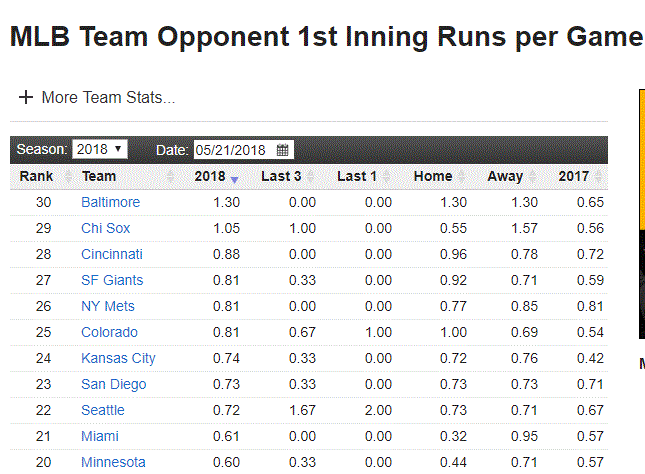
I mentioned in a previous blog how the Giants seemed to be leading the league in getting behind early, giving up an inordinate amount of runs in the first inning and voila!, here's the statistical back-up.

MLB Stats - MLB Team Opponent 1st Inning Runs per Game on TeamRankings.com:


'via Blog this'

The teams ranked higher on this basis are not exactly world-beaters (Orioles, White Sox, Reds). 

Apparently, this is a betting gambit that players use to get quick win-loss feedback so they can go on to the next wager without having to sit through three hours of boredom. You can literally bet by inning. You must really have to look hard to spot trends in the middle innings. First and last, I guess I can see....Some people would make book if two cockroaches appeared all of a sudden and scurried across the floor.

You can flip the order of the table in the other direction to see who is best at preventing first inning runs.

MLB Team Opponent 1st Inning Runs per Game


RankTeam2018Last 3Last 1HomeAway2017
1St. Louis0.330.000.000.280.380.52
2Houston0.351.000.000.350.350.34
3Tampa Bay0.350.000.000.160.480.54
4NY Yankees0.381.003.000.360.400.50
5Cleveland0.390.000.000.270.500.38
6LA Angels0.401.675.000.480.260.56
7Washington0.400.000.000.400.410.62
8Pittsburgh0.431.672.000.330.520.60
9Atlanta0.430.000.000.450.410.48
10LA Dodgers0.440.000.000.390.480.49
There doesn't appear to be a huge correlation between winning and losing record based on this, but I know which table I would rather see the name "Giants" appear. 
Posted by Charles Slavik at 9:17 AM No comments:
Email ThisBlogThis!Share to XShare to FacebookShare to Pinterest
Labels: Giants, Statistics
Newer Posts Older Posts Home
View mobile version
Subscribe to: Posts (Atom)

Eagle Baseball Club Recommended Reading List for Baseball & Softball Excellence

  • 52 Week Baseball Training by Gene Coleman
  • Advanced Fitness Assessment and Exercise Prescription by Vivian Heyward
  • Athletic Body in Balance by Gray Cook
  • Athletic Development by Vern Gambetta
  • Complete Conditioning for Baseball by Steve Tamborra
  • Expert Performance in Sports by Starkes and Ericsson
  • Measurement & Evaluation in Human Performance by Morrow, Jackson, Disch & Mood
  • Norms for Fitness, Performance and Health by Jay Hoffman
  • Sports Speed - 3rd Edition by George Dintiman & Robert Ward
  • Sports Talent by Jim Brown
  • The Softball Coaching Bible by National Fastpitch Coaching Association
  • Total Training for Young Champions by Tudor Bompa

Eagle Baseball Club Recommended Products List

  • Cutting the Cord: HotDog.com (formerly KillTheCableBill.com)
  • Keep Your Eye on the Ball: The Science and Folklore of Baseball by Robert G. Watts and A. Terry Bahill
  • Mindset: The New Psychology for Success by Dr. Carol Dweck
  • Talent is Overrated by Geoff Colvin
  • The Genius in all of Us by David Shenk
  • The Talent Code by Daniel Coyle

Giants Top Minor League Prospects

  • 1. Joey Bart 6-2, 215 C Power arm and a power bat, playing a premium defensive position. Good catch and throw skills.
  • 2. Heliot Ramos 6-2, 185 OF Potential high-ceiling player the Giants have been looking for. Great bat speed, early returns were impressive.
  • 3. Chris Shaw 6-3. 230 1B Lefty power bat, limited defensively to 1B, Matt Adams comp?
  • 4. Tyler Beede 6-4, 215 RHP from Vanderbilt projects as top of the rotation starter when he works out his command/control issues. When he misses, he misses by a bunch.
  • 5. Stephen Duggar 6-1, 170 CF Another toolsy, under-achieving OF in the Gary Brown mold, hoping for better results.
  • 6. Sandro Fabian 6-0, 180 OF Dominican signee from 2014, shows some pop in his bat. Below average arm and lack of speed should push him towards LF.
  • 7. Aramis Garcia 6-2, 220 C from Florida INTL projects as a good bat behind the dish with enough defensive skill to play there long-term
  • 8. Heath Quinn 6-2, 190 OF Strong hitter, makes contact with improving approach at the plate. Returns from hamate bone injury.
  • 9. Garrett Williams 6-1, 205 LHP Former Oklahoma standout, Giants prototype, low-ceiling, high-floor prospect.
  • 10. Shaun Anderson 6-4, 225 RHP Large frame, 3.36 K/BB rate. Can start or relieve
  • 11. Jacob Gonzalez 6-3, 190 3B Good pedigree, impressive bat for HS prospect.
  • 12. Seth Corry 6-2 195 LHP Highly regard HS pick. Was mentioned as possible chip in high profile trades.
  • 13. C.J. Hinojosa 5-10, 175 SS Scrappy IF prospect in the mold of Kelby Tomlinson, just gets it done.
  • 14. Garett Cave 6-4, 200 RHP He misses a lot of bats and at times, the plate. 13 K/9 an 5 B/9. Wild thing.

2019 MLB Draft - Top HS Draft Prospects

  • 1. Bobby Witt, Jr. 6-1,185 SS Colleyville Heritage HS (TX) Oklahoma commit. Outstanding defensive SS who can hit. 6.4 speed in 60 yd. Touched 97 on mound. Son of former major leaguer. Five tool potential.
  • 2. Riley Greene 6-2, 190 OF Haggerty HS (FL) Florida commit.Best HS hitting prospect. LH bat with good eye, plate discipline and developing power.
  • 3. C.J. Abrams 6-2, 180 SS Blessed Trinity HS (GA) High-ceiling athlete. 70 speed with plus arm. Hitting needs to develop as he matures. Alabama commit.
  • 4. Reece Hinds 6-4, 210 SS Niceville HS (FL) Power bat, committed to LSU. Plus arm, solid enough bat to move to 3B down the road. 98MPH arm.
  • 5. Daniel Espino 6-3, 200 RHP Georgia Premier Academy (GA) LSU commit. Touches 98 on FB with wipe out SL.

2019 MLB Draft - Top College Draft Prospects

  • 1. Adley Rutschman C Oregon State Plus defender with great arm. Excellent receiver plus a switch hitter with some pop in the bat.
  • 2. Shea Langliers C Baylor Excelent throw and catch skills with good pop time. Quick bat, uses all fields approach with some pop.
  • 3. Zack Thompson 6-2 LHP Kentucky Missed time with an elbow issue. FB up to 95 with plenty of secondary stuff.
  • 4. Matt Wallner 6-5 OF Southern Miss Run producing bat plus mid to upper 90's FB closer. Power bat from the left side, athletic for size.
  • 5. Nick Lodolo LHP TCU Tall LHP, 95MPH FB and solid breaking stuff.
Powered By Blogger

The Mighty Eagle Baseball Club

The Mighty Eagle Baseball Club
Making Ballplayers Better Everyday!!!

TheSlav

TheSlav
Béisbol ha sido muy bien para mi - Esta en la sangre

About Me

Charles Slavik
View my complete profile

Subscribe To The Slav's Blog

Posts
Atom
Posts
All Comments
Atom
All Comments

The Coach

The Coach
Doing what I love best!!!

The Referee

The Referee
When I Grow Old, And I Can't See, I Want to be a Referee!!!

Search This Blog

Top Ten Posts This Week

  • Chamath Palihapitiya (kinda) walks back comments critical of Facebook, social media - Business Insider
    He says there were "unintended consequences" yet another former Facebook founder says that the group knew that it was preying o...
  • Cut the Cord
    I can save $75.83 per month by cutting the cord. Are you ready to cut the cord? #MWCordCutter  http://projects.marketwatch.com/ar...
  • Giants 2017 Starters
    This is it, save for a couple of forgettable Chris Stratton starts. If the Giants knew how bad the season was going to be, do you t...
  • Tag, Mike Tyson and The U
    SCHOOL DISTRICT BANS TAG? So now a school district in Massachusetts wants to ban kids from playing tag during recess as well as touch f...
  • Giants "We Own the Pennant" T-Shirts Flying Off Shelves | CSN Bay Area
    Sorry, maybe I don't fly as high as some birds on this, cool looking shirt, but the terminology is just BAD . You don't OWN the...
  • Giants 'scratch and claw' with unlikely heroes in another win | CBSSports.com
    This is what playoff intensity is all about. Whether it's "scratch and claw" or "hunt and peck", it does describ...
  • Conte again refuses to roll over on Bonds!! What's wrong with this guy?
    So let me get this straight, the guy with the most to gain by giving up Bonds, the ultimate "stay out of jail free card" in this ...
  • The Statistical Problem of Sample Sizes both Large and Small
    So let me see if I have this straight? A small sample size can be a problem according to the Fan Graphs article below, But a large sam...
  • MLB Draft Today on ESPN2
    Finally the Major League Draft hits the big time. ESPN2 will televise the opening round of the 2007 MLB Draft today from 2pm to 6pm. This...
  • Is Buster Posey the face of MLB? He's already "The Logo"
    I thought he was well before these other "Johnny Come Lately's". Put me down for YES!! from ESPN: Is Buster Posey t...

Classic The Slav's Posts (The Best of...)

  • "Oooo-ree-bay" - Cain is more than able - Redemption for Renteria and Rowand
  • A tale of two QB's and a thin line between love and hate
  • Ana Ivanovic the Next Anna? Let's find Out
  • BEARS TRADE KYLE ORTON
  • Ban the Soccer Flopper!! and Stephen A. Smith is for the Birds
  • Blame it on the vuvuzela, or the goalie's HGF.....
  • Can the spirit of SERVICE improve the youth sports climate?
  • Chicago Values.....
  • Conte again refuses to roll over on Bonds!! What's wrong with this guy?
  • DOES SIZE REALLY MATTER? Today's major leaguers are bigger and stronger than those of earlier eras - physical size of baseball players | Baseball Digest | Find Articles at BNET
  • ESPN takes a look in the mirror, and then the tables turned
  • Fw: THE BEGINNERS MIND
  • GIANTS PROMOTE POSEY TO AAA FRESNO
  • Giants Appear Content to be ever the Bridemaids
  • Giants mid-season (plus two games) report card
  • Giants round up the 2010 draft class...Brown and Parker signed
  • Guilt Beyond a Reasonable Doubt....
  • Happy Veterans Day - We salute all who served our nation
  • Hypocrisy lives on at ESPN
  • Hypocrisy, Hypocrisy, Hypocrisy...and Bonds at 740.
  • I (HEART) BUSTER POSEY??
  • INSANITY THY NAME IS PETA
  • Jackie Robinson Breaks Baseball's Color Barrier
  • Just Thinking....Random Thoughts
  • L'Affaire Vick, ESPN and the Giants
  • Life out on the Filed...the Knucke-Slider?? Seriously??
  • MIKE LUPICA IS AN INQUISITIVE LITTLE MOUSE
  • Mike Matheny Letter
  • Mindsets and Carol Dweck « Live from Planet Paola
  • NURTURING SPORT EXPERTISE: FACTORS INFLUENCING THE DEVELOPMENT OF ELITE ATHLETE
  • On Lance Armstrong.....we've come full circle
  • Open Letter to Warren Buffett - Drop Dead!! and take Congress with you
  • Our Nation Mourns - Buster Posey has been eliminated from the CWS
  • Phil Angelides Discusses America's Dual Justice System: One For Wall Street And One For Everyone Else | zero hedge
  • Remembering Martin Luther King
  • Renteria feels "disrespected"!!
  • San Francisco Giants - Team Report - MLB - Yahoo! Sports
  • Strict Constructionism and the Strike Zone...and the Culture of the Game
  • Suing over steroids and WADA finally gets it......
  • Swisher drawing interest from M', O's and a few others
  • THE OLYMPICS ARE OVER - GOOD!!!
  • THE RETURN OF MICHAEL VICK
  • TIE GOES TO THE RUNNER...BASEBALL MYTH
  • The 2010 MLB Draft
  • The Bulls are back - MVP Derrick Rose and my new favorite announcer Stacey King
  • The Buster Posey for MVP watch continues
  • The Larger Lessons from Tiger Woods / Michael Vick fall from grace (and possible redemption)
  • Thumbs Up, Thumbs Down
  • True Grit - Angela Duckworth
  • Why are there no left-handed catchers? Form follows function
  • Your Second Amendment Rights....
  • Your Tax Dollars at Work, Garbage In - Garbage Out

Pageviews last month

Flag Counter

free counters

National Debt Clock

U.S. National Debt Clock : Real Time

Blog Archive

  • ▼  2025 (3)
    • ▼  December (1)
      • Run, Jaxson, Run: Empirical studies from NFL concu...
    • ►  May (1)
    • ►  April (1)
  • ►  2024 (1)
    • ►  January (1)
  • ►  2023 (1)
    • ►  December (1)
  • ►  2022 (5)
    • ►  December (2)
    • ►  February (1)
    • ►  January (2)
  • ►  2021 (5)
    • ►  December (5)
  • ►  2020 (20)
    • ►  June (1)
    • ►  March (13)
    • ►  February (6)
  • ►  2019 (10)
    • ►  November (3)
    • ►  October (3)
    • ►  September (4)
  • ►  2018 (185)
    • ►  October (1)
    • ►  September (1)
    • ►  August (7)
    • ►  July (25)
    • ►  June (42)
    • ►  May (36)
    • ►  April (32)
    • ►  March (22)
    • ►  February (8)
    • ►  January (11)
  • ►  2017 (72)
    • ►  December (20)
    • ►  August (9)
    • ►  June (17)
    • ►  May (26)
  • ►  2016 (34)
    • ►  November (1)
    • ►  September (1)
    • ►  May (2)
    • ►  April (7)
    • ►  March (9)
    • ►  February (4)
    • ►  January (10)
  • ►  2015 (332)
    • ►  December (15)
    • ►  November (7)
    • ►  October (21)
    • ►  September (14)
    • ►  August (15)
    • ►  July (56)
    • ►  June (66)
    • ►  May (45)
    • ►  April (31)
    • ►  March (27)
    • ►  February (26)
    • ►  January (9)
  • ►  2014 (312)
    • ►  December (24)
    • ►  November (14)
    • ►  October (58)
    • ►  September (47)
    • ►  August (26)
    • ►  July (51)
    • ►  June (44)
    • ►  May (23)
    • ►  April (20)
    • ►  March (4)
    • ►  February (1)
  • ►  2013 (302)
    • ►  December (8)
    • ►  November (6)
    • ►  October (4)
    • ►  September (15)
    • ►  August (40)
    • ►  July (46)
    • ►  June (24)
    • ►  May (32)
    • ►  April (38)
    • ►  March (30)
    • ►  February (15)
    • ►  January (44)
  • ►  2012 (253)
    • ►  December (24)
    • ►  November (29)
    • ►  October (53)
    • ►  September (21)
    • ►  August (21)
    • ►  July (9)
    • ►  June (10)
    • ►  May (16)
    • ►  April (44)
    • ►  March (6)
    • ►  February (3)
    • ►  January (17)
  • ►  2011 (224)
    • ►  December (17)
    • ►  November (6)
    • ►  October (6)
    • ►  September (11)
    • ►  August (45)
    • ►  July (25)
    • ►  June (29)
    • ►  May (9)
    • ►  April (50)
    • ►  March (10)
    • ►  February (6)
    • ►  January (10)
  • ►  2010 (260)
    • ►  December (21)
    • ►  November (23)
    • ►  October (21)
    • ►  September (20)
    • ►  August (22)
    • ►  July (23)
    • ►  June (25)
    • ►  May (17)
    • ►  April (10)
    • ►  March (15)
    • ►  February (18)
    • ►  January (45)
  • ►  2009 (170)
    • ►  December (32)
    • ►  November (8)
    • ►  October (16)
    • ►  September (16)
    • ►  August (13)
    • ►  July (15)
    • ►  June (5)
    • ►  May (4)
    • ►  April (20)
    • ►  March (21)
    • ►  February (9)
    • ►  January (11)
  • ►  2008 (194)
    • ►  December (10)
    • ►  November (15)
    • ►  October (16)
    • ►  September (8)
    • ►  August (18)
    • ►  July (14)
    • ►  June (24)
    • ►  May (19)
    • ►  April (13)
    • ►  March (22)
    • ►  February (11)
    • ►  January (24)
  • ►  2007 (126)
    • ►  December (7)
    • ►  November (5)
    • ►  October (8)
    • ►  September (5)
    • ►  August (20)
    • ►  July (13)
    • ►  June (15)
    • ►  May (21)
    • ►  April (8)
    • ►  March (9)
    • ►  February (15)
  • ►  2006 (38)
    • ►  December (1)
    • ►  October (8)
    • ►  September (3)
    • ►  August (8)
    • ►  July (7)
    • ►  June (4)
    • ►  March (4)
    • ►  February (1)
    • ►  January (2)
  • ►  2005 (13)
    • ►  December (1)
    • ►  November (1)
    • ►  October (11)

Yahoo! Sports - MLB News

Loading...

The Slav's Favorite Links

  • Baseball America
  • Baseball Crank
  • Baseball Evolution
  • Baseball Graphs
  • Baseball Musings
  • Baseball Prospectus
  • Baseball Reference
  • Baseball Reference - Minor Leagues
  • Baseball Think Factory - Hall of Merit
  • Baseball Tips - Coach John Peters
  • Baseball's Steroid Era
  • BatSpeed.com
  • Circular Strength Magazine
  • Coach Dan Huff - Baseball Stength
  • Coach Wooden Web Site
  • CrossFit
  • CrossFit Kids
  • Dave Hudgens Hitting Site
  • Doyle Baseball School
  • Dr. Alan Nathan - The Physics of Baseball University of Illinois
  • Dr. Barry Seiller - Vizual Edge
  • Dr. Greg Shepard - Bigger, Faster, Stronger
  • Dr. John Bagonzi - The Pitching Professor
  • Dr. Michael Yessis
  • Dr. Mike Marshall's Pitching Coach Services
  • Dr. Patrick Cohn - Peak Performance Sports
  • Dr. Tom Hanson - Baseball Confidence
  • DraftTek Sports Information
  • Eagle Baseball Club
  • Fan Graphs
  • Fellowship of Christian Athletes
  • Frozen Ropes
  • Hardball Times
  • Human Kinetics
  • Illinois High School Association (IHSA)
  • Illinois High School Baseball Coaches Association
  • Illinois High School Baseball Report
  • Illinois Prep Baseball Report
  • McCovey Chronicles
  • Mike Epstein Hitting Site
  • Minor League Ball Blog
  • National Association of Sports Officials
  • Officiating.com - The Officials Forum
  • Pose Tech
  • Rays Index
  • Referee and NASO
  • STEROIDS AND BASEBALL
  • Sabermetric Research Blog
  • Sports Economist
  • Sports Feel Good Stories
  • Sports Law Blog
  • Sports are 80 Percent Mental
  • Steve Zawrotny - Baseball Fit
  • The Baseball Cube - Statistics
  • The Baseball Reliquary
  • The Genius in all of Us by David Shenk
  • The Talent Code by Daniel Coyle
  • Think Mental Models
  • Training & Conditioning Magazine
  • Vern Gambetta - Functional Path Training Blog
  • Westside Barbell - Louie Simmons & Dave Tate

The Slav's Favorite Investment Links

  • Bar Charts - Sectors
  • Bar Charts - Top 100 Stocks
  • Carpe Diem
  • Chart of the Day
  • Disciplined Investing
  • Financial Peace University
  • Financial Sense
  • Focus Investor
  • Greg Mankiw Blog
  • Guru Focus
  • John Taylor - Economics One
  • Magic Formula Investing
  • Minyanville
  • Seeking Alpha
  • South Elgin Economic Development
  • The Big Picture
  • Vitaliy Katsenelson - Contrarian Edge

Favorite Political Sites

  • Advocates for Self Government - Libertarian Education
  • Cato Institute Blog
  • Cato Institute Web Site
  • Cato Unbound Blog
  • Center for Individual Freedom
  • Club for Growth
  • Federalist Blog
  • Free to Choose Series
  • Freedom Rings Radio
  • Gateway Pundit Blog
  • Grandfather Economic Report
  • Innocence Project Blog
  • Instapundit Blog
  • Lew Rockwell Web Site
  • Lexrex.com
  • Libertarian Party
  • Ludwig von Mises Institute
  • Milton Friedman Blog
  • Open Secrets
  • Shadow Government Statistics
  • The Heritage Foundation
  • The Situationist Blog

Favorite All-Time Players

  • Albert Pujols
  • Alex Rodriguez
  • Barry Bonds
  • Bobby Bonds
  • Buster Posey
  • Chris Speier
  • Curt Flood
  • Darryl Strawberry
  • David Eckstein
  • Derek Jeter
  • Don Mattingly
  • Dwight Gooden
  • Gaylord Perry
  • Graig Nettles
  • Jack Clark
  • Jackie Robinson
  • Joe DiMaggio
  • John "The Count" Montefusco
  • Juan Marichal
  • Lenny Dykstra
  • Lou Gehrig
  • Mariano Rivera
  • Mark "The Bird" Fidrych
  • Mike Marshall
  • Nolan Ryan
  • Orel Herschiser
  • Pete Rose
  • Roberto Clemente
  • Roger Clemens
  • Ron Guidry
  • Thurman Munson
  • Tim Lincecum
  • Tito Fuentes
  • Tom Seaver
  • Tony Gwynn
  • Will Clark
  • Willie Mays
  • Willie McCovey

Fav Players from Other Sports

  • Arthur Ashe
  • Bill Bradley
  • Bo Jackson
  • Brad Van Pelt
  • Buckpasser
  • Carl "Spider" Lockhart
  • Chris Evert
  • Connie Hawkins
  • David Thompson
  • Doug Kotar
  • Ernie DiGregorio
  • Herchel Walker
  • Homer Jones
  • Jerry Lucas
  • Jimmy Connors
  • Joe Morris
  • John McEnroe
  • Julius "Dr. J" Erving
  • Kareem Abdul Jabbar
  • Larry Bird
  • Lawrence Taylor
  • Magic Johnson
  • Mark Bavaro
  • Mike Tyson
  • Muhammad Ali
  • Oscar "Big O" Robertson
  • Pele
  • Pete Maravich
  • Phil Simms
  • Rob Carpenter
  • Rocky Thompson
  • Ruffian
  • Secretariat
  • Sugar Ray Leonard
  • Tiki Barber
  • Tim Tebow
  • Walt "Clyde" Frazier
  • Walter Payton
  • Wilt Chamberlain

Favorite All-Time Coaches

  • Bill Parcells
  • Bill Thurston
  • Billy Martin
  • Bobby Bowden
  • Bobby Knight
  • Denny Doyle
  • Dr. Fred Hatfield
  • Dr. Gene Coleman
  • Dr. John Bagonzi
  • Dr. Mike Marshall
  • Gil Hodges
  • Herb Brooks
  • Jim Valvano
  • Joe Torre
  • John Wooden
  • Johnny Parker
  • Mike Epstein
  • Phil Jackson
  • Roger Craig
  • Ron Polk
  • Tony Abbatine
  • Tony Dungy
  • Turner Gill
  • Vern Gambetta

Favorite Baseball Books

  • A Hitting Clinic by Walt Hriniak
  • Coaching Pitchers by Spanky McFarland
  • Dollar Sign on the Muscle by Kevin Kerrane
  • Dr. Mike Marshall's Pitching Book
  • How to Hit .300 by Charlie Lau
  • Keep Your Eye on the Ball by Barnhill & Terry
  • Men at Work by George Will
  • Moneyball by Michel Lewis
  • Percentage Baseball by Earnshaw Cook
  • Pitching by Bob Shaw
  • Power Baseball by Coop DeRenne
  • The Act of Pitching by Dr. John Bagonzi
  • The Art of Pitching by Tom Seaver
  • The Complete Guide to Medicine Ball Training Book. By Vern Gambetta
  • The Game According to Syd by Syd Thrift
  • The Science of Hitting by Ted Williams

Favorite Baseball Movies

  • A League of Their Own
  • Bang the Drum Slowly
  • Bull Durham
  • Eight Men Out
  • Fear Strikes Out
  • Field of Dreams
  • For Love of the Game
  • Major League
  • Pride of the Yankees
  • The Natural
  • The Rookie

Favorite Non-Baseball Books

  • MindSet: The New Psychology of Success by Carol Dweck, PhD
  • Outliers by Malcolm Gladwell
  • Quiet Strength by Tony Dungy
  • Talent is Overrated by Geoffrey Colvin
  • The Bible
  • The Genius in all of Us by David Shenk
  • The Talent Code by Daniel Coyle
  • Values of the Game by Bill Bradley

Labels

Giants (925) Giants Prospects (290) Politics (265) Youth Sports (170) Statistics (151) MLB Draft (132) Buster Posey (124) Media (110) Steroids (100) Sport Science (91) EAGLE BASEBALL CLUB (89) Umpires (89) Economics (85) Rays (85) Barry Bonds (83) SABR (83) MLB (77) WEED IN THE GARDEN (75) NFL (72) Barack Obama (71) Baseball America (70) Cubs (70) HEALTH AND SAFETY (70) CULTURE OF THE GAME (69) SPEAKING WORDS OF WISDOM (69) ESPN (65) Tim Lincecum (61) MLB Review (60) Madison Bumgarner (60) Race (56) SPORTSMANSHIP (56) Player Development (54) Scouting (51) Brian Sabean (50) MASTER COACHING (49) NY Giants (49) Pablo Sandoval (49) END THE FED (48) Dodgers (46) Religion (46) CHARACTER COUNTS (44) END THE DEBT (42) THE AMERICAN DREAM (42) Bruce Bochy (41) Bruce Springsteen (41) NCAA (41) Data Analytics (38) Hall of Fame (38) TALENT (38) Joe Panik (37) THE BUSTER POSEY ERA (37) Moneyball (35) NFL Draft (35) SPIN RATE (35) Bud Selig (34) FCA PROJECT (34) Hot Stove League (34) Tim Tebow (34) Ben Bernanke (32) Socialism (32) Yankees (32) Hitting Approach and Strategy (31) White Sox (31) High School Baseball (30) Pitching Mechanics (30) Brandon Crawford (28) Prospect Review (28) Barry Zito (27) Mrs. TheSlav (27) College Baseball (26) Ron Paul (26) Brandon Belt (25) Coaching Baseball (25) NBA (25) Strength and Conditioning (25) Hunter Pence (24) PED (24) FanGraphs (23) Hitting Mechanics (23) Mental Skills (23) Ryan Vogelsong (23) Baseball Economics (22) Concussions (22) JUSTICE (22) Little League (22) St. Louis Cardinals (22) March Madness (21) Matt Cain (21) Mets (21) Referees (21) VISUAL SKILLS (21) World Series (21) A-Rod (20) College Baseball Daily (20) LONG TERM ATHLETIC DEVELOPMENT (20) Red Sox (20) Women (20) World Baseball Classic (20) Analytics (19) Life Lessons (19) Olympics (19) RIP (19) Roger Clemens (19) The Science of Hitting (19) Trade Rumors (19) CARPE DIEM (18) Capitalism (18) Education (18) LIBERTY (18) Pitch Sequences and Strategy (18) Ronald Reagan (18) SPORT SPECIALIZATION (18) Willie Mays (18) Chicago (17) Instant Replay (17) Mark McGwire (17) Matt Duffy (17) McCovey Chronicles (17) Sports Parents (17) Stock Market (17) Tea Party (17) Andrew Susac (16) B-POPE (16) BALCO (16) Brian Wilson (16) Business Insider (16) FREEDOM (16) Kaneland High School (16) Mac Williamson (16) PITCH COUNTS (16) PITCHERS AND CATCHERS REPORT (16) THE CONSTITUTION MEANS SOMETHING (16) The Physics of Baseball (16) UNF Baseball (16) VISUAL GAME OF BASEBALL (16) AEI (15) Bracketology (15) Horse Racing (15) Jake Peavy (15) LET FREEDOM RING (15) Marco Scutaro (15) Tony Dungy (15) Babe Ruth (14) Baseball Preview (14) Dr. Mike Marshall (14) Drug Testing (14) LAUNCH ANGLE (14) Sergio Romo (14) Angel Pagan (13) Angel Villalona (13) Clayton Blackburn (13) Cody Ross (13) EconLib (13) Joe Maddon (13) LAW OF UNINTENDED CONSEQUENCES (13) SILVER AND GOLD (13) The Talent Code (13) Warren Buffett (13) Aubrey Huff (12) Chicago Blackhawks (12) Cubs Prospects (12) Devil Rays (12) Joey Bart (12) Josh Hamilton (12) Keith Olbermann (12) Lance Armstrong (12) Michael Vick (12) Research (12) Tyler Beede (12) Alan Greenspan (11) BBWAA (11) Billy Beane (11) Derek Jeter (11) END THE WAR ON POVERTY (11) GIANTS-DODGERS RIVALRY (11) Kyle Crick (11) MENTAL GAME OF BASEBALL (11) MLB.com (11) POLITICAL CORRECTNESS (11) REDEMPTION (11) SCREW THE BANKS (11) SECOND AMENDMENT (11) Soccer (11) THE JUICED BALL THEORY (11) COLLEGIATE BASEBALL (10) CULTURE MATTERS (10) Casey Crosby (10) Cuban Prospects (10) GOD BLESS AMERICA (10) Jeremy Affeldt (10) Lebron James (10) SERVANT-LEADER (10) SPORTS AS A METAPHOR FOR LIFE (10) Sarah Palin (10) TOMMY JOHN SURGERY (10) Ted Williams (10) Thomas Sowell (10) Baseball History (9) Baseball Prospectus (9) Baseball Rules (9) Bigotry (9) Bill Parcells (9) Curt Schilling (9) Daniel Carbonell (9) David Ortiz (9) David Price (9) Don Mattingly (9) GOOD VS. EVIL (9) Giants TORTURE (9) Jets (9) Memorial Day (9) Mitt Romney (9) Pete Rose (9) QUESTEC (9) Rays Prospects (9) Secretariat (9) Softball (9) The Cody Ross Experience (9) Tiger Woods (9) Umpiring (9) What works in Theory doesn't always work in practice (9) Albert Pujols (8) Andrew McCutchen (8) Arizona Fall League (8) BOB COSTAS (8) Beemer (8) Carlos Beltran (8) Carol Dweck (8) Chicago Bulls (8) Chicks Dig the Long Ball (8) College Football (8) D.J. Snelten (8) END THE MSM (8) HEALING (8) High School Basketball (8) High School Football (8) Hockey (8) IHSA (8) JUST A DOG (8) Jackie Robinson (8) Japan (8) MINDSET (8) NFL Combine (8) Nutrition (8) OCCUPY WALL STREET (8) Oakland A's (8) PEOPLE OF THE LIE (8) Rule 5 Draft (8) STRONG MARRIAGES - STRONG FAMILIES (8) Spring Training (8) TRUE GRIT (8) Tim Geithner (8) Tim McCarver (8) Ty Blach (8) Zack Wheeler (8) 9-11 (7) Albert Einstein (7) Athletic Business (7) B-COPE (7) BirdsofStray (7) Cape Cod League Baseball (7) Chicago Values (7) Chris Heston (7) Clayton Kershaw (7) Conor Gillaspie (7) DR. ISTVAN BALYI (7) Eli Manning (7) FELLOWSHIP OF CHRISTIAN ATHLETES (7) George Orwell (7) Gregor Blanco (7) HAPPY FOURTH OF JULY (7) Hank Aaron (7) INTEGRITY (7) Income Inequality (7) JUST PLAY (7) John Kruk (7) John Wooden (7) Johnny Cueto (7) Jose Canseco (7) Juan Uribe (7) Kentucky Derby (7) LEADERSHIP (7) LESS SEPARATION OF CHURCH AND STATE - MORE SEPARATION OF EDUCATION AND STATE (7) Mel Kiper (7) Mental Health (7) Michael Morse (7) Mike Kickham (7) Milton Friedman (7) Motivation (7) Peter Gammons (7) Phil Simms (7) Physical Education (7) Pirates (7) RELATIVE AGE EFFECT (7) RICK SANTELLI (7) STRENGTH (7) TALE OF THE TAPE (7) THE PERFECT PITCHER (7) THE RON PAUL REVOLUTION (7) Tom House (7) Victor Conte (7) Yusmeiro Petit (7) Adam Duvall (6) BASEBALL MYTHS (6) Benjamin Franklin (6) Bill James (6) Blogging (6) C'MON MAN! (6) Carlos Zambrano (6) Chris Shaw (6) Dan Patrick (6) Dr. Angela Duckworth (6) General Training (6) Giants Review (6) Hawk Harrelson (6) High School Softball (6) Hunter Strickland (6) Jason Giambi (6) Khalil Greene (6) LOYALTY (6) MARTIN LUTHER KING (6) MIT SLOAN SPORTS ANALYTICS CONFERENCE (6) Mark Prior (6) Melky Cabrera (6) NAACP (6) Negro Leagues (6) ROKU (6) Recovery Protocols (6) Rick Reilly (6) Royals (6) STUDENT LOAN DEBT (6) Skill Instruction (6) Sports Illustrated (6) Steve Phillips (6) THE BANALITY OF HEROISM (6) TITLE IX (6) The Rules of the Game (6) The Ten-Thousand Hour Rule (6) Twitter (6) USF Bulls (6) VALUES (6) VIRTUE (6) Vince Lombardi (6) 1969 MIRACLE METS (5) A.J. Pierczinski (5) Alcohol (5) BULL DURHAM (5) Baseball's Unwritten Rules (5) Bill Clinton (5) Bryan Stow (5) C.S. Lewis (5) CLUTCH (5) COACH OF THE YEAR (5) CUT THE CORD (5) Casey McGehee (5) Charlie Munger (5) Chemistry (5) Christian Arroyo (5) Coach K (5) Coach Wolff (5) DISPARATE TREATMENT VS. DISPARATE IMPACT (5) Derrick Rose (5) Donald Trump (5) Down on the Farm Report (5) Driveline Baseball (5) END DISPARATE IMPACT BASED POLICIES (5) END THE WAR ON DRUGS (5) EXIT VELOCITY (5) Edgar Renteria (5) Evan Longoria (5) FREE MATT DUFFY!!! (5) Farnam Street (5) GOVERNMENT IS NOT THE SOLUTION TO OUR PROBLEM - GOVERNMENT IS THE PROBLEM (5) GRIT (5) HUMILITY (5) International Draft (5) Lineup Optimization (5) Lou Piniella (5) Lucius Fox (5) Marco Rubio (5) Mike Lupica (5) Morality (5) NHL (5) Nate Silver (5) Nolan Ryan (5) Notre Dame (5) PERSEVERANCE (5) PRO-LIFE (5) Pat Burrell (5) STEROID NATION (5) Schadenfreude (5) Scouts versus Stats Debate (5) Sean Hjelle (5) Shelby Miller (5) Speed Kills (5) Sports Chart of the Day (5) Super Bowl (5) THE BANALITY OF EVIL (5) Theo Epstein (5) Tiki Barber (5) Tim Hudson (5) Veterans Day (5) ATLAS SHRUGGED (4) Andrew Suarez (4) Aroldis Chapman (4) Astros (4) Atlantic Sun Conference (4) BRINGING BORING BACK TO BASEBALL (4) BUGS BUNNY (4) Bat Speed (4) Bears (4) Bill Bradley (4) Bobby Bonds (4) Bobby Knight (4) CULTURE OF MORAL MISFITS (4) Charles Barkley (4) Coach and Athletic Director (4) Coaching Tirades (4) DO YOU BELIEVE IN MIRACLES? (4) Dr. Ramy Elitzur (4) END OBAMACARE (4) Eri Yoshida (4) Eric Surkamp (4) Ethics (4) FREE CLAYTON BLACKBURN!!! (4) GINI COEFFICIENT (4) Gary Sheffield (4) Gilbert Arenas (4) Harold Reynolds (4) Heat Stroke (4) Heisman Trophy (4) Heliot Ramos (4) JUST THINKING (4) James Shields (4) Jarrett Parker (4) Jennie Finch (4) Jim Hendry (4) John Galt (4) Jose Guillen (4) Josh Osich (4) Knicks (4) LOVE (4) LT. COL. ALLEN WEST (4) MAD AS HELL (4) MIRACLE ON ICE (4) MISERY INDEX (4) Matt Harvey (4) Merry Christmas (4) Mike Epstein (4) Mike Matheny (4) Opening Day (4) Oscar Taveras (4) Phil Bickford (4) Quiet Strength (4) RED SOX NATION (4) Robinson Cano (4) SOPHISTRY (4) SPORTS ARE 80 PERCENT MENTAL (4) STAT-MAN (4) Stephen Strasburg (4) Supplements (4) TEAMWORK (4) TOO MANY PEOPLE ON THE CART - NOT ENOUGH PEOPLE PULLING THE CART (4) TORCH AND PITCHFORK CROWD (4) Tampa (4) The Freak (4) The Impact of the Flat Seam Ball (4) Tony Gwynn (4) Vuvuzela (4) Wealth Inequality (4) World Cup (4) Yasiel Puig (4) Yoan Moncado (4) 1984 (3) ACTA Sports (3) Al Gore (3) Ali (3) BOOM OR BUST (3) Barney Frank (3) Beat L.A. (3) Behavioral Biases (3) Benito Mussolini (3) Big Brown (3) Bill Belichick (3) Bob Dylan (3) Buccaneers (3) Chart of the Day (3) College Basketball (3) Confirmation Bias (3) Conspiracy Theory (3) DISPARITY FALLACY (3) David Stockman (3) Deadline Deals (3) Democracy (3) Dr. Fred Hatfield (3) Dr. Michael Yessis (3) Dr. Peter Fadde (3) Dr. Robert Adair (3) Duke (3) Dustin Byfuglein (3) El Nuevo Dia (3) Equality of Outcomes (3) Erin Andrews (3) FOCUS (3) FROZEN ROPES (3) Florida Gators (3) Florida State (3) GAME THEORY (3) GOD BLESS THE U.S.A. (3) Gallup (3) Gary Brown (3) Google (3) HAPPY FATHER'S DAY (3) HAPPY NEW YEAR (3) HOPE (3) Heath Hembree (3) Hector Sanchez (3) INCENTIVES MATTER (3) International Baseball (3) Jacksonville University (3) Javier Lopez (3) Jeff Pearlman (3) Joe Morgan (3) Joey Votto (3) John Corzine (3) Juan Perez (3) Kendry Flores (3) Kurt Warner (3) Lawrence Taylor (3) MF Global (3) MIRACLE OF COOGANS BLUFF (3) Madison Bumgarner - Tim Alderson Career Path Divergence (3) Malcolm Gladwell (3) Margaret Thatcher (3) Matt Moore (3) Minor League Baseball (3) Mitchell Report (3) Motor Learning (3) Myelin (3) NPR (3) Nature versus Nurture (3) Nick Hundley (3) PATIENCE (3) PEACE (3) PENN STATE (3) PETA (3) PSYCHOLOGY TODAY (3) Perfect Game USA (3) Pitch Recognition (3) Playoff Odds (3) Power of Positive Thinking (3) RE24 (3) RESPECT (3) RULES OF SUCCESS (3) Rage against the Machine (3) Rockies (3) Roster Construction (3) Ruffian (3) Run Expectancy (3) Run Expectancy Matrix (3) SABR Defensive Index (3) SCOTUS (3) SERVING (3) STACK (3) STAR SPANGLED BANNER (3) Seamheads.com (3) Sport Law (3) Stephen Okert (3) Steven Duggar (3) THE NAKED PUBLIC SQUARE (3) THE ODDS OF MAKING IT (3) THE TIMES THEY ARE A-CHANGIN' (3) THE WISDOM OF CROWDS (3) THEY SAID IT AND I QUOTE (3) TOTO (3) Ted Lilly (3) The Science of Pitching (3) Thomas B. Fordham Institute (3) Tom Brady (3) Tom Seaver (3) Twins (3) Vern Gambetta (3) Vin Scully (3) WHY JOHNNY HATES SPORTS (3) Wharton Business Radio (3) Will Clark (3) Willie McCovey (3) Win Expectancy (3) Win Probability (3) Wrigley Field (3) XTRANORMAL (3) Yogi Berra (3) A League of their Own (2) A. Terry Bahill (2) Adalberto Mejia (2) Alex Norman (2) Alphonso Soriano (2) American Pharoah (2) Anders Ericsson (2) Angels (2) Anthony Rizzo (2) Aramis Garcia (2) BLESSING (2) BOLDNESS (2) BUSTER POSEY RULE (2) Baker Mayfield (2) Barbaro (2) Baseball Combine (2) Baseball Crank (2) Baseball Performance (2) Berlin Wall (2) Bill Walsh (2) Bob Sheppard (2) Bobby Evans (2) Bobby Murcer (2) Brady Singer (2) Branch Rickey (2) Brett Favre (2) CONSTITUTIONAL MYTHS (2) COURAGE (2) CRASH JP MORGAN - BUY SILVER (2) California Chrome (2) Cam Newton (2) Carlos Gomez (2) Carter Capps (2) Casey Mize (2) Catching (2) Chase Johnson (2) Chelsea Baker (2) Chris Rock (2) Civil Rights (2) Clarence Clemons (2) Cognitive Dissonance (2) Cole Hamels (2) Communism (2) Cowboys (2) Creatine (2) Curt Flood (2) DELETE FACEBOOK (2) Daniel Patrick Moynihan (2) Dave Ramsey (2) Dear Colleague (2) Diversity (2) Dr. Martin Seligman (2) Dr. Tom Hanson (2) Dusty Baker (2) EARLY PHYSICAL MATURERS (2) FAITHFULNESS (2) FEAR (2) FORM FOLLOWS FUNCTION (2) Facebook (2) Frans Bosch (2) GIANTS DYNASTY (2) GODLINESS (2) Genetics (2) George Steinbrenner (2) Giancarlo Stanton (2) Golf (2) HAPPY MOTHER'S DAY (2) HELICOPTER PARENTS (2) Hensley Meulens (2) Hollywood (2) Human Kinetics (2) Ichiro (2) Illinois High School Baseball (2) Illusory Superiority (2) J.C. Watts (2) JRWLL (2) Jake Dunning (2) Jake Wong (2) Jason Grimsley (2) Javier Baez (2) Jeff Samardzjia (2) Jeremy Lin (2) Jim Cramer (2) Jim McMahon (2) Joe Biagini (2) Joe Namath (2) John Lennon (2) Johnny Weismuller (2) Jose Fernandez (2) Journalism (2) Kareem Abdul Jabbar (2) Kelby Tomlinson (2) King of Little Things (2) Kirk Cousins (2) Kris Bryant (2) LABOR DAY (2) LATTICEWORK OF MENTAL MODELS (2) LEARNED HELPLESNESS (2) Law (2) Led Zeppelin (2) Lenny Dykstra (2) Leo Mazzone (2) Leslie Nielsen (2) Luis Ysla (2) MLB Trade Rumors (2) MLB.tv (2) MLBPA (2) MLBPA where are you? MIA? (2) Manny Ramirez (2) Manti Te'o (2) Mariano Rivera (2) Mark Melancon (2) Michael Irvin (2) Mike Tyson (2) Mitch Albom (2) Mother's Love (2) NARCISSISM (2) NIU (2) NPD (2) Nate Schierholtz (2) Nationals (2) New York Times (2) Normalcy Bias (2) Oscar Robertson (2) Outside the Lines (2) POMP AND CIRCUMSTANCE (2) Patriots (2) Paul Harvey (2) Peter King (2) Phillies (2) Physics (2) Polls (2) RGIII (2) RIGHTEOUSNESS (2) RIMSHOT (2) Ron Santo (2) Ryan Braun (2) Ryan Perez (2) SERVICE (2) SOFT BIGOTRY OF LOW EXPECTATIONS (2) STANFORD PRISON EXPERIMENT (2) STATCAST (2) Sabermetrics (2) Santiago Casilla (2) Shane McClanahan (2) South Elgin (2) St. Petersburg (2) Stephen A. Smith (2) Stetson (2) TED (2) THE AVERAGE GUY (2) THE BABY ELEPHANT SYNDROME (2) THE BARRY ZITO ERA (2) THE CONE OF SILENCE (2) THE FRANCHISE (2) THE GANG OF THIEVES (2) THE MILGRAM EXPERIMENT (2) THE UNTOUCHABLES (2) THINK MENTAL MODELS (2) THUMBS UP-THUMBS DOWN (2) TIME (2) TRUTH (2) Terrell Owens (2) The Art of Framing (2) The Atlantic (2) The Bill of Rights (2) The Road to Omaha (2) The Shot Heard 'Round the World (2) Thurman Munson (2) Tom Verducci (2) Tony Abbatine (2) Top Sports Stories of the Year (2) Travis Ishakawa (2) Turner Gill (2) United States Marines (2) Vaughn's Summaries (2) WHITE MEN CAN'T JUMP (2) WISDOM (2) When the Levee Breaks (2) White Sox Prospects (2) Whitney Houston (2) Wood Bats (2) YOU CANNOT BE SERIOUS (2) Yoenis Cespedes (2) #honorClementeretire21 (1) 38 Special (1) AARP (1) ACADEMIA (1) ACKNOWLEDGEMENT (1) ACTIVISM (1) Abraham Lincoln (1) Addison Russell (1) Alan Hanson (1) Alex Bohm (1) Allen Iverson (1) Amphetamines (1) Andres Torres (1) Andy Stanley (1) Animal Farm (1) Anna Kournikova (1) April Fools Day (1) Arbitration (1) Athletic Management (1) Austin Park (1) BANALITY OF EVIL (1) BASKETBALL MYTHS (1) BOYS WILL BE BOYS (1) BRING TIMMY BACK!!! (1) BROKENNESS (1) Back Where You Belong (1) Base Running Skills (1) Baseball Cards (1) Baseball Hotbeds of Talent (1) Baseball Humor (1) Basketball (1) Bayes Theorem (1) Beatles (1) Ben Johnson (1) Ben Zobrist (1) Bill Cosby (1) Billy McKinney (1) Blake Rivera (1) Bleacher Report (1) Bloomberg News (1) Bob Feller (1) Bob Gibson (1) Bobby Jindal (1) Boof Bonser (1) Botchy-ball (1) Brad Van Pelt (1) Brain Dominance (1) Brandon Hicks (1) Brian McCann (1) Brian McCormick (1) Brian Reynolds (1) Brian Stow (1) Brian Urlacher (1) Brry Bonds (1) Bryce Harper (1) Buck O'Neill (1) Buck Showalter (1) Bulls (1) Buster Posey - The Logo (1) Bystander Effect (1) C.C. Sabathia (1) CBS Sports (1) CHARITY (1) CTE (1) Cal Dietz (1) Cal Ripken (1) Cardinals (1) Ceremonial First Pitch (1) Charles Henry Parkhurst (1) Charlie Finley (1) Charlie Francis (1) China (1) Chipper Jones (1) Chris Archer (1) Chris Christie (1) Chris Gloor (1) Chris Simms (1) Christian Taugner (1) Chuck Colson (1) Cirque du Soleil (1) Coach Dave Piggott (1) Coco Crisp (1) Cognitive Bias (1) Communicaton (1) Corey Lidle (1) Cory Gearin (1) CrossFit (1) Cuban Missile Crisis of Finance (1) Curse of the Goat (1) Curtis Granderson (1) Cy Young (1) DEINSTITUTIONALIZATION (1) DEVOTION (1) DISPARATE IMPACT THEORY (1) DNA (1) DON'T STOP BELIEVIN' (1) Dale Carnegie (1) Dallas Braden (1) Dan John (1) Danny Federici (1) Dave Jennings (1) David Beats Goliath (1) David Lee (1) David Wells (1) Denard Span (1) Dennis Johnson (1) Dennis Rodman (1) Dereck Rodriguez (1) Derek Law (1) Detroit (1) Dice-K (1) Dick's Sporting Goods (1) Do the Right Thing (1) Dollar Sign on the Muscle (1) Domestic Violence (1) Don ZImmer (1) Donovan McNabb (1) Dr. Alan Nathan (1) Dr. Ben Carson (1) Dr. Coop DeRenne (1) Dr. Eugene Coleman (1) Draft (1) Duke Snider (1) Dwayne Wade (1) Dylan Davis (1) E-STREET BAND (1) EXCELLENCE (1) Ecdysterone (1) Eight Belles (1) Eli Whiteside (1) Eric Hosmer (1) Eric Liddell (1) Erik Cordier (1) Ernie Banks (1) Evil Empire (1) FEE.org (1) FELLOWSHIP (1) FIRST AMENDMENT (1) FLAG DAY (1) FREE PLAY (1) Fab Five (1) Federalism (1) Fitness (1) Fourth of July (1) Free Agency (1) GAZELLE-LIKE INTENSITY (1) GIANT Potential (1) Galantamine (1) Gamer Babe (1) Gaming Incentives (1) George Carlin (1) Gerrit Cole (1) Gold Glove Award (1) Golden Tate (1) Grant Hill (1) Greg Maddux (1) H.L. Mencken (1) HANNAH ARENDT (1) HAPPY EASTER (1) HOLLYWOOD SQUARES (1) HONEY BADGER (1) HOOSIERS (1) HUMAN NATURE (1) Habits (1) Happy Thanksgiving (1) Hardball Talk (1) Harry Kalas (1) Henlsey Meulens (1) Henry David Thoreau (1) Herb Washington (1) History (1) Hooters (1) ILBWA (1) IMAGINE (1) Imus (1) In Search of David Ross (1) Independent Baseball (1) Ivy League (1) JOY (1) Jack Clark (1) Jaguars (1) Jaime Dimon (1) Jake Arrieta (1) Jalen Rose (1) Jamie Dimon (1) Jarret Parker (1) Jason Whitlock (1) Jason-Pierre Paul (1) Jeff Bagwell (1) Jeff Francoeur (1) Jena 6 (1) Jeremy Shockey (1) Jesse Owens (1) Jessica Mendoza (1) Jim Kelly (1) Jim Rome (1) Jim Valvano (1) Joe Buck (1) Joe Weider (1) John Cachrane (1) John Elway (1) John Maxwell (1) John McEnroe (1) John Nash (1) John Sickels (1) John Smoltz (1) John T. Reed (1) Johnny Bench (1) Jokim Noah (1) Jon Gordon (1) Jonny Gomes (1) Jordan Zimmerman (1) Jose Bautista (1) KATE SMITH (1) KINDNESS (1) Kaleb Eulls (1) Karl Marx (1) Kevin Costner (1) Kids are not a Commodity (1) Kyle Circk (1) Kyle Hendricks (1) LAND OF HOPE AND DREAMS (1) LANGUAGE (1) LAUGH OF THE DAY (1) LSU (1) LUCK (1) Lake Wobegon Effect (1) Land of the Free (1) Landon Donovan (1) Lee Roy Slemon (1) Leon Lett (1) Lightning (1) Linup Optimization (1) Logan Gilbert (1) Logic (1) Long Toss (1) Lou Gehrig (1) MAJOR LEAGUE (1) MBWA (1) MICHAEL MAUBOUSSIN (1) MISSION ROCK (1) MLB Road Trip (1) Magic Johnson (1) Manny Machado (1) Mark Fidrych (1) Mark Spitz (1) Marvin Miller (1) Marxism (1) Maslow's Theory of Needs (1) Masters (1) Matt Deggs (1) Matt Holliday (1) Matt Scherzer (1) Max Scherzer (1) McCovey Cove (1) Meat Loaf (1) Men at Work (1) Metallica (1) MiLB (1) Michael Conforto (1) Michael Jordan (1) Mickey Mantle (1) Mike Leake (1) Military (1) Minnie Minoso (1) Mladen Jovanovic (1) Monte Irvin (1) Multiculturalism (1) Myron Rolle (1) NEWTOWN CT (1) NFL Black Monday (1) NSCA (1) Namita Nandakumar (1) Nash Equilibrium (1) Ned Yost (1) Nelson Mandela (1) Neuroplasticity (1) Neuroscience (1) New York Post (1) New York Rangers (1) Nick Adenhart (1) Nick Madrigal (1) Nick Swisher (1) Non-Cooperative Games (1) Norman Vincent Peale (1) O.J. (1) Obesity in America (1) Old Fashioned Conservative Values (1) Optical Illusions (1) Orioles (1) Ozzie Guillen (1) Ozzie Smith (1) PASSION (1) PECOTA (1) POWER OF PURPOSE (1) POWER TO THE PEOPLE (1) PRAYER (1) PROTECTION (1) PURITY (1) Paul Lo Duca (1) Paul Nyman (1) Peak: Secrets from the New Science of Expertise (1) Pele (1) Penny Hardaway (1) Perry Husband (1) Phil Jackson (1) Planned Parenthood (1) Positive Leadership (1) Preakness (1) Prejudice (1) Pride of the Yankees (1) Prisoner's Dilemma (1) Psychology of The Game (1) R.A. Dickey (1) RICH DAD POOR DAD (1) ROCK-PAPER SCISSORS (1) ROD BECK (1) RULES OF THUMB (1) Rachel Alexandra (1) Racism (1) Ralph Nader (1) Rand Paul (1) Reefer Madness (1) Report Card Day (1) Rex Ryan (1) Rick Ankiel (1) Rick Monday (1) Rick Santorum (1) Ricky Romero (1) Robert T. Kitosaki (1) Roberto Clemente (1) Roger Kieschnick (1) Root Cause Analysis (1) Ross Perot (1) Rules for Radicals (1) Ryne Duren (1) SETPRO (1) SHINE THE LIGHT (1) SPIRIT OF GRATITUDE (1) SPORTS MATTER (1) SQL (1) STANDARD MODEL OF TALENT DEVELOPMENT (1) STANFORD MARSHMALLOW EXPERIMENT (1) Saint Charles (1) Sam Dyson (1) Sam Houston State (1) Saquon Barkley (1) Sarah Hudek (1) Schools (1) Scott Kazmir (1) Scott Walker (1) Self-Determination Theory (1) Seth Beer (1) Social Anxiety Disorder (1) Sports Medicine (1) Sportswriting (1) St. Charles North HS (1) Stacey King (1) Stan Musial (1) Steven Gingery (1) Stewardship (1) Stickball (1) Strat-O-Matic Baseball (1) Super Bowl Commercials (1) T-Nation (1) T.J. Weis (1) TALKIN' BASEBALL (1) TANSTAAFL (1) TEXAS RATIO (1) THANKSGIVING (1) THE BRADLEY EFFECT (1) THE CHICAGO WAY (1) THE CLASH (1) THE DIVERSITY MYTH (1) THE DOG AND THE FRISBEE (1) THE GANG OF 545 (1) THE K.I.S.S. PRINCIPLE (1) THE LOST PILOT EFFECT (1) THE MATTHEW EFFECT (1) THE PERILS OF OBEDIENCE (1) THE SIGNAL AND THE NOISE (1) THE SILENT MAJORITY (1) THE SOUNDS OF SILENCE (1) THE SPORTS GENE (1) THE VERDUCCI EFFECT (1) TOLERANCE (1) TORCH AND PITCHFORK 2.0 (1) TWTW (1) Tampa Jesuit (1) Tax Freedom Day (1) Teaching to the Test (1) Ted Cruz (1) Teddy Roosevelt (1) The Baseball Gauge (1) The Beginners Mind (1) The Cobden Centre (1) The Cold Within (1) The Galatea Effect (1) The Pygmalion Effect (1) The Simpsons (1) The Sports Ethic (1) The Talent Equation (1) The Voice of God (1) Tigers (1) Tim Cate (1) Tim Flannery (1) Tom Glavine (1) Tom Izzo (1) Tommy Hanson (1) Tommy Joseph (1) Travis Swaggerty (1) Triphasic Training (1) Triple Crown (1) Tristan Pompey (1) U of Miami (1) UNF Basketball (1) UNITY (1) US NAVY SEALS (1) Victor Cruz (1) Visualization (1) Voltaire (1) WEIDER PRINCIPLES (1) WINNERS NEVER QUIT (1) Wayne Gretzky (1) Wearable Technology (1) Why Sport Matters (1) Wiffleball (1) Wil Myers (1) Williams Syndrome (1) Willie Roaf (1) Wrestling (1) Yasmany Tomas (1) Zig Ziglar (1) strengtheory.com (1) wOBA (1)

Lifetime Things To Do List

  • ! DONE - ATTEND SPRINGSTEEN CONCERT
  • ! DONE - Attend Baseball Game @ Wrigley Field
  • ! DONE - Attend Baseball Game @ Yankee Stadium
  • ! DONE - Attend Football Game @ Giants Stadium
  • ! DONE - Attend World Series Game
  • ! DONE Attend SABR National Convention (SABR48, 2018 Pittsburgh)
  • Attend College World Series @ Omaha (June)
  • Attend Little League World Series @ Williamsport (August)
  • Attend Baseball Game @ Fenway Park (SUMMER)
  • Visit Field of Dreams Site
  • Attend SABR Analytics Conference (March Phoenix,AZ)
  • Attend MIT Sports Analytics Conference (late-FEB)
  • Attend Kentucky Derby (early-MAR)
  • Attend Daytona 500 (late-FEB)
  • Attend Football Game @ Green Bay (WINTER)
  • Attend Masters Golf Tournament (mid-March)
  • Attend Olympics Event
  • Attend Super Bowl Game (late JAN)
  • Visit New York Stock Exchange
  • Visit Baseball Hall of Fame
Awesome Inc. theme. Powered by Blogger.