Showing posts with label Coach Wolff. Show all posts

Tuesday, June 12, 2018

ABUSIVE SPORTS PARENTS: Plane Fly-Over Banner a New Low in Parental Behavior - Ask Coach Wolff

ABUSIVE SPORTS PARENTS: Plane Fly-Over Banner a New Low in Parental Behavior - Ask Coach Wolff

Image result for parents fly banner from plane coach fired

Look!! Up in the sky, it's a bird, it's a plane!! No, it's just Johnny and Billy's parents doing stupid $pit again!!

Nothing should amaze us anymore, and yet it does. It seems like sports parents are having a competition to out-do each other in terms of stupid stunts or abhorrent behavior.

from askcoachwolff.com
http://www.askcoachwolff.com/2018/05/27/abusive-sports-parents-plane-fly-over-banner-a-new-low-in-parental-behavior/

ABUSIVE SPORTS PARENTS: Plane Fly-Over Banner a New Low in Parental Behavior

Chances are that you heard about this absolutely bizarre incident that took place last week at a HS baseball playoff game. It was first reported on all sorts of twitter feeds, and a number of you made sure I was aware of it.

In short, at Briarcliff HS in Westchester County (NY), right before the start of a game between Briarcliff and Irvington HS, a small plane flew overhead for several minutes with a banner trailing behind it that read: "Fire Schrader and Kowalcyck"….

As you might have surmised, John Schrader is the head coach, and Walter Kowalcyck is the assistant coach at Briarcliff.

Now, this act of renting a plane to publicly and blatantly urge that HS coaches be fired is, if nothing else, deeply embarrassing to the people who live in that community. That is, instead of the focus being on how the team is having a great season, one parent has selfishly pushed all of that off to the side in order to make his or her point known.

And that, of course, is just not right. Especially if you don't have the COURAGE to step forward and identify yourself – and to explain WHY you felt compelled to do this.
The hard reality is that this is just another progressive step in the increasingly acrimonious friction between sports parents and coaches. And even worse, there's no sense that this kind of alienation is going to decrease.

In short, as we know,  from the parent's perspective, THESE DAYS…it's all about MY KID….not the team…MY KID comes first.

WHO IS THE REAL VICTIM?

That's the sad irony here. Certainly in the small town of Briarcliff, word will soon get out as to who did this. And while that parent will be vilified for sure, the real victim here is the son who's presumably on the team. Of course, it's possible that he's a senior and graduating soon, or perhaps he was cut from the team, or maybe transferred to a different school. We won't really know the underlying reason until the parent steps up.

But regardless, in the end, it's the boy who clearly had some sort of relationship to the team who will be ostracized. Of course, he may be totally innocent in what his parent did, but in the end, that probably won't make any difference.

According to various media reports, the LI-based aviation company which owns the plane, it was a woman – presumably a sports parent – who paid $1250 to have the banner flown over the HS field for 15 minutes.

What is even more amazing is that the aviation company said that they get requests like this routinely. (But if that is true, how come we haven't heard about other similar incidents?)

In any event, at the time of the fly-over, Briarcliff was actually having a terrific season at 19-3 and easily defeated Irvington HS on that day.

That being said, we all know that even when a team is having a highly successful year, there are still usually parents who are disgruntled…that is, they feel that their kid is not getting enough playing time, or is not playing the right position, or they feel the staff is only playing favorites, or whatever reason – and they point to the coaches as the reason why.

Now, the aftermath is that people in Briarcliff are saying that this embarrassing experience has actually brought the team and coaching staff closer together. I sure hope so.

In fact, in the next playoff game for Briarcliff, another plane flew overhead with another  banner – but this one was encouraging the team and the Briarcliff coaches. That banner was signed by the school superintendent who clearly supported the coaching staff.

This entire incident begs the question: what can HS coaches do to defend themselves against unruly parents?

COACHES WHO FILE LAWSUITS

Now, I ask that because  I read where a HS coach in upstate NY fought back against a bunch of parents who basically got him fired by writing nasty letters to the school board. And that coach went to court to fight back; he sued those parents for defamation, and won.

In short, a long-time coach named Mark Storm in a small public school district outside Rochester was let go after 30 years coaching basketball, baseball, and other sports. As mentioned, some parents had sent a letter to the local school board saying that the coach was a bully… that he broke promises to his players… and that he was verbally abusive and had a drinking problem.

Confronted with this parental list of complaints, the local school board decided to let the veteran coach go.

But for Coach Storm, this was the last straw. He was angry at all of these complaints, and especially the false accusation that he had an alcohol problem.

So Storm fought back. He filed a defamation lawsuit against those parents. And last month, he agreed to a $50,000 settlement –he had asked for $150,000. But certainly his point was made. The parents who wrote the nasty letter now have to pay him.

This is not the first time a coach used the legal system. Back In 2005, a HS baseball coach in California won $700,000 in a slander case when a parent accused the coach of ruining his kid's chances of becoming a college or pro player. (That kid, by the way, eventually tried out as a walk-on at the Univ. of San Diego and was cut.)

Now….I'm not necessarily advocating that coaches start to hire lawyers…..but I do think we're at a point where we can certainly understand why HS coaches feel that they have a right to defend themselves.

Sure, getting a lawyer takes time, effort and money to file a lawsuit, but I do sense this may be where we are headed. I sure hope not.


Sent from my iPhone

Monday, April 30, 2018

COACHING TIPS: If You Sign Up to Be a Volunteer Coach, Be Sure to Do Your Homework First! - Ask Coach Wolff

COACHING TIPS: If You Sign Up to Be a Volunteer Coach, Be Sure to Do Your Homework First! - Ask Coach WolffImage result for coaching tips

This is a great list for those just starting down the path. Read the article for more details.

I especially relate to "rules knowledge". I had a game recently with two highly competitive middle schools softball coaches. The batter hits the ball off the plate, it bounces straight up, the catcher shuffles out and grabs the ball over the plate in fair territory and throws the runner out at first. BOTH coaches yelled, "Blue, it hit the plate, It's a FOUL BALL!!", The coach whose team was on defense, who theoretically, was advantaged by the call, argued the longest and I think still didn't understand the rule after explanation. 

If You Sign Up to Be a Volunteer Coach, Be Sure to Do Your Homework First!


I thought this would be a good day to review what all coaches – especially those parents who volunteer to coach – need to keep in mind when working with kids. 
Rule number one: Absolutely no sarcasm is allowed
Rule number two: If you don't know the rules of the sport you're coaching, learn them.
Rule number three: organize and run your practices so that there's no standing around.
Rule number four: every kid plays – and plays a lot in each game.
Rule number five: Watch your language – including your body language!
Rule number six: Be specific in your praise 
Rule number seven: It's still about having fun.


Sent from my iPhone

Monday, October 19, 2015

[Ask Coach Wolff] TITLE IX ISSUES: 40 Years After Title IX BecameLaw, Why Are There Still So Few Female Coaches?


The article asks a very good question. And it can be extended even further. Why are there so few female coaches in the youth and HS ranks in the sports that they participated in?

You would think that a after a couple of generations of women athletes passing through their chosen sports would have the time and the passion for the sport enough to give something back. I would think that strictly from a potential liability standpoint the high schools and colleges would have a preference for female coaches coaching female athletes.


from askcoachwolff.com:
http://www.askcoachwolff.com/2015/10/12/title-ix-issues-40-years-after-title-ix-became-law-why-are-there-still-so-few-female-coaches/

Ask Coach Wolff has posted a new item, 'TITLE IX ISSUES: 40 Years After Title IX Became Law, Why Are There Still So Few Female Coaches?'
How Narrowing the Gender Gap in Youth League Coaching Would Serve the Players
By Doug Abrams
 Late last month, the Bergen Record and NorthJersey.com carried two articles
about the under-representation of women in youth league coaching ranks
nationwide. The University of Minnesota's Nicole LaVoi estimates that women
coach only about 10% of boys' teams, and barely a [...]
You may view the latest post at
http://www.askcoachwolff.com/2015/10/12/title-ix-issues-40-years-after-title-ix-became-law-why-are-there-still-so-few-female-coaches/
Best regards,
Ask Coach Wolff

Friday, June 26, 2015

Investigating the elements that encourage or inhibit the participation of children and youth in Australian Football - Academia.edu


Maybe it's time that youth programs get graded like schools are, by how many children they fail. 

Then revoke the charters of the ones that fail to retain a respectable percentage of players. It's baseball, and football and basketball and soccer for crying out loud. It's supposed to be FUN!!! 

You should lose ANY kids when basically what you are asking them to do is be with their friends, PLAY and HAVE FUN. You shouldn't lose ONE!!!. But we'll give them some leeway, because kids can be weird at certain ages,  but still C'MON MAN!! 

The ones that refuse to participate or be graded should be treated like schools that resist grading. TEHY SHOULD BE RUN AWAY FROM AND SHUT DOWN. If they don't have confidence in their own ability to see how well they are doing, they are telling you all you need to know about them anyway.  

STOP GRADING ON WINS AND LOSSES OR NUMBER OF CHAMPIONSHIP FLAGS YOU CAN FLY AROUND YOUR COMPLEX. YOU'RE NOT THE DAMN YANKEES!!!

 Academia.edu

Top papers from your news feed from the last week
Murray
This study utilized a mixed method approach to examine youth retention in Australian Football. It aimed to investigate the factors contributing to initial and sustained engagement with Australian Football as well as the reasons why children disengage with the sport. Questionnaires along with qualitative interviews were conducted in junior football clubs across South Australia. Two themes emerged from the data: 'sustained engagement with Australian Football' and 'Alienation and Disengagement'. Findings suggest that there are two critical age ranges where disengagement with Australian...
Ask Coach Wolff has posted a new item, 'ABUSIVE SPORTS PARENTS: The Latest
Update from Australia'

More About Australia’s Ugly Parent Syndrome: Post-Game “Debriefing”

By Doug Abrams

 Australians have a label for the negative influence of some adults in that
nation’s youth sports leagues. Aussies call it the “ugly parent syndrome.”
Most often, the label describes acts of parental violence, particularly acts
that are serious enough to reach the headlines. Periodically on this [...]

You may view the latest post at
http://www.askcoachwolff.com/2015/05/20/abusive-sports-parents-the-latest-update-from-australia/

Australians have a label for the negative influence of some adults in that nation’s youth sports leagues. Aussies call it the “ugly parent syndrome.” Most often, the label describes acts of parental violence, particularly acts that are serious enough to reach the headlines. Periodically on this blog, I have written about media accounts of these acts in Australia, and in other western nations whose youth sports systems resemble systems here in the United States.
Spurred by a new study by Dr. Sam Elliott at Flinders University (Adelaide, South Australia), the Australian media reports yet another, sometimes less apparent manifestation of ugly sports parenting – post-game “debriefing.” Australians use the term “debriefing” to describe parents’ sometimes strident post-game criticisms of their player’s performance. With the game’s pressures still weighing on the player’s mind, criticism begins while the player is a captive audience in the family vehicle on the way home, or it begins soon after the family arrives.
Here in the United States, I have heard Rick Wolff and others call this parental criticism “station wagon syndrome,” or more recently “SUV syndrome.” By whatever name, the new Flinders University study reemphasizes the harmful effects that well-meaning sports parents can have on the fun their children seek from sports. The Advertiser, an Adelaide daily newspaper, warns that debriefing is “killing children’s enjoyment of sport with post-game grillings on their performance, making it more likely that youngsters will quit.”
Declining Enrollments and High Dropout Rates
American parents, coaches, and league administrators should pay attention to troubling reports from nations whose youth sports systems resemble our own. Globalization and the Internet media have left the world a smaller place, so nations can learn plenty from one another about how to overcome common economic, political and cultural stresses.
The new Flinders University study, which interviewed 12- and 13-year-old youth soccer players and their families, plausibly links pressurized debriefing to two serious concerns that plague youth sports in the United States and Australia. Both concerns — declining enrollments and high dropout rates — raise red flags.
In the United States, between 30 and 35 million boys and girls — nearly half the nation’s children – enroll in at least one youth sport each year.  The Australian Bureau of Statistics recently reported that about 1.7 million boys and girls — about 63% of Australian children – enroll in at least one organized sport outside school hours.
These are hefty numbers, but they appear to be falling in both nations. And among boys and girls who do enroll, about 70% drop out by the time they turn 13, and nearly all quit by the time they turn 15. When researchers ask youngsters the reasons for quitting, the answers given most often are that practice sessions and games stopped being fun because parents and coaches imposed too much pressure.

This phenomena has been going on for longer than I care to remember and it doesn't seem to change for the better, even with all the attention focused on the issue. This post goes back to 2004!! from a predecessor to TheSlav's Blog.
   
  Date: Fri, 27 Aug 2004 11:23:10 -0400  From: "cslavik" <cslavik@tampabay.rr.com>Subject: Fixing Kids Sports
Article hit it right on the head IMO. Wouldn't even want to summarize, every word is important. Since it is Little League World Series time, or the Tournament of the Accelerated Maturers, whichever you prefer, the timing is about right to review the concepts.
And I swear, if ESPN's announcers don't stop using cutesie pie nicknames for those curve balls and sliders those kids are using to slowly but surely turn their arms into linguine, I may just have a seizure.
 They are subconsciously encouraging legions of future coaches and players into the same bear trap. If you also were able to watch ESPN Outside the Lines piece on the increase in High School pitchers getting Tommy John surgery, the cause and effect seems pretty obvious. Of course, that was on after midnight, when most of the LL players were sound asleep. Likely most of the coaches, too. With visions of Wiliamsport dancing in their heads. 
It doesn't seem like we're making much progress in this area, as parents, coaches, trainers, administrators, etc. The kids deserve better, much better.  
Charles Slavik, NSCA-CPT, ISSA-YFTPresident, Eagle Baseball Club, LLCTampa Bay's Finest Baseball & Softball Traininghttp://www.eaglebaseballclub.comhttp://www.groups.yahoo.com/group/eaglebaseballclub
http://www.usnews.com/usnews/news/articles/040607/7sports.htm
6/7/04Fixing Kids' Sports Rescuing children's games from crazed coaches and parents By Peter Cary 
 Fred Engh has seen it all. A wiry former college wrestler and father of seven, Engh has been a baseball dad, a coach, an athletic director, and, for nearly 30 years, an evangelist out to fix youth sports. Mention any ugliness at a kids' sporting event, and Engh, the founder of the National Alliance for Youth Sports, can counter with tales even worse. There's the father telling the kid, "You little bastard, you could never get anything right." Or the beefy guy, captured on video, telling his young baseball player, "I'm gonna get you tonight because you let me down, buddy." Or the one that started Engh on his crusade, the kid pitching in a local recreation league, who, after every pitch, grabbed his elbow and winced. When the umpire stopped the game, the boy's father and coach came out to the mound. "What's wrong?" he asked the boy. "It's my arm; it hurts," said the child, crying. "Son," said the coach, "this is a man's game. Now stay in there and pitch."
Cal Ripken Jr., the former Baltimore Orioles star shortstop and a father of two, has his own catalog of youth sports at their worst. He has seen coaches use what he calls the "loopholes" just to get wins. They will, in the younger leagues, tell players not to swing the bat because of the likelihood that the pitcher will throw more balls than strikes. Soon the bases are loaded. "So," Ripken continues, "you exploit the base-running, and you create an environment that is frustrating to the defensive team, especially the pitcher. He starts crying. He's thinking, 'How terrible that all these kids are crossing the plate on passed balls and wild pitches and they are stealing on me. It's not fair; it's not fair.' And they break the kids down emotionally, and that's how you win."
On a plane not long ago, Ripken read Engh's Why Johnny Hates Sports and found himself highlighting passage after passage. "I was struck by how the things he wrote about were things I cared about," Ripken recalls. He arranged to meet with Engh, and last week they got together again to talk. The topic: How to give kids' sports back to the kids.
That Ripken, a perennial all-star, would find common ground with Engh, a 68-year-old grandfather of 13, isn't quite as surprising as it may sound. Just about anyone who has spent time around youth sports these days has had a bad experience or has heard of plenty more. A survey of 3,300 parents published in the January/February issue of SportingKid magazine last year found that 84 percent had witnessed "violent parental behavior" toward children, coaches, or officials at kids' sports events; 80 percent said they had been victims of such behavior. A survey in South Florida in 1999 of 500 adults found 82 percent saying parents were too aggressive in youth sports, and 56 percent said they had personally witnessed overly aggressive behavior. An informal survey of youngsters by the Minnesota Amateur Sports Commission found 45 percent saying they had been called names, yelled at, or insulted while playing. Twenty-two percent said they had been pressured to play while injured, and an additional 18 percent said they had been hit, kicked, or slapped while participating. Not surprisingly, the dropout rate of all children from organized sports is said to be 70 percent.
Suffer the family. In the past decade, some disturbing new trends have emerged. Children are starting in sports younger, specializing in one sport earlier, and may play the same sport year-round. The consequences of such activity are not yet fully understood, but sports physicians say stress injuries among kids are way up, and coaches say some of the most talented athletes drop out by their teens. And for many parents the demands of toting kids to practice, travel games, and tournaments are taking a big toll on what used to be called family life. In the past 20 years, says Alvin Rosenfeld, a New York psychiatrist who specializes in adolescents, structured sports time has doubled while family dinners have been cut by a third and family vacations have decreased 28 percent. "There's been a huge growth in youth sports," says Paul Roellig, a Virginia coach and parent. "The question nobody's asking is, is this a good thing?"
Perhaps it all began way back in 1929, when the owner of a Philadelphia factory set out to stop neighborhood youths from breaking his windows. He got a friend to organize a youth football league to keep the kids busy. Five years later, they named their club after the legendary Temple University football coach, Glenn Scobie "Pop" Warner. About the same time, in Williamsport, Pa., a sandpaper plant worker named Carl Stotz decided to organize a league for the little kids left out of sandlot play. It came to be called "Little League." The first pitch was thrown on June 6, 1939.
From those humble beginnings, kids' sports exploded. Pop Warner Football came to enroll more than 225,000 children in 36 states. Little League has 2.5 million kids playing in 50 states. Babe Ruth League baseball, whose younger divisions now bear Cal Ripken's name, has 945,000 players and, like Little League, a World Series of its own.
The real boom in youth sports, however, was driven by soccer. Here was a sport--unlike batting a pitched ball or shooting a basketball through a high hoop--that any tot could play. In 1964, the American Youth Soccer Organization was formed in Torrance, Calif. Its founding principles included the ideas that every kid had to play at least half of every game and that teams had to be balanced in talent to ensure fairness. Soccer leagues grew like kudzu. In 2003, the Sporting Goods Manufacturers Association reported that 6.1 million kids from ages 6 to 17 played soccer more than 25 days a year. All told, more than 26 million, or two thirds of America's youth, play a team sport in America.
The boom in youth sports coincided with the suburbanization of America, but it was stoked by the maturing of the baby boom generation and its unprecedented focus on its children. Parenting became "the most competitive sport in America," says Rosenfeld, the psychiatrist. "Soccer mom," meanwhile, came to conjure up more than just the image of a mother shuttling her kids to and from practice. "It's the culture," says Andrew Holzinger, athletic programs coordinator for Palm Beach County, Fla. "Maybe all I wanted to do was have my daughter kick the soccer ball around because she's driving me crazy. But Soccer Mom gets out to the field, and she has a new personality. She gets to bond with the other parents about the lousy call, or 'Why is this an 11 o'clock game; I told them to schedule it earlier.' Soccer Mom, she gets to have her own sport."
"Child abuse." As parents got more involved, some got too involved, and things turned ugly. By the mid-'70s, Engh had seen enough. His daughter played on a softball team whose coach was caught urging his girls to shoplift for him, Engh says. And then, coaching his own son's baseball team, he ran into the father who told his boy with the sore elbow to stay in there and pitch. This was nothing more, Engh says, than "legalized child abuse."
He decided to do something about it. By 1980, he began working out of a tiny second-floor office in West Palm Beach, creating a training manual for coaches. The idea: to make team sports less pressurized, safer, and more child friendly. Engh still remembers the day when the bank called and told his wife, Michaele, they were $440 overdrawn. With seven kids to feed, Engh thought it was the end. Then he opened his mail, and in it was his first order for the new manual, a check for $732. He never looked back.
Today, Engh's National Alliance for Youth Sports has certified 2.1 million volunteer coaches. But that, he says, isn't enough; everyone in youth sports--administrators, coaches, officials, parents--should be trained and sensitized. Indeed, one evening in February 2000, the Jupiter-Tequesta Athletic Association in Florida packed more than 1,500 parents into a stadium to watch a video on how to be a good sports parent, pick up a handbook, and sign a sportsmanship pledge--or their children could not play. Engh's National Alliance has even created a program to teach basic skills to kids as young as 3, so they can enjoy sports from the start. Near Buffalo, N.Y., the town of Hamburg adopted all of the alliance programs. "The coaches used to show up like, 'We're going to war here,' " says Tim Jerome, president of the junior football league. "It was pretty bad." Verbal abuse, shoving matches, parents misbehaving, it's all "changed dramatically," he says.
"The one thing people need to understand," Engh emphasizes, "is that they don't need to put up with this anymore." Mike Murray agrees. "Here in Northern Virginia," says Murray, a high school coach, teacher, and a director of youth baseball training programs, "you've seen a real cultural shift. All the things you'd want, people policing themselves. I think in large part people have bought into this." Murray is a trainer for another organization, the Positive Coaching Alliance. The alliance shares many of the same goals as Engh's organization--and even some of the same tips--but their approaches are different. Engh's organization wants all volunteers trained and certified; the Positive
Coaching Alliance is focused more on the zen of coaching.
The PCA is the brainchild of a soft-spoken former college basketball player named Jim Thompson. While studying at Stanford University Business School in the mid-1980s, he found himself coaching his son's baseball and basketball teams. Seeing too many "negative interactions" between coaches and players, he recalled his earlier experiences working at the Behavioral Learning Center in St. Paul, Minn. There he had learned the power that positive reinforcement had on severely disturbed children. He wrote a book called Positive Coaching, which stressed some basic principles: Athletes perform best when they feel good about themselves. The way to keep them confident is with positive comments. Athletes so motivated will be confident, try hardest, take chances, and play "over their heads." And when that happens, the team wins.
Thompson's manuscript made its way to Phil Jackson, then the head coach of the Chicago Bulls. Jackson, recalling his own trying years in youth sports, was struck: "It fused a lot of my thinking," he said. He decided to test Thompson's theory at the pro level. At the time, Jackson was riding one of his players, Horace Grant, pretty hard, and their relationship had fallen apart. Jackson tried the positive approach, and things turned around. Jackson, now with the Los Angeles Lakers, became the PCA's national spokesman.
Its influence has been sizable. The PCA's 65 trainers have run workshops for 400 youth sports organizations, training an estimated 60,000 coaches and parents. "I can tell you the first year we ran PCA programs the number of coaches being ejected from games was cut drastically," says Tim Casey, former vice president of Chicagoland Pop Warner football conference. The Dallas Parochial League, with 3,500 fifth to eighth graders enrolled in 11 sports, began offering PCA workshops to all coaches. In basketball, "our most volatile sport," says athletic director B. J. Antes, technical fouls dropped from over 100 to 26 in three years. This year, PCA workshops will no longer be optional, Antes says. "It's too darned important not to make it mandatory." Coaches say they like the PCA's "dual goal" approach: striving to win, but using sports to teach life lessons. PCA workshops stress "honoring the game," mastering sports skills, and shrugging off mistakes. "The way I see the world of youth sports," Thompson says, "is that the win-at-all-costs mentality is the root of all evil."
Studies confirm this. A survey last summer at the National PTA Convention in Charlotte, N.C., found 44 percent of parents saying that their child had dropped out of a sport because it made him or her unhappy. These parents were not wimps. In fact, 92 percent of the respondents said sports were either important or very important to the overall development of their children. But 56 percent said that youth sports were too competitive, nearly half said that organized youth sports need to be completely revamped, and half said if they could change one thing, they would want their coach to be less focused on winning. Many surveys support this conclusion: Most kids would prefer to play a lot on a team that loses than sit on the bench of a team that wins.
For all the progress that the Fred Enghs and Jim Thompsons have made, however, they have yet to address a development of the '80s and '90s that has swept up many families. Known as travel teams, they are formed of the best players in a league or a community, may be coached by a volunteer parent or a well-paid coach, and travel to other towns--and sometimes even other states--to play teams of their own caliber. Also known as elite, select, or club teams, they're found in virtually every town in the nation.
At their best, travel teams provide young players with professional-level coaching, better competition, and even family bonding. "The clubs get very tight. They like each other; they travel with each other; they go on trips. It becomes much more of a long-term social thing as well as a competitive thing," says Craig Ciandella, California director of United States Specialty Sports Association baseball, which has 1,300 teams. Many young athletes believe their clubs give them the accelerated development they need to make the high school varsity or go beyond. "It's no longer a myth: If your kid wants to make a high school team, he has to play club ball," says Jim Tuyay, a tournament director with the California Beach Volleyball Association. "They're getting the training and the attention that the normal rec leagues are not providing."
Pressure. Travel teams can be nothing if not intense. They may practice twice a week and play twice more. They can travel one, two, three hours each way for games, chewing up entire Saturdays or weekends. "It becomes a way of life. It winds up being what you do on weekends. You don't go away; you don't go on vacation; you do baseball. I wouldn't have had it any other way," says Ciandella. And most kids playing on elite teams are encouraged to play the same sport again in one, two, or three more seasons--even if they are playing other sports. Some are told--and believe--that if they don't play, say, soccer year-round, they will fall behind their peers.
One effect is even more pressure in the early years. Children now play travel hockey at the age of 7, and baseball tournaments are organized featuring pitchers as young as 8. "Where we live, travel soccer starts at the U-9 [8-year-old] level," says Virginia father Roellig. If you resist, he says, "you will be told, 'Your kids will quickly fall behind and not make the team when they are 10.' If you want your kid to play in high school, you have to start [travel] at 10, and if you want to travel at 10, you have to play travel at 8." Roellig says his community recently started a U-5 soccer program. Called the "Little Kickers," children can play at age 3 1/2. In 2003 it enrolled 50 kids, he says; now it has more than 150. "It's an arms race," complained one soccer mom in Washington, D.C.
Some wonder whether things have not gotten out of hand. Roellig, who coaches soccer, has three children, ages 10, 15, and 16--all involved in sports. His 15-year-old daughter, a high school freshman, plays year-round soccer and two other sports to boot. In the spring, she plays high school and travel soccer. In the summer she attends camps, does a basketball league, and has August soccer practice. In the fall, she has travel soccer and field hockey. And in the winter, she plays indoor travel soccer and basketball. Most nights she gets home at 7:00 or 7:30 from practice, has to eat and do her homework. She may make it to bed by 10 p.m., but she has to get up at 5:40 for school. "What gives is the homework and the sleep," Roellig says, adding that his daughter often looks exhausted. "If I had to do it again as a parent, I'd definitely scale back sports," he says. "I think I'm doing more harm than good."
He's not alone. Holzinger, the parks administrator in Palm Beach County, oversees 120 athletic fields and issues permits for their use by 65 different youth organizations. Only 2 to 5 percent of children under the age of 13, he believes, qualify as "elite" athletes. But in his region, the proportion of kids being placed on "elite" teams has grown to 25 to 30 percent of the athletic pool in the area. It's not that more kids have become better athletes; more parents are simply insisting that their kids be enrolled on select teams. "As we see these children as elite players, we stop thinking of them as children," Holzinger says. "You're not a child; you're my defensive line that nobody ever gets through. So if someone gets through, you let me down." The 25 percent of kids who shouldn't be on the select teams, in other words, frustrate the team and the coach. Parents get down on the coach because the team isn't winning, and coaches sometimes take it out on the kids. Or some kids simply ride the bench. "You, the kid," Holzinger explains, "are now becoming frustrated with a sport, and it's a sport you loved. Past tense."
Much of the problem, Holzinger and others say, stems from coaches. "You'd be surprised," Holzinger says, "by how many parents are really impressed when a coach tells them, 'I'll have your child in a scholarship; stick with this program.' " What parents don't understand, and what the coaches don't tell them, are the real numbers. Dan Doyle, a former collegiate basketball player and head coach, is the executive director of the Institute for International Sport at the University of Rhode Island. For his forthcoming book, The Encyclopedia of Sports Parenting (to be published in September 2005), Doyle's research team surveyed young basketball players. Using data from nationally affiliated basketball leagues, they estimated that the total number of fourth-grade boys playing organized basketball was about 475,000. At the same time, the team found, only 87,000 teens were playing basketball as seniors in high school. Of the 87,000, they say, 1,560 will win Division I college scholarships, 1,350 will get Division II scholarships, and 1,400 more will play at Division III schools. And of those 4,310, about 30 will make it to the National Basketball Association. An additional 130 will play pro ball in Europe.
In soccer, the odds are even longer, because so many colleges recruit foreign players. "It's not a worthy objective at the fourth- or fifth- or sixth-grade level," Doyle says, "which is what some of these coaches are telling them. You know, 'If you don't play for me you're not going to get to college.' " And tennis? Doyle found that there are approximately 3 million males between 10 and 18 worldwide aspiring to be top tennis players. How many make money on the pro circuit? 175. "The professional aspiration," he says, "it's just crazy."
Equally crazy, experts say, is the idea that child stars can be created by starting early. "It doesn't matter when you start a sport. If you start at 3, it doesn't necessarily help," says Paul Stricker, a pediatric sports medicine specialist in San Diego. "Kids develop sports skills in a very sequential manner, just like they do sitting up and walking and talking. Parents and coaches just don't understand that sequence. They feel that after they're potty trained, if they practice something enough they'll get it." Parents, some coaches say, are often fooled by "early maturers," kids who are big and well-coordinated at a young age. But often it's the late bloomers, who had to work longer and harder at sports, who turn into the stars.
Breakdown. Pushing kids to play sports too early and too often can result in pain and worse. Since he began his specialty practice in 1991, Stricker says, "I've had at least a 30 to 40 percent increase in overuse injuries like stress fractures and tendinitis. Those are things we just didn't see much in kids previously." Stress fractures, which occur when kids overtax their bones, are common. "These only come from forces that are repetitive," Stricker explains. "The bone breaks down faster than it can build up." Tendinitis is also common, especially in pitchers and swimmers, because young muscles aren't strong enough yet to keep up with adult training regimens. In young pitchers, Stricker says, "the growth plate gets pulled apart like an Oreo cookie."
The American Academy of Pediatrics has taken note. "Those who participate in a variety of sports and specialize only after reaching the age of puberty," the academy said in a statement four years ago, "tend to be more consistent performers, have fewer injuries, and adhere to sports play longer than those who specialize early."
What overeager parents should really worry about, some experts say, is burnout. Jim Perry is director of athletics at La Quinta High School in Westminster, Calif., a public school where club sports are hugely popular. He says he recently read an article about a national powerlifting championship for kids as young as 9. "What 9-year-old gets up in the morning and says, 'I want to be powerlifting'?" he asks. "That came about because of a coach or a parent." Perry says many kids, so pushed, tire of sports by the time they reach high school. "It's not a matter of [club sports] sucking talent away [from high school]. They're driving high-end kids away from athletics in general," he says. "They're sick and tired of playing 135 travel baseball games a year by the time they're 12 years old. They're sick of playing 100 soccer games a year before they ever set foot in high school. They don't need it anymore."
Besides, it's not yet proven that year-round play, travel teams, and specialization make better athletes. "Most of today's top professional athletes didn't even think to specialize in just one sport until they were in high school, around the age of 15," says Rick Wolff, chairman of the Center for Sports Parenting at the University of Rhode Island. Cal Ripken, for one, attributes his success on the diamond partly to playing three sports into high school. Soccer taught him footwork and balance, he says. Basketball gave him explosiveness and quick movements. "I think athleticism is developed," he says, "by everything you do." For that reason, he tells his 10-year-old son, Ryan, "put down your glove" when spring baseball is over.
All the emphasis on winning, perversely, can make for inferior skills. The Virginia Youth Soccer Association, with 138,000 registered players, recently posted a long note on its website from Technical Director Gordon Miller assailing "overly competitive travel soccer." In their zeal to win games, Miller warned, some Virginia travel teams emphasize the wrong things. Big kids are recruited and taught to kick the ball long down the field instead of being taught to make tight, short passes and ball-handling skills. "You don't encourage flair, creativity, and passion for the game," he says, emphasizing that it is in practice, not games, that young athletes develop their skills. Studies show, Miller says, that in a typical game a player on average has the ball in his or her control for only two to three minutes. "The question is, 'Is playing all of these matches the best way to develop players?' " he asks. "And the answer is, 'No.' "
If we could only start over--that's one of Fred Engh's dreams. Engh has been traveling and speaking abroad, hoping to learn from others and to find countries where it's not too late to fix things. In the course of his travels, he came across the tiny Caribbean nation of Dominica, a place where organized youth sports do not yet exist. The Dominicans agreed to let Engh and his Alliance for Youth Sports start a complete roster of kids' sports there, from scratch. Engh told Ripken of the venture. Ripken says he was intrigued by the idea of starting a youth sports program with the slate entirely clean. "I never thought there was a place on this planet that hadn't played baseball as an organized sport," he says. "Maybe I could help participate in something like that--rebuilding the joy of baseball."
Dropping Out 
 Although the number of kids ages 6 to 17 rose by more than 7 million between 1990 and 2002, the most popular team sports lost significant numbers of players.

Thursday, July 10, 2014

ABUSIVE SPORTS PARENTS: The Unforeseen Fall-Out from Fans Screaming at Young Refs


Sports Officials will have to "Go Galt" before anything changes for the better. Given the reports cited below, that appears to be happening at some level both here in the U.S. and Canada.

With all the focus that schools and organizations put on sportsmanship (everybody has a Code of Conduct) do you ever wonder why these incidents keep happening with increasing severity than ever before?

I don't.

The bad actors, whether they be players, their parents or coaches are coddled throughout the system because they WIN. And nobody directly and effectively confronts their behavior. They just pass them on. PERIOD. END OF STORY.

The leagues and school administrators have a direct relationship with each other and their interest is in minimizing complaints and "noise" about issues like this in order to keep the line moving, the show must go on and the fees keep flowing in. 

So we have a "Silence of the Lambs" culture hidden and embedded within the system. The economic incentive / disincentive prevents the enforcement mechanism -- which has to come from the umpires in conjunction with administrators -- from working properly. Leagues don't ever want to admit / confront a problem openly and directly when it develops in their front yard.

The officials, who are supposed to be on the front lines of enforcement are sabotaged at every turn if they even attempt to touch these "radioactive materials" (the bad actors) with threats of "You'll never work here again" from schools and leagues. "You need to have a thicker skin. I'm getting complaints about you" from administrators and assignors because they have an economic incentive in minimizing complaints and coddling their clients to keep their fees flowing.  "The show must go on". We'll just send another umpire who will tolerate / ignore the behavior and the vicious cycle continues on overdrive.

All those fancy "Sport a Good Attitude" signs and glossy "Code of Conduct" missives, that everyone reads and signs at the beginning of the year before the game start and then forgets about throughout the year as games are played and behavior worsens, are MEANINGLESS if the miscreants know that the "Powers that Be" will not enforce them in any meaningful way.

So wonder no more boys and girls. There is a reason why EVERYBODY is on board in saying this kind of stuff can't continue and yet IT DOES. The people who should be shutting it down are handcuffed, shackled and silenced by the people that hire them because if they can hire them, they can fire them.

So the good umpires "Go Galt" and leave and the natural selection process continues. The sportsmanship environment continues to get ever more polluted and everyone says "Why is this happening?" 

Well, wonder no more.

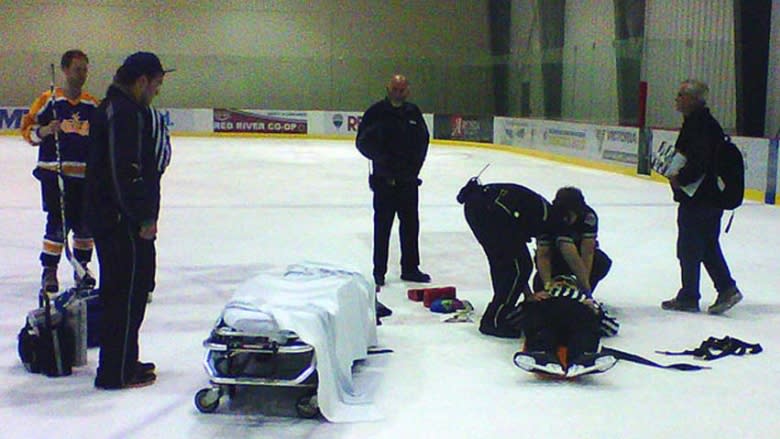
Recently, we've had reports of sports officials suffering serious bodily harm and death as a result of working games for some of these social deviants:

 Charges elevated to second-degree murder in fatal Livonia assault of soccer referee

How many of those is enough or too much, I wonder? As we've witnessed with the Bryan Stow verdict, maybe lawsuits are the only answer.  It seems to be the only thing that gets the Powers that Be's attention.

Until the "Powers that Be" get serious and put more actions behind their words, the environment will not improve. PERIOD. END OF STORY. 

image
ABUSIVE SPORTS PARENTS: The Unforeseen Fall-Out fr...
      HOW ADULTS' ABUSE OF REFEREES ENDANGERS PLAYER SAFETY by Doug Abrams On June 10, the Bakersfield Californian reported that all Kern County...
Preview by Yahoo

This column concerns another, especially harmful result that can escape the untrained eye when veteran referees prematurely hang up their whistles. Particularly in contact and collision sports, the shortage of experienced officials can increase the risk of injury to players, including ones who play clean and follow the rules of the game.
 Compromising Safety
"To be effective for promoting safety," says a recent medical study, a sport's rules "must be enforced rigorously and consistently by referees and leagues." Parents and coaches assume important enforcement roles, but referees are the primary enforcers once the game starts. The American Academy of Pediatrics reports consensus among sports medicine professionals that "[o]fficials controlling the physicality of thegame . . . can . . . play significant roles in reducing contact injuries."
Particularly in contact or collision sports, this essential control suffers when so many veteran referees are driven to quit each year. Many replacement refs are simply not yet ready for the responsibilities cast on them. But for the premature departures of so many veterans, many of the replacements would not yet be on the field.
Before parents and coaches criticize less experienced officials for not controlling high school and youth league games, the adults need to consider whether their over-the-top misbehavior helped create the very situation that draws their criticism. All too often, parents and coaches get the quality of officiating that they deserve. All too often, their children are the losers.
 [Sources: Jeff Evans, Kern County Association Faces Referee Shortage, Bakersfield Californian, June 10, 2014; Charles H. Tator et al., Spinal Injuries in Canadian Ice Hockey: An Update to 2005, 19 Clin. J. Sport Med. 451 (2009); Chris G. Kouteres & Andrew J.M. Gregory, Injuries in Youth Soccer, 125 Pediatrics 410 (Feb. 2010)]


Amateur hockey referee Scott Miskiewicz says he considered giving up officiating after he was sucker-punched by a player during a game last March.
“An incident like that, you kind of wonder is it worth the $35 you get for that game?" said the 18-year-old Manitoban, recalling the attack.
But while Miskiewicz continues to officiate, some amateur referees are fed up with the abuse heaped on them during games. While most of the abuse is verbal, it can turn physical, and deadly, as it did this week when a referee of an adult-league soccer match in Detroit died after he was punched in the head by a player upset that he was going to be ejected from the game.
The frequency with which these attacks are occurring and whether it’s increasing is difficult to say. Miskiewicz insisted that his incident was an anomaly, and that while he is mostly a target of benign verbal attacks, the physical attack was a first. 
In an email to Miskiewicz to offer him support after the assault, NHL official Vaughan Rody lamented that when it comes to referees, "We lose 10,000 great young men and woman a year due to abuse."
Bruce Tennant, who has been refereeing amateur hockey in Toronto for 40 years, said he was once cross-checked in the side of the head by a player after he threw him out of a game.
Tennant said he "could count on two hands the number of times I've been abused," but a lot of the senior referees are quitting because of the abuse they have received.
A couple of years ago, in response to what seemed to be a slew of reports of officials getting attacked after games in parking lots, Sports Officials Canada began tracking complaints. The organization, which represents sports officials across the country, is set to launch an abuse database.
“I think so many people have buried their head in the sand about this,” said Denise Pittuck, executive director of the organization. “They consider it part of the game, and they don’t think it’s affecting recruitment. Certainly now the sports are realizing recruitment is down, retention is down.”
Barry Mano, the president and founder of the U.S. National Association of Sports Officials, told The Associated Press that his group spends 20 per cent of its time on assault and liability-related issues, up from around three per cent 20 years ago. 
Meanwhile, in Saskatchewan, the Saskatoon Referees Association said the number of referees dropped in 2013 because of fans and coaches abusing young officials. 
Two years ago, a report published in the Clinical Journal of Sport Medicine — titled Violence in Canadian Amateur Hockey: The Experience of Referees in Ontario — found that more than 90 per cent of the 632 referees who responded to their survey said they were recipients of aggression and anger. Around 46 per cent said that referees are threatened by physical violence.
The study, co-authored by Toronto neurosurgeon Dr. Charles Tator along with Dr. Alun Ackery and Dr. Carolyn Snider, found that some referees reported they had been punched, spit on and had garbage thrown on them (with nine per cent saying police had to get involved.) Specific examples of abuse included a parent breaking a referee's finger, a referee grabbed by the throat by a player, sexual and homophobic comments to a female referee and a fan threatening to "carve out a linesman's eye."
But Peter Woods, executive director of Hockey Manitoba, said that the media attention given to some of the abusive incidents may give the impression that it’s a worse problem than it is or has ever been. Woods said the number of complaints, ranging from threatening an official to actual physical contact, has remained stable throughout the years.
He said there are probably 10 to 15 incidents a year, with 60 to 70 per cent of those involving a threat to an official and maybe a couple where there's physical contact.
“One is probably too many, but it’s not at a catastrophic level that is unmanageable or that is negatively impacting our sport," he said.
Although she doesn't have hard data, Pittuck said the number of abusive incidents appears to be on the rise, and that there seem to be more physical attacks against referees and more attacks from spectators.
"There's always verbal abuse. It should never be part of the game," she said. "Officials shouldn’t have to accept that. But a lot people think that 'Hey, there’s  an official, I can yell at them, I can do whatever I want.' It’s that mentality that we’re trying to break."
Pittuck said that according to their research, younger officials are more willing to report abuse than older officials, who have developed an attitude that it's part of the game. She said abuse also seems to be more prevalent in team sports. 
Officials are also subject to cyberbullying, where those upset with a referee's officiating are putting their names and faces up on Facebook.
Tennant blamed some of the referees for the abuse, saying a lot of what officials get they bring onthemselves.
"They put the striped jersey on and they think it's instant respect. You sort of have to earn that respect," he said.
"It's almost like they expect the abuse, so they don't even put an effort in, because they know they're going to get abused anyway."


Giants Top Minor League Prospects

  • 1. Joey Bart 6-2, 215 C Power arm and a power bat, playing a premium defensive position. Good catch and throw skills.
  • 2. Heliot Ramos 6-2, 185 OF Potential high-ceiling player the Giants have been looking for. Great bat speed, early returns were impressive.
  • 3. Chris Shaw 6-3. 230 1B Lefty power bat, limited defensively to 1B, Matt Adams comp?
  • 4. Tyler Beede 6-4, 215 RHP from Vanderbilt projects as top of the rotation starter when he works out his command/control issues. When he misses, he misses by a bunch.
  • 5. Stephen Duggar 6-1, 170 CF Another toolsy, under-achieving OF in the Gary Brown mold, hoping for better results.
  • 6. Sandro Fabian 6-0, 180 OF Dominican signee from 2014, shows some pop in his bat. Below average arm and lack of speed should push him towards LF.
  • 7. Aramis Garcia 6-2, 220 C from Florida INTL projects as a good bat behind the dish with enough defensive skill to play there long-term
  • 8. Heath Quinn 6-2, 190 OF Strong hitter, makes contact with improving approach at the plate. Returns from hamate bone injury.
  • 9. Garrett Williams 6-1, 205 LHP Former Oklahoma standout, Giants prototype, low-ceiling, high-floor prospect.
  • 10. Shaun Anderson 6-4, 225 RHP Large frame, 3.36 K/BB rate. Can start or relieve
  • 11. Jacob Gonzalez 6-3, 190 3B Good pedigree, impressive bat for HS prospect.
  • 12. Seth Corry 6-2 195 LHP Highly regard HS pick. Was mentioned as possible chip in high profile trades.
  • 13. C.J. Hinojosa 5-10, 175 SS Scrappy IF prospect in the mold of Kelby Tomlinson, just gets it done.
  • 14. Garett Cave 6-4, 200 RHP He misses a lot of bats and at times, the plate. 13 K/9 an 5 B/9. Wild thing.

2019 MLB Draft - Top HS Draft Prospects

  • 1. Bobby Witt, Jr. 6-1,185 SS Colleyville Heritage HS (TX) Oklahoma commit. Outstanding defensive SS who can hit. 6.4 speed in 60 yd. Touched 97 on mound. Son of former major leaguer. Five tool potential.
  • 2. Riley Greene 6-2, 190 OF Haggerty HS (FL) Florida commit.Best HS hitting prospect. LH bat with good eye, plate discipline and developing power.
  • 3. C.J. Abrams 6-2, 180 SS Blessed Trinity HS (GA) High-ceiling athlete. 70 speed with plus arm. Hitting needs to develop as he matures. Alabama commit.
  • 4. Reece Hinds 6-4, 210 SS Niceville HS (FL) Power bat, committed to LSU. Plus arm, solid enough bat to move to 3B down the road. 98MPH arm.
  • 5. Daniel Espino 6-3, 200 RHP Georgia Premier Academy (GA) LSU commit. Touches 98 on FB with wipe out SL.

2019 MLB Draft - Top College Draft Prospects

  • 1. Adley Rutschman C Oregon State Plus defender with great arm. Excellent receiver plus a switch hitter with some pop in the bat.
  • 2. Shea Langliers C Baylor Excelent throw and catch skills with good pop time. Quick bat, uses all fields approach with some pop.
  • 3. Zack Thompson 6-2 LHP Kentucky Missed time with an elbow issue. FB up to 95 with plenty of secondary stuff.
  • 4. Matt Wallner 6-5 OF Southern Miss Run producing bat plus mid to upper 90's FB closer. Power bat from the left side, athletic for size.
  • 5. Nick Lodolo LHP TCU Tall LHP, 95MPH FB and solid breaking stuff.