Showing posts with label Heat Stroke. Show all posts

Saturday, July 07, 2012

Umpires Could Be at Risk of Heat Related Illness


These are good tips for umpires as well as players. Entering the dog days of summer, it doesn't hurt to review them and then go out on the field and apply them.


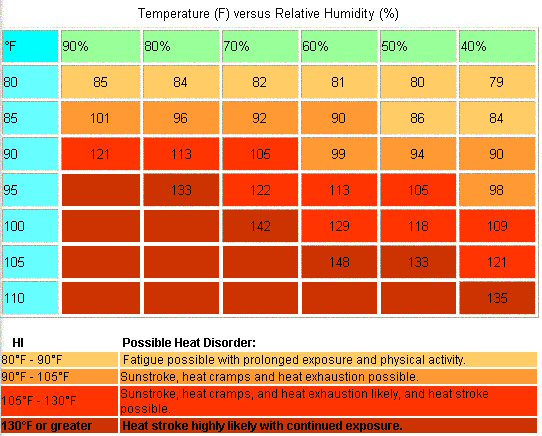
Umpires Could Be at Risk of Heat Related Illness:

"On hot and humid day,umpires can struggle to beat the heat. Umpires should be conscious of staying hydrated and seek every opportunity to grab a little shade and a drink between innings. The Athletic Trainers' Society of New Jersey (ATSNJ) recommends steps to help umpires and athletes prevent heat illness during baseball and softball.

On a hot and humid day, Shore Conference Umpire Paul Hooker was struggling to beat the heat. “I felt it come on by the end of the second inning. I tried to push through it for a couple of innings and then it just got to me”. Hooker was removed from the game and attended to by the licensed athletic trainer when he complained of dizziness, difficulty breathing and an irregular heart rate.

“Umpires probably need to be as vigilant and concerned as athletes when working a game in the heat” remarked Eric Nussbaum, President of the Athletic Trainers Society of New Jersey. “Normally your body dissipates heat through sweating and evaporation but umpires often wear a heavy chest protector, dark clothing, and a hat or helmet which impedes their ability to dissipate heat”."


I've had quite a few games that were interrupted because of umpires going down on one field or another. The added gear that catchers and umpires wear, of course, increases the burden.

That both classes tend to want to be "tough guys" who won't come out of the game unless hauled off on a stretcher further compounds the problem.


“I’m in good shape and this has never happened to me before” stated Hooker. I’m really glad that an athletic trainer was available and able to quickly cool me down and get me the appropriate care. I know heat illness can be bad and despite my best efforts, I just couldn’t work through it.”


Nussbaum noted that “umpires should be conscious of staying hydrated and seek every opportunity to grab a little shade and a drink between innings." The excitement of the game generally elevates their heart rate, and their dark shirt and equipment absorbs the heat and just doesn’t allow them to appropriately dissipate it. This can be complicated with umpires who may be older, have health issues, may be on medications, and are overweight or not in great physical condition. Those who work multiple games in a row on a hot day can be at high risk as well.

The Athletic Trainers Society of New Jersey recommends that umpires and athletes who are working or exercising in the heat should first have a regular physical to assure they are in good health. Beating the heat requires that the athlete and umpire take the proper measures. These measures include: hydrating the night before with water or a sports drink, avoiding alcohol and caffeine which can dehydrate your body, considering a diet high in carbohydrates the night before the activity, consuming two glasses of water an hour before the competition, staying hydrated between innings, and when necessary removing your hat, mask and headgear as often as possible. 


In addition to these recommendations, the athlete and umpire should stay cool in between innings. The best ways to achieve this are to; get out of the sun, either in the dugout or a shady area near the field, and to use wet towels or ice packs as a means to help to fight off issues with the heat. Often umpires don’t drink enough fluid to compensate for all of the sweat loss. Thirst is not an adequate indicator of hydration, once someone is thirsty they have already fallen behind in the battle for proper hydration.


Proper heat illness education is vital. Umpires and athletes need to be able to recognize the warning signs of heat illness which include: dizziness, blurry vision, loss of energy, SOB, rapid heart rate, cramping, headache and extreme sweating.

'via Blog this'

Tuesday, August 02, 2011

Medical News: Heat Illness and Concussions


Medical News: Heat Illness Strikes Male, Teen Athletes Harder - in Emergency Medicine, Emergency Medicine from MedPage Today:

"Males and teens are most likely to require a trip to the emergency department for a heat illness related to sports or another recreational activity, researchers found.

From 2001 to 2009, males accounted for nearly three-quarters (72.5%) of emergency department visits for heat illness following such physical activity, according to Ellen Yard, PhD, an Epidemic Intelligence Service officer at the CDC, and colleagues.

Those most affected were 15- to 19-year-olds, who accounted for 35.6% of visits, the researchers reported in the July 29 issue of Morbidity and Mortality Weekly Report"


Among the findings:

Although the vast majority of patients were treated and released, 7.1% required hospitalization or transfer to another facility for further care. The hospitalization rate was higher in males (8.9% versus 2.4%) and in those 55 and older than in younger individuals (18.8% versus 4.6%).

Overall, most cases of heat illness occurred during football games (24.7%) and exercise such as walking, jogging, and calisthenics (20.4%).

For males, the most common activity leading to heat illness was football for those younger than 20, exercise for those 20 to 44, and golf for those 45 and older.

For females, the most common activity leading to heat illness requiring a trip to the ED was baseball/softball for those 14 and younger, track and field for those 15 to 19, and exercise for those 20 and older.

Yard and colleagues noted that all heat illnesses are preventable.

"Coaches of organized sports teams should schedule frequent rest breaks and encourage fluid consumption, particularly on days that are very hot or humid," they wrote. "Practices that begin during summer months should increase frequency, duration, and intensity gradually to allow athletes to acclimate to the heat."

"In addition to recommendations for sports teams," they continued, "recommendations for individual participants include wearing lightweight, light-colored, and loose-fitting clothing; exercising early or late in the day when it is cooler; and having an exercise partner."

---


Quinn signs school athletes concussions legislation - chicagotribune.com:

"Student athletes from elementary to high school will get better safeguards against concussion injuries under a new law that takes effect immediately.

Gov. Pat Quinn signed the measure Thursday in Chicago. It says that student athletes with concussions must get medical approval before resuming play. The law also requires education for coaches, parents, referees and players about concussion symptoms.

Several other states have enacted similar laws.

Repeat concussions and returning to play too soon raises risks for permanent brain damage.

The law requires school boards across Illinois to join with the Illinois High School Association in developing guidelines and educational materials about concussions for coaches, student athletes and parents."

----
UPDATE

Tragic real-world consequences every day.

Two Ga. high school football players die
http://msn.foxsports.com/collegefootball/story/two-Georgia-high-school-football-players-die-after-training-workouts-080211?GT1=39002

NewsCore

Updated Aug 3, 2011 2:53 AM ET
A 16-year-old Georgia high schooler was found dead at a football camp in Florida's Columbia County on Tuesday, WJXT-TV reported.

Hours later, another 16-year-old Georgia high schooler died in an Atlanta hospital a week after being admitted suffering what doctors believe was heat exhaustion, WSB-TV reported.

Donteria Searcy was found unresponsive in his cabin about 11:15 a.m. local time Tuesday, after Fitzgerald (Ga.) High School's football team had finished a morning workout at Florida's O'Leno State Park, where it is holding a summer training camp.

Searcy was taken to a nearby hospital, but attempts to resuscitate him were unsuccessful.

An autopsy will be carried out to determine the cause of death, but police do not suspect foul play.

In Atlanta, Locust Grove High School's Forrest Jones died about 9:30 p.m. local time Tuesday. He was admitted to a hospital on July 25 after collapsing following an optional team workout.

Jones' uncle told WSB-TV that doctors believed his death was caused by a heat stroke or heat exhaustion.

The two Georgia students' deaths came just a few days after a rising high school football player collapsed and died after practice in Darlington, SC.

Tyquan Xavier Brantley, 14, was walking off the field with his Lamar High School team Saturday when he collapsed. He was taken to a nearby hospital and was pronounced dead about 7 p.m. local time.

Friday, September 18, 2009

FOLLOW UP: A COACH'S WORST NIGHTMARE


COACH DAVID STINSON AND HIS PLAYER 15-YR.OLD MAX GILPIN

As I said when this story first came out, there are no winners. But I am glad that absent any finding of true recklessness on the part of the coaching staff the jury came in with a just verdict.

http://www.cnn.com/2009/CRIME/09/17/kentucky.coach.trial/index.html

A jury Thursday acquitted a former Louisville, Kentucky, high school football coach of all charges connected to the heat-related death of a player last year.

The jury found former Pleasure Ridge Park football coach David Jason Stinson not guilty of reckless homicide and wanton endangerment in the death of 15-year-old Max Gilpin, who collapsed during a practice on August 20, 2008. The teenager died three days later.

Gilpin's body temperature reached 107 degrees, officials say.

Stinson also was acquitted on a charge of wanton endangerment.


It is clear that this has had a devastating effect on the family as well as the coach, who clearly lost a member of his extended "family" by losing a player.

Days after he was charged, Stinson told supporters that his "heart is broken." "Part of my life has been taken away," he said, according to WHAS. "I no longer teach, and I no longer coach at the school that I love. ...

"The one thing people keep forgetting in this is that I lost one of my boys that day," he said. "It was a boy that I loved and a boy that I cared for and a boy that meant the world to me. That's the thing that people forget. And that's a burden I will carry with me for the rest of my life."


The local news actually adds more detail than the national story from CNN. While I personally do not care for the practice of using conditioning drills as punitive measures by coaches, it seems like the team was allowing for kids to bow opt out and get water if necessary.


http://www.herald-dispatch.com/news/briefs/x912513692/Ky-coach-acquitted-in-player-death

The jury deliberated for about 90 minutes, and Stinson hugged defense attorney Brian Butler after the verdict was read.

“That’s why they came back quickly, because he was innocent,” said Butler, who characterized the prosecution as a “witch hunt.” Stinson left without speaking to reporters.

Players said he ordered the gassers as punishment for the lack of effort they showed at practice on a day where the temperature and heat index were both 94 degrees.

Prosecutors relied on a series of Gilpin’s teammates who testified that several teens became ill during the gassers, vomiting or bowing out of the running with ailments.

Several medical and athletic training experts also testified for the prosecution, saying Gilpin suffered from exertional heat stroke, which led to his death. One witness, University of Connecticut associate professor Douglas Casa, said Gilpin could have been saved if he’d been immersed in ice water almost immediately after collapsing on the field.

Hurlbert said he hopes the case prompts coaches to pay closer attention to their players.

Stinson’s defense attorneys relied on Pleasure Ridge Park players who testified that, while they ran sprints, there were only a few more than normal. Three of Gilpin’s classmates, along with his stepmother, testified that Gilpin complained of not feeling well throughout the day he collapsed.


This is one of the great difficulties for a coach to deal with is you don't know what the kids are doing on their own time to make the team. Sometimes these details are disclosed on the initial physical evaluation forms, many times they are not.

Some schools have athletic trainers on staff, but not always on the field at all times, others do not for budgetary reasons.

There is a need for better education to filter down to the coaching staffs as far as when and where and how you can ride these kids hard physically, but the bottom line from a philosophical standpoint should always be:

YOU ARE CONDITIONING KIDS TO BUILD THEM UP, NOT TO TEAR THEM DOWN.


Defense medical experts told jurors that it appeared a combination of heat, the use of the dietary supplement creatine and attention deficit disorder drug Adderall, and being ill were the main factors that contributed to Gilpin’s death, which they called an accident.

The medical experts also said little could have been done to save Gilpin because his temperature was so high for so long before he made it to the hospital and began cooling down.


This would be the ultimate end result--you would see less people willing to participate as coaches due to the potential liability and less qualified people to boot. The ripple effect would have been felt throughout all sports.


Jimmie Reed, executive director of the Kentucky Football Coaches Association, said he followed the trial daily and expected most of the coaches in the state were doing the same. He said a conviction would have had lasting ramifications for all teams.

“Any type of coaching where you’re dealing with student-athletes, where there’s some type of tragic accident, then it would have been scrutinized to the liability of the coach no matter what the sport was,” he said.


Friday, January 30, 2009

A COACH'S WORST NIGHTMARE


Let me start our by saying that no matter what happens in the future with this case, THERE ARE NO WINNERS HERE AND THERE WILL BE NO WINNERS HERE. NOT WITH THIS STORY.


Parents who sent their son to play high school football have lost a son.

A coach who was trying to build up his team--broke it down--and lost a player in the worst way possible.

Both parties will live with unanswerable questions for the rest of their lives and nobody can settle those for them.

One of my larger pet peeves as a conditioning coach has always been when sport coaches use conditioning as punishment for their players. It's counter-productive from a conditioning standpoint and there has to be a better way to enhance mental toughness without losing players in this manner.

The coaches quote "telling them they would do 'gassers' until someone quit" was met with the ultimate law of unintended consequences here. A parent watching the practice from a nearby soccer field is reported to heard the coach say "numerous times that all he needed was one person to say that they quit the team and all of the suffering and running and heat would be all over."

Unfortunately, one of them did quit.

No water breaks and no athletic trainer on site to possibly head off this tragedy is going to leave both the school and the coach vulnerable from a legal standpoint.

Maybe it is time for this issue to move from that of a pet peeve to a crusade.

Part of the problem that there have been 39 similar deaths in the last 13 years according to the National Center for Catastrophic Sports Injury Research at the University of North Carolina.

Maybe three deaths per year has become an "acceptable loss" in the name of high school football. To me, one is unacceptable especially since the risks are well known, well-documented and well-reported and disseminated annually.

And yet some of the old-school mentality remains.

According to Grant Teaff, executive director of the American Football Coaches Association, "It goes with the profession that it's a unique sport and conditioning is a part of it." The ACFA membership includes professional, collegiate and high-school coaches.

Most of these deaths occur during the first few days if practice when players are just beginning to get acclimated to the heat and the unique conditioning needs of the sport. As I've said before, the risks are well-known.

Practices will always be a time where coaches are trying to build both physical and mental toughness of their teams in an intensely competitive environment, coaches are looking for these early season trials to translate into late victories during the season.

I understand the building of mental and physical toughness and all of that, but the death of young man should not be a part of the sport or the profession. That is a loss that no team or coach should ever be forced to try and overcome.

------------------
FROM USA TODAY STORY:
http://www.usatoday.com/sports/preps/football/2009-01-26-coach-indicted_N.htm?loc=interstitialskip

The sophomore's death certificate shows he died of septic shock, multiple organ failure and complications from heat stroke, three days after working out for two to three hours in temperatures that felt like 94 degrees. No autopsy was conducted.

Prosecutors have declined to say why they chose Stinson in what is believed to be an
unprecedented case of criminally charging a coach in a player's heat-related death. Witnesses have said in court filings that the coach was running his players hard, telling them they would do "gassers" — sprints up and down the field — until someone quit. One parent at a nearby soccer field said in an e-mail to the school that he didn't see the team get regular water breaks.

"This is not about football, this is not about coaches," Stengel said after the hearing. "This is about an adult person who was responsible for the health and welfare of a child."

--------------------------------
FROM LOCAL NEWS REPORTS:

http://www.wlky.com/cnn-news/18541445/detail.html

LOUISVILLE, Ky. -- A football coach has been charged with reckless homicide in the heat-related death of a high school athlete.

David Jason Stinson was indicted Thursday.

Max Gilpin, 15, died Aug. 23, 2008, three days after he collapsed at a
Pleasure Ridge Park High School football practice after coaches
allegedly refused to let players take water breaks.

Temperatures were in the 90s.Gilpin was rushed to a hospital where he died three
days later. The coroner's report shows Gilpin's body temperature was
107 degrees when he passed out."I don't feel it was proper at
all," said Commonwealth's Attorney Dave Stingel. "They should've been
much more concerned and responded much quicker."

Stengel asked police to investigate wrongdoing in the teen's death.
"A reasonable person should have understood that this result could happen,
fails to perceive that and prevent the end result. That's the level of
proof we will have to go at," the prosecutor said. "I knew it could go
either way. I made no recommendation. We put it in front of the grand
jury -- told them what we saw as the facts and they made their decision."

Stengel said the coach asked to testify before the grand jury, but members refused to hear him.Stinson's attorney said his client maintains his innocence and looks forward to his day in court to clear his name.

"It is a tragedy, and it is unfortunate but I don't think the
indictment of coach Stinson doesn't necessarily resolve that issue,"
said Alex Dathorne, Stinson's attorney.Stinson is expected to appear at an arraignment Monday in Louisville.JCPS representative Lauren Roberts said Stinson has been notified of the indictment and has been reassigned immediately away from PRP to a district office pending the outcome of the case.

In a statement released Thursday afternoon, Gilpin's family said, "We intend to
closely monitor the prosecution and expect anyone responsible for Max's
death to be held accountable."

Giants Top Minor League Prospects

  • 1. Joey Bart 6-2, 215 C Power arm and a power bat, playing a premium defensive position. Good catch and throw skills.
  • 2. Heliot Ramos 6-2, 185 OF Potential high-ceiling player the Giants have been looking for. Great bat speed, early returns were impressive.
  • 3. Chris Shaw 6-3. 230 1B Lefty power bat, limited defensively to 1B, Matt Adams comp?
  • 4. Tyler Beede 6-4, 215 RHP from Vanderbilt projects as top of the rotation starter when he works out his command/control issues. When he misses, he misses by a bunch.
  • 5. Stephen Duggar 6-1, 170 CF Another toolsy, under-achieving OF in the Gary Brown mold, hoping for better results.
  • 6. Sandro Fabian 6-0, 180 OF Dominican signee from 2014, shows some pop in his bat. Below average arm and lack of speed should push him towards LF.
  • 7. Aramis Garcia 6-2, 220 C from Florida INTL projects as a good bat behind the dish with enough defensive skill to play there long-term
  • 8. Heath Quinn 6-2, 190 OF Strong hitter, makes contact with improving approach at the plate. Returns from hamate bone injury.
  • 9. Garrett Williams 6-1, 205 LHP Former Oklahoma standout, Giants prototype, low-ceiling, high-floor prospect.
  • 10. Shaun Anderson 6-4, 225 RHP Large frame, 3.36 K/BB rate. Can start or relieve
  • 11. Jacob Gonzalez 6-3, 190 3B Good pedigree, impressive bat for HS prospect.
  • 12. Seth Corry 6-2 195 LHP Highly regard HS pick. Was mentioned as possible chip in high profile trades.
  • 13. C.J. Hinojosa 5-10, 175 SS Scrappy IF prospect in the mold of Kelby Tomlinson, just gets it done.
  • 14. Garett Cave 6-4, 200 RHP He misses a lot of bats and at times, the plate. 13 K/9 an 5 B/9. Wild thing.

2019 MLB Draft - Top HS Draft Prospects

  • 1. Bobby Witt, Jr. 6-1,185 SS Colleyville Heritage HS (TX) Oklahoma commit. Outstanding defensive SS who can hit. 6.4 speed in 60 yd. Touched 97 on mound. Son of former major leaguer. Five tool potential.
  • 2. Riley Greene 6-2, 190 OF Haggerty HS (FL) Florida commit.Best HS hitting prospect. LH bat with good eye, plate discipline and developing power.
  • 3. C.J. Abrams 6-2, 180 SS Blessed Trinity HS (GA) High-ceiling athlete. 70 speed with plus arm. Hitting needs to develop as he matures. Alabama commit.
  • 4. Reece Hinds 6-4, 210 SS Niceville HS (FL) Power bat, committed to LSU. Plus arm, solid enough bat to move to 3B down the road. 98MPH arm.
  • 5. Daniel Espino 6-3, 200 RHP Georgia Premier Academy (GA) LSU commit. Touches 98 on FB with wipe out SL.

2019 MLB Draft - Top College Draft Prospects

  • 1. Adley Rutschman C Oregon State Plus defender with great arm. Excellent receiver plus a switch hitter with some pop in the bat.
  • 2. Shea Langliers C Baylor Excelent throw and catch skills with good pop time. Quick bat, uses all fields approach with some pop.
  • 3. Zack Thompson 6-2 LHP Kentucky Missed time with an elbow issue. FB up to 95 with plenty of secondary stuff.
  • 4. Matt Wallner 6-5 OF Southern Miss Run producing bat plus mid to upper 90's FB closer. Power bat from the left side, athletic for size.
  • 5. Nick Lodolo LHP TCU Tall LHP, 95MPH FB and solid breaking stuff.