Showing posts with label IHSA. Show all posts

Friday, August 26, 2011

IHSA Announces 2011 Sportspersons of the Year > IHSA


This is one of the things the IHSA (and other state HS associations) does get right. You wish that these kids get more attention than they do. They are the ones who re-establish your faith when some of their more highly publicized and lionized brethren act in the manner that they sometimes do. BRAVO!!!

IHSA Announces 2011 Sportspersons of the Year > IHSA:

"Congratulations to each of these worthy recipients on being honored as IHSA Sportspersons of the Year," said IHSA Assistant Executive Director Beth Sauser. “These individuals excel in the classroom, in athletics, in activities and in extracurriculars inside and outside of their schools. On top of that, they have the character and integrity to represent themselves and their schools with model sportsmanship.”

Each winner will receive a plaque and a $500 dollar scholarship during the Illinois Principals Association conference in October. All four winners were seniors during the 2010-11 school year."


A brief bio on each Sportsperson of the Year is listed below:

Kelly McShea, Wheaton St. Francis High School
Kelly spent four years on the Spartan basketball, cross country and track & field teams during her high school career, which included earning All-State honors at the IHSA state meets in the latter two sports. A Student Ambassador at St. Francis, she was also a part of the school’s Social Justice Club and has been on three mission trips.


St. Francis cross country and track & field coach Scott Nelson on Kelly: “In 27 years of working in education, Kelly is one of the top student-athletes I have had the pleasure of working with. She has always been a leader in every sense of the word.”

Claire Watson, Riverton High School
Claire was a part of the volleyball, basketball and dance teams during her time at Riverton and was selected to serve as a team captain in each during her senior season. Her leadership also carried over into involvement in Riverton’s Student Government, Spanish Club and National Honor Society, in addition to being a part of several music clubs and in the theater program.


Riverton Counselor Nancy Penk on Claire: “Her behavior is exemplary and she is respectful of others. She is one of the most responsible students I have encountered in 20 years of education and will be successful in any vocation she chooses.”


Tanner Crum, Mt. Carmel High School
Tanner participated in four sports over the course of his career at Mt. Carmel, including four years of football, wrestling and track & field. The 2011 IHSA Class 1A Individual Wrestling State Champion at 285 pounds, Crum also found time to serve as the school’s Student Council President and Future Business Leaders of America President.

Mt. Carmel Principal Pat Cheesman on Tanner: “He is truly an awesome young man. He is a well-rounded individual who puts time into his school work, clubs, hobbies and extracurricular activities. ”

Bo Beniac, Lincoln-Way North
Bo was a three-sport athlete at Lincoln-Way North High School, participating on the basketball, football and tennis teams. He was selected by his teammates to serve as a team captain in basketball and football. A National Honor Society member, Bo was also a part of the school’s Key Club, Varsity Club, Pi Sigma Pi and served as a Math Peer Guide.


Lincoln-Way North Mathematics teacher and basketball coach John Terry on Bo: “Bo is a passionate individual with a love for athletics and academia. He is a natural leader who leads by example. I wanted everyone on the team to emulate him.”

Tuesday, August 02, 2011

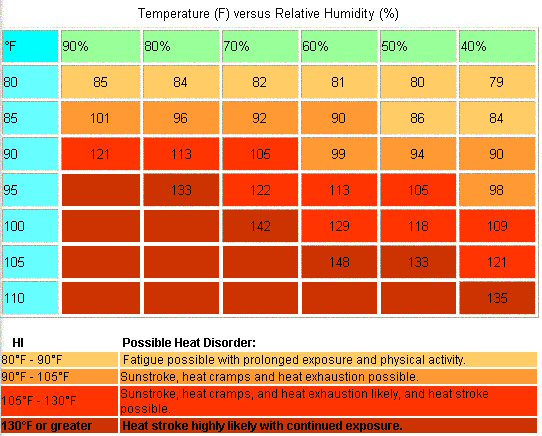
Medical News: Heat Illness and Concussions


Medical News: Heat Illness Strikes Male, Teen Athletes Harder - in Emergency Medicine, Emergency Medicine from MedPage Today:

"Males and teens are most likely to require a trip to the emergency department for a heat illness related to sports or another recreational activity, researchers found.

From 2001 to 2009, males accounted for nearly three-quarters (72.5%) of emergency department visits for heat illness following such physical activity, according to Ellen Yard, PhD, an Epidemic Intelligence Service officer at the CDC, and colleagues.

Those most affected were 15- to 19-year-olds, who accounted for 35.6% of visits, the researchers reported in the July 29 issue of Morbidity and Mortality Weekly Report"


Among the findings:

Although the vast majority of patients were treated and released, 7.1% required hospitalization or transfer to another facility for further care. The hospitalization rate was higher in males (8.9% versus 2.4%) and in those 55 and older than in younger individuals (18.8% versus 4.6%).

Overall, most cases of heat illness occurred during football games (24.7%) and exercise such as walking, jogging, and calisthenics (20.4%).

For males, the most common activity leading to heat illness was football for those younger than 20, exercise for those 20 to 44, and golf for those 45 and older.

For females, the most common activity leading to heat illness requiring a trip to the ED was baseball/softball for those 14 and younger, track and field for those 15 to 19, and exercise for those 20 and older.

Yard and colleagues noted that all heat illnesses are preventable.

"Coaches of organized sports teams should schedule frequent rest breaks and encourage fluid consumption, particularly on days that are very hot or humid," they wrote. "Practices that begin during summer months should increase frequency, duration, and intensity gradually to allow athletes to acclimate to the heat."

"In addition to recommendations for sports teams," they continued, "recommendations for individual participants include wearing lightweight, light-colored, and loose-fitting clothing; exercising early or late in the day when it is cooler; and having an exercise partner."

---


Quinn signs school athletes concussions legislation - chicagotribune.com:

"Student athletes from elementary to high school will get better safeguards against concussion injuries under a new law that takes effect immediately.

Gov. Pat Quinn signed the measure Thursday in Chicago. It says that student athletes with concussions must get medical approval before resuming play. The law also requires education for coaches, parents, referees and players about concussion symptoms.

Several other states have enacted similar laws.

Repeat concussions and returning to play too soon raises risks for permanent brain damage.

The law requires school boards across Illinois to join with the Illinois High School Association in developing guidelines and educational materials about concussions for coaches, student athletes and parents."

----
UPDATE

Tragic real-world consequences every day.

Two Ga. high school football players die
http://msn.foxsports.com/collegefootball/story/two-Georgia-high-school-football-players-die-after-training-workouts-080211?GT1=39002

NewsCore

Updated Aug 3, 2011 2:53 AM ET
A 16-year-old Georgia high schooler was found dead at a football camp in Florida's Columbia County on Tuesday, WJXT-TV reported.

Hours later, another 16-year-old Georgia high schooler died in an Atlanta hospital a week after being admitted suffering what doctors believe was heat exhaustion, WSB-TV reported.

Donteria Searcy was found unresponsive in his cabin about 11:15 a.m. local time Tuesday, after Fitzgerald (Ga.) High School's football team had finished a morning workout at Florida's O'Leno State Park, where it is holding a summer training camp.

Searcy was taken to a nearby hospital, but attempts to resuscitate him were unsuccessful.

An autopsy will be carried out to determine the cause of death, but police do not suspect foul play.

In Atlanta, Locust Grove High School's Forrest Jones died about 9:30 p.m. local time Tuesday. He was admitted to a hospital on July 25 after collapsing following an optional team workout.

Jones' uncle told WSB-TV that doctors believed his death was caused by a heat stroke or heat exhaustion.

The two Georgia students' deaths came just a few days after a rising high school football player collapsed and died after practice in Darlington, SC.

Tyquan Xavier Brantley, 14, was walking off the field with his Lamar High School team Saturday when he collapsed. He was taken to a nearby hospital and was pronounced dead about 7 p.m. local time.

Sunday, March 23, 2008

NEW FROM THE IHSA


Apparently, they will determine team penalties on a case-by-case basis. At least they are moving towards a recognition that there is some responsibility on those placed in charge of these student-athletes. That will get positive results faster than anything else.
-----------------------------------------------
IHSA sets penalty for steroid usage
Daily Herald Report

The Illinois High School Association's Board of
Directors at its monthly meeting Saturday in Peoria
approved the penalty to be applied to a student who
tests positive for performance-enhancing drugs.

The student would be ineligible for 365 days from the
date the test results were reported to the student and
the school.


The student may then apply for reinstatement of
athletic eligibility after 90 calendar days, following
the successful completion of an approved educational
program and a negative test for performance-enhancing
drugs.

The board determined that any team penalties would be
determined by the executive director on a case-by-case
basis under the provisions of Article 1.460 of the
IHSA Constitution.


The board also approved the National Center for Drug
Free Sport to provide testing services when the
program is implemented in the 2008-09 school term, and
approved the language of the random testing consent
form that each student and his/her guardian will be
required to sign to maintain athletic eligibility.

"We are pleased with the action taken by the Board in
regards to our drug testing program," said IHSA
assistant executive director Kurt Gibson in a release
on the IHSA Web site Monday.

"Our Sports Medicine Advisory Committee believes the
experience Drug Free Sport has with athletic drug
testing will be invaluable in the implementation our
program, and we're excited to have an opportunity to
work with them. Our committee felt that their
experience, expertise, and commitment to education on
the use of performance-enhancing substances were the
best match for the needs of our program."

Thursday, February 28, 2008

IHSA POLL ON PED TESTING IMPLEMENTATION-REVISITED


ARTICLE BELOW:
Drug study: College coaches 'looking other way'
Nearly a quarter of NCAA steroid users are 'certain' coaches knew
03:09 AM CDT on Thursday, April 27, 2006
By GARY JACOBSON / The Dallas Morning News


I would like to see a congressional inquiry into this issue. Nearly 25% of college players are certain that their coaches knew of their use? This doesn't surprise me a bit, in fact it seems like it may be on the low side. And if this is the number in college, I can't imagine what the the number would be at the high school level where the coaches have more control and influence on the athletes and the culture.

Now if Congress can get up in arms on the basis of "role-models" exerting undue influence on the Youth of America, I ask you this: At the high school level, who do you think exerts more influence over the life of kids? Their coach or their favorite athlete.

The numbers I have seen indicate that teachers (coaches) are right up their with parents and slightly ahead of the athlete. But I don't want to get into a battle of the studies, because as we've seen with the "reported use of steroids by youth" studies, they could be all over the map.

Although it may sound cynical, I don't think it's a stretch to assume that the reason is the ratings for a Congressional Inquiry into coaches would not quite pull down the same numbers as the anal probe, uh inquiry of Roger Clemens.
----------------------------------------------------------------
Drug study: College coaches 'looking other way'

Nearly a quarter of NCAA steroid users are 'certain' coaches knew
03:09 AM CDT on Thursday, April 27, 2006

By GARY JACOBSON / The Dallas Morning News

Among NCAA athletes who reported using anabolic steroids in the organization's most recent study, 24.1 percent said they were "certain" their coaches knew they were using the banned drugs.

Pete Carlon, athletic director at the University of Texas at Arlington and a former member of the committee that oversees the NCAA survey, said he was "startled" and "disappointed" by the finding.

"If that's true, then somebody is turning and looking the other way," Carlon said Wednesday.

Mary Wilfert, the NCAA's associate director of Education Outreach, said the finding indicates a need for additional education of coaches about steroids.

In the NCAA's 2001 study, 20.7 percent of steroid users said they were certain their coaches knew.

The NCAA, which published highlights from its 2005 survey in August, posted the entire study on its Web site Tuesday. Just 1.2 percent of the nearly 20,000 athletes in the study said they used steroids, down from 1.5 percent in 2001. Since its first study in 1985, the NCAA has surveyed athletes about their drug and alcohol use every four years.

Other findings from the 2005 study:

• Of steroid users, 17.8 percent said they got their steroids from a coach, athletic trainer or team physician.

• 4.1 percent of the athletes said they used amphetamines, which, like steroids, are performance-enhancing substances. Amphetamine use has increased steadily from 2.1 percent in 1993 and is highest (4.6 percent) in Division III.

• Use of steroids (2.3 percent) and amphetamines (3.9 percent) by baseball players equaled use by football players.

• 5.2 percent of women's softball players said they used amphetamines.

• 11.2 percent of the athletes said they had "been taken advantage of sexually" one or more times in the last 12 months because of their drinking or drug use.

• Among those who said they had used amphetamines "recently," 27.9 percent said they used the drug as treatment for attention deficit disorder (ADD) and 9.7 percent said to improve athletic performance.

Frank Uryasz, president of the National Center for Drug Free Sport, which conducts the NCAA's drug-testing program, said his group is seeing greater use of ADD medication.

"Some athletes are readily sharing their prescription drugs," he said Wednesday. Any use of stimulants, including Ritalin and Adderall, increases the risk of heat illness for an athlete, he said.

Uryasz said he expects the latest results from NCAA drug-testing to be released later this year. They will include the first findings from year-round testing of Division I baseball players.

"We had a disproportionate number of pitchers test positive," he said. "I didn't expect that."

Saturday, February 23, 2008

IHSA POLL ON PED TESTING IMPLEMENTATION


Where is the leadership? Where and when have those in leadership positions stood up and held themselves accountable when things go bad in this country.

Some recent examples of abdication of leadership:
The role of the Federal Reserve and government policy in the housing/credit crisis.
Owners and the Players Union culpability in the PED issue.
The role of government policy and ties to Big Pharma in the growth of the PED issue.
Indiana's administration during the Kelvin Sampson controversy.

Here is a local example from Illinois, the implementation of drug testing for student-athletes, that shows pretty clearly, step by step, how the so-called leaders are willing to pass off responsibility, accountability and the imposition of penalties and sanctions down the line and do not accept PERSONAL responsibility or accountability. Although they do expect that from others. What is it they say? If you can't walk the walk, don't talk the talk.

In this case specifically, and the others I mentioned previously, is an illustration of the antithesis of true leadership, as I understand the definition. And then we wonder why some these situations develop and then fail to get resolved. It's a lack of leadership and a failure of leadership in most cases.

I've inserted my notes after the questions and responses.
------------------------------------------------------------------------------------
http://www.ihsa.org/announce/2007-08/2008-01-15.htm

IHSA Announcements

January 15, 2008
Tabulated Results of Survey on Performance-Enhancing Drugs, Classification, and Tournament Structure

On December 11, 2007, IHSA member schools were asked to respond to a survey dealing with performance-enhancing drugs, classification, and tournament structure. One survey was allotted to each school, to be filled out by its official IHSA representative, which in most cases is the principal or athletic director. The deadline for submitting the survey was January 13, 2008.

In all, 414 of 765 member schools (54%) responded to the survey.
Members Responding
765 414 (54%)

The Slav: This speaks volumes right off the bat. Only 54% response rate for an issue of such significance and importance.

Following are the survey questions and tabulated responses.

1. Do you favor the IHSA implementing a performance-enhancing drug testing program? (If the answer was no, respondents were asked to skip to question 6.)
Yes No
294 (72%) 117 (28%)

The Slav: Pretty good so far. First step, identify that there is a problem. Still have to wonder about the other 46% schools.

2. Do you favor the drug testing program described at the Principals' Rules Meetings?
Yes No
252 (87%) 37 (13%)

The Slav: OK second step, propose a solution. And note the 87-13% landslide.

3. Do you favor ineligibility for a student-athlete who tests positive for a banned substance on an IHSA administered drug test?

Yes No
284 (97%) 8 (3%)

The Slav: OK, so once we have testing it's 97-3% for punishing the kid who tests positive.

4. Do you favor the consequence for a school that would require the school to submit an education plan in the event one of its students tests positive for a banned substance on an IHSA administered drug test? The plan would address the harms associated with anabolic steroids and other performance enhancers and implementation would be required before the school is allowed to participate in IHSA state series competitions.

Yes No
168 (57%) 125 (43%)

The Slav: OK, here is where we start to slide a little bit. It's 97-3% to punish the kid, but here we start to look at the school's responsibility to the kid. And all it seems like we're asking for here is for them to do what theoretically they've been doing all along, which is educate the kids. EDUCATE THE KIDS!!! WE'RE TALKING ABOUT SCHOOLS HERE!!! AND ASKING THEM TO EDUCATE THE KIDS, AND THEY WANT TO ABIDCATE THEIR RESPONSIBILITY AT THE FIRST SIGN OF TROUBLE???? ARE YOU F***ING KIDDING ME??? OH BUT WAIT, THERE'S MORE.

5. Do you favor an additional consequence for a school that would require it to forfeit any post-season award won by its team that had a student who tested positive for a banned substance on an IHSA administered drug test?

Yes No
116 (40%) 175 (60%)

The Slav: Oh no way. Ask Coach Trophycollector to give up his goodies? No Way. There is no possibility that either the school or the coach that benefits from it's reputation as a football power should be held accountable. They certainly have no responsibility and shouldn't be held accountable for setting up and reinforcing the "culture" that puts KIDS in the position of having to make the choices that they do, now should they?

So to review:
We went from 97-3% for punishing the kids.

To 57-43% for just asking the schools to do what they've been doing all along, just maybe do it a little better since it seems like you may have failed a bit here, what with this positive test and all.

To 40-60% against holding the team, the coach, and the school (ie: leadership) accountable.

And we call this leadership. AMAZING.

---------------------------------------------------------------------
The other questions are entirely unrelated to the issue so I left them out, but in my opinion, it is morally wrong for the schools and the so-called leaders of young men and women to take this position. I do not understand how they can look these kids in the face, much less expect to lead them after basically saying "Kids, if we fail in teaching you about the serious consequences of this issue, you're on your own. You'll take the hit by yourself."

What happened to the teachers refrain of "If you fail, I fail"?
What happened to the concept of team?
If one of us goes down, we all go down.

We preach that to teams all the time as coaches. I know in speaking about this issue with my wife, whose opinion I respect greatly, she did not feel that you can punish the entire team for the actions of one person. But in reality, in a team setting, IT HAPPENS ALL THE TIME.

And I think most who participate in team sports, understand and appreciate the concept.

And I'm not sure if that actually where the environment in practice, instead of just in words, that perhaps the climate and the culture would change.

Because if a kid is doing something like this on a football team for example, generally speaking I think its fair to say that someone else on the team knows about it.

If the punitive setting were such that the TEAM, the ENTIRE TEAM would suffer the consequences, then the WALL OF SILENCE COMES DOWN, THE ENTIRE CULTURE changes. Coaches would have to ensure that they are not spewing mere words and that their actions are sending an entirely different message to these kids.

And then we have a real chance of beating down the numbers of kids who are tempted to use PED's. You have to attack the entire culture and EVERYBODY has to be one board, willing to take on the responsibility. ESPECIALLY WHEN THE KIDS ARE INVOLVED.

Do these so-called leaders think that kids are stupid and don't understand what's going on here?

SHAME ON THESE SCHOOLS (THE SHAMEFUL 60%) THAT ARE SELECTIVELY IN FAVOR OF THE CONCEPT OF ACTING AS PARENTS WHILE OUR KIDS ARE IN THEIR CARE, BUT CHOOSE TO ABDICATE THE RESPONSIBILITY WHEN IT SERVES THEIR OWN INTEREST.

THAT'S NOT HOW A RESPONSIBLE PARENT WOULD ACT WHEN THEIR CHILD'S HEALTH, WELFARE AND SAFETY ARE AT STAKE. I APPLAUD THE 40% WHO SEEM TO HAVE SOME COMMON SENSE.

Sunday, January 20, 2008

THE RACE TO BE SURROGATE PARENTS


ILLINOIS BECOMES 4TH STATE TO IMPLEMENT PED TESTING PROGRAM

The Illinois High School Association's Board of Directors voted earlier this week to implement a performance enhancing drug testing program beginning this fall for state championship competitions. The Board's vote came after reviewing the results of a survey sent to all 765 member schools on December 11, 2007. Curiously, only 414 schools (54%) responded to the survey that was due on Sunday, with 294 schools (72%) voting in favor of implementing a testing program.

IHSA Press Release:
http://www.ihsa.org/announce/2007-08/2008-01-14.htm

Illinois becomes the fourth state to implement such testing, following New Jersey, Florida, and Texas. Illinois is unique in that its implementation is not the result of state government action, but rather a voluntary choice by IHSA member schools, albeit with an affirmative response from less than 40% of the membership. The IHSA still has to select a collection agent and lab, determine the exact scope of the testing, select a medical review officer, and determine the relative penalties for the athletes and schools after a positive test. Interestingly, the aforementioned survey reveals that while the schools (the voting was done by either the principal or athletic director) were heavily in favor of making the athlete ineligible for testing positive (97% in favor), the schools were against forfeiting a post-season team award for the same offense (60% against).

IHSA Executive Director Marty Hickman said the IHSA likely will fund its own program at an initial annual cost of $100,000 to $150,000. Based on an estimated cost of $175 a test, the IHSA would test fewer than 1,000 athletes a year.

It will test them only after they enter state competition and perhaps only in sports in which use of performance-enhancing substances produces significant competitive advantages. Hickman said the IHSA also plans to strengthen its education program regarding avoiding use of performance-enhancing substances.

Of course, the devil is always in the details, but given these parameters you wonder if this will amount to more window dressing than deterrent. Don't get me wrong, the overall goal of deterring drug use among high school athletes is a positive end goal. I'm just not sure this program gives us much reason to assume that the landscape will change very much.

It would seem as if your school doesn't compete in state competitions and it does not conduct testing on its own, you could continue use and not be at risk of detection. So we may only be talking about deterring a limited percentage of players.

I'm aware that something is better than nothing, but by the same token effective is better than ineffective as well. It remains to be seen whether or not this program, as well as those of the other three states, realizes its goal of deterring and reducing drug use in the future effectively.

According to Frank Uryasz, president of the National Center for Drug Free Sport, data is lacking regarding how many high school athletes take steroids, but he believes anecdotal evidence indicates a need for testing.

The courts have in the past ruled that the legality of searches of this nature are determined “by balancing the intrusion on the individual’s interests against its promotion of legitimate government interests” (US Supreme Court). The balancing act is based on the privacy rights of the students and the general intrusive nature of the tests themselves vs. the need and importance of the instituting the tests.

Generally, the students privacy rights have fared as well as an employees rights in the workplace, which is that you check your constitutional rights at the door. Further the perception is that athletic participation is a privilege, not a right.

I'm OK with that, in fact we often caution athletes that they can and will be held to higher standards than the general student population in this area as well as issues like grades, behavior, interaction with their teachers and fellow students.

What I do worry about, especially after hearing some of the commentary from the Mitchell hearings and after, is we are heading down a slippery slope where we follow the International model of suspicion less testing, where there is no probable cause.

If the school system (state) wants to continue to act in its capacity as surrogate parents, then it needs to assume the same posture that a reasonable parent or guardian would.

Where the IHSA and the testing proponents may gain some traction is that it appears as if some of the focus of the effort will be directed against supplements that are readily available over the counter. So we may be willing to criminalize or stain athletes reputations and perhaps improperly inflate the scope of the crisis by including legal supplements into the testing trap. I understand they all fall under the catch-all of Performance Enhancing Substances but the message heard by others is DRUGS and STEROIDS.

Initial reports are the IHSA will use the NCAA banned substance list as a model, so that would include things like DHEA and possibly supplements that include various banned stimulants. Some of which are legal and sold over the counter.

Interesting stuff.
------------------------------------------------------------
FROM THE JANUARY 20, 2008 DAILY HERALD
http://www.dailyherald.com/story/?id=117284

Bigger, stronger, faster -- over the counter
The focus of IHSA drug-testing is not steroids but those legal supplements

Anabolic steroids get the bulk of attention.

Yet, the main focus of a new state drug testing program for high school athletes won't be illegal steroids, but the shakes, powders and pills available at drug stores, nutrition retailers and gyms across the suburbs -- and for purchase by any teen with cash.

"It's difficult for high school kids to get their hands on anabolic steroids," said Marty Hickman, executive director of the Illinois High School Association. "The over-the-counter substances are really the main concern."

Dietary supplements -- which include vitamins, minerals, herbs, amino acids, enzymes and organ tissues -- are legal, largely unregulated, and highly alluring to teens looking to boost athletic performance.

-----------------------------------------------------------------------------
Very interesting comments by Mr. Hickman. "It's difficult for high school kids to get their hands on anabolic steroids". This begs the question, where do these high levels of use by high school kids come from? Hopefully not from the anecdotal evidence cited by Mr. Uryasz above. Hopefully not from flawed surveys conducted where kids self-report usage based on incomplete or erroneous knowledge of what they are being asked.

Also interesting comment regarding "The over-the-counter substances are really the main concern". Really, since when? What kind of bait and switch tactic is that? I've been following this issue fairly closely recently and that is not the impression I was given. It was steroids and HGH that was the apparent boogey-man and it was these substances that the powers that be developed a mandate to fight against. Over the counter supplements can be regulated by the Fed anytime they so choose. Be careful, under the guise of good intentions, this may not pass the smell test as we move further down the road. Someone may have some further explaining to do.

Sunday, February 18, 2007

Zero for 150 - What an Epidemic!!! - Do I Hear 500??


I suppose these high school kids all made the switch to HGH using their paper-route money once they got wind of the steroid tests. You know how these cheaters are, always one step ahead of the law.

Give me a @#$%^&*+ break.

There's $100,000 of taxpayers money well spent. Doesn't matter, it ultimately gets charged back to the participants parents in fees and time spent selling candy bars, attending car washes, etc.

Guess those inflated numbers regarding high-school users we heard about before congress and in the media were either flat-out lies or fabrications to promote an agenda. Wonder if anyone will be punished for perjuring themselves, or in this case I think the correct term is prostituting themselves.

Props to the website www.steroidnation for highlighting this story. It surely will not make the front pages or the Sports Center lead.


AP New Jersey
Random steroid tests on N.J. high schoolers all negative
February 18, 2007, 1:49 PM EST
TRENTON, N.J. (AP) _ New Jersey's first in-the-nation tests of high school athletes for steroid abuse showed no positive results among 150 random samples taken in the fall, according to the group that administered the tests.

All tournament-bound high schoolers randomly sampled tested negative for performance-enhancing drugs, according to Bob Baly, assistant director with the New Jersey State Interscholastic Athletic Association.

New Jersey became the first state to administer the test to athletes amid concerns that high schoolers might be bulking up to be more competitive. National studies have shown that about 2 percent of teenagers use steroids before graduating from high school.

The scholastic association, which oversees high school sports, plans to test about 500 athletes during tournaments for various sports in the 2006-07 school year. The $100,000 cost is split between the association and the state Education Department.

Baly says the money is well-spent, even if every test is negative.

"If we find out that people aren't doing something illegal because they're afraid to get caught, then we're successful," he told The Philadelphia Inquirer for Sunday newspapers.


(Emphasis added - Bad Jersey - C.S.)

In Philadelphia, St. Joseph's Prep stopped testing for steroids years ago.

"It was too costly and it wasn't productive," said Gil Brooks, who coaches St. Joseph's football team. "We didn't find anyone who tested positive."


(Emphasis added - Good Philly - C.S.)

The National Federation of State High School Associations reported in its February publication that Illinois is close to starting steroid testing among high school athletes, and that it plans to use New Jersey as its model.

(Look out Illinois - Monkey see, Monkey do - C.S.)

___

Giants Top Minor League Prospects

  • 1. Joey Bart 6-2, 215 C Power arm and a power bat, playing a premium defensive position. Good catch and throw skills.
  • 2. Heliot Ramos 6-2, 185 OF Potential high-ceiling player the Giants have been looking for. Great bat speed, early returns were impressive.
  • 3. Chris Shaw 6-3. 230 1B Lefty power bat, limited defensively to 1B, Matt Adams comp?
  • 4. Tyler Beede 6-4, 215 RHP from Vanderbilt projects as top of the rotation starter when he works out his command/control issues. When he misses, he misses by a bunch.
  • 5. Stephen Duggar 6-1, 170 CF Another toolsy, under-achieving OF in the Gary Brown mold, hoping for better results.
  • 6. Sandro Fabian 6-0, 180 OF Dominican signee from 2014, shows some pop in his bat. Below average arm and lack of speed should push him towards LF.
  • 7. Aramis Garcia 6-2, 220 C from Florida INTL projects as a good bat behind the dish with enough defensive skill to play there long-term
  • 8. Heath Quinn 6-2, 190 OF Strong hitter, makes contact with improving approach at the plate. Returns from hamate bone injury.
  • 9. Garrett Williams 6-1, 205 LHP Former Oklahoma standout, Giants prototype, low-ceiling, high-floor prospect.
  • 10. Shaun Anderson 6-4, 225 RHP Large frame, 3.36 K/BB rate. Can start or relieve
  • 11. Jacob Gonzalez 6-3, 190 3B Good pedigree, impressive bat for HS prospect.
  • 12. Seth Corry 6-2 195 LHP Highly regard HS pick. Was mentioned as possible chip in high profile trades.
  • 13. C.J. Hinojosa 5-10, 175 SS Scrappy IF prospect in the mold of Kelby Tomlinson, just gets it done.
  • 14. Garett Cave 6-4, 200 RHP He misses a lot of bats and at times, the plate. 13 K/9 an 5 B/9. Wild thing.

2019 MLB Draft - Top HS Draft Prospects

  • 1. Bobby Witt, Jr. 6-1,185 SS Colleyville Heritage HS (TX) Oklahoma commit. Outstanding defensive SS who can hit. 6.4 speed in 60 yd. Touched 97 on mound. Son of former major leaguer. Five tool potential.
  • 2. Riley Greene 6-2, 190 OF Haggerty HS (FL) Florida commit.Best HS hitting prospect. LH bat with good eye, plate discipline and developing power.
  • 3. C.J. Abrams 6-2, 180 SS Blessed Trinity HS (GA) High-ceiling athlete. 70 speed with plus arm. Hitting needs to develop as he matures. Alabama commit.
  • 4. Reece Hinds 6-4, 210 SS Niceville HS (FL) Power bat, committed to LSU. Plus arm, solid enough bat to move to 3B down the road. 98MPH arm.
  • 5. Daniel Espino 6-3, 200 RHP Georgia Premier Academy (GA) LSU commit. Touches 98 on FB with wipe out SL.

2019 MLB Draft - Top College Draft Prospects

  • 1. Adley Rutschman C Oregon State Plus defender with great arm. Excellent receiver plus a switch hitter with some pop in the bat.
  • 2. Shea Langliers C Baylor Excelent throw and catch skills with good pop time. Quick bat, uses all fields approach with some pop.
  • 3. Zack Thompson 6-2 LHP Kentucky Missed time with an elbow issue. FB up to 95 with plenty of secondary stuff.
  • 4. Matt Wallner 6-5 OF Southern Miss Run producing bat plus mid to upper 90's FB closer. Power bat from the left side, athletic for size.
  • 5. Nick Lodolo LHP TCU Tall LHP, 95MPH FB and solid breaking stuff.