Showing posts with label Physical Education. Show all posts

Thursday, May 11, 2017

Myths of Sports Specialization


Image result for Myths of Sports Specialization
Myths of Sports Specializationhttp://sportsscientists.com/2011/04/early-vs-late-specialization-when-should-children-specialize-in-sport/

This shouldn't even be much of a discussion anymore. It was left hanging by a thread by the example set by Tiger Woods. Now that he's not around as a shining example of the benefits of early specialization, I'm not sure what else is left. Most of the other outcomes are pretty negative versus a more rational approach, and yet we still debate and some choose a different path. WDIK?

Myths of Sports Specialization


THE BLOG 6 days ago | Updated 6 days ago
  • Scott Sailor President of the National Athletic Trainers' Association

Athletics can provide some of the most rewarding experiences in a young person's life. Sports participation is frequently considered a great way to develop leadership skills, goal setting, discipline, self-confidence, camaraderie and an appreciation for individual and team accomplishments. And yet, the way we go about pursuing athletic achievements can affect our outcomes.

We have a strong athletic culture in the United States, and we are proud to stand behind our athletes as they push for success. Some of our greatest stories, movies and rags-to-riches scenarios showcase how sports can help a young athlete gain access to a better quality of life, higher education or a professional athletic career. The opportunity to develop relationships with coaches, athletic trainers, teammates and others who share the athlete's' vision is invaluable. Each of these individuals can help to shape young athletes and challenge them to accomplish their mental and physical best on the playing field.

While it's easy to recognize all the positive benefits of sports participation, it's important to ensure balance. Athletes who specialize in a certain sport very early miss out on the benefits of cross training and rest, which are critical to ensuring young athletes reach important short and long-term goals. We read, see and hear too many times how sports specialization can sideline an athletic career -- whether at the youth, college or professional levels.

Let's examine some of the myths about sports specialization perpetuated in athletic culture and compare them with evidence-based research.

Myth 1: Most college athletes specialized in one sport as a child.
The American Medical Society for Sports Medicine (AMSSM) published results of a 2012 survey1 that found 88 percent of college athletes surveyed participated in more than one sport as a child.

Myth 2: The only way for my child to be "good enough" is for her/him to focus specifically on one sport early in life.
Recent studies2,3 suggest just the opposite: Children who play multiple sports are more effective than those who specialized in a single sport during childhood and adolescence.

Myth 3: Children need to play their sport year-round to avoid getting out of shape, which could lead to injury.
According to a study4 by Dr. Neeru Jayanthi of Loyola University, early sport specialization is one of the strongest predictors of injury in children playing sports. Athletes in the study who specialized in one sport were 70 to 93 percent more likely to be injured than children who played multiple sports. Females who specialized in one sport early in life were found to have a higher risk of anterior knee pain disorders including Patellofemoral Pain Syndrome, Osgood Schlatter and Sinding Larsen-Johansson. They may also be more likely to sustain an ACL tear.

Myth 4: Kids who spend their time learning one sport as a child are more likely to stay active throughout their lives.
Children who specialize in one sport early in life were found to be the first to quit their sport and ended up having higher inactivity rates as an adult5.

Myth 5: The only way to develop skills in a sport is to adopt that sport early and spend time training to be better in that specific sport.
Studies6,7,8,9 indicate that playing multiple sports actually results in longer playing careers, better confidence, motivation, motor control and athletic development, plus the ability to transfer these skills to other sports more easily.

Myth 6: The only way to learn to love a sport is to specialize early and focus on getting better in that sport.
Early specialization may lead to a greater risk for burnout due to stress, decreased motivation and lack of enjoyment10,11,12,13.

Research suggests that athletes can actually benefit from playing multiple sports by decreasing risk of overuse injuries and developing complementary skills. Consider the football player who had a higher chance of sustaining a shoulder injury had he not had a break from football during the baseball season, or the soccer player who developed the muscular strength and coordination necessary to avoid a serious knee injury by learning to jump as a basketball player. Had you asked these athletes to specialize early in life, the statistics tell us that at least one of them would have dropped out of sport completely due to burnout.

This sounds great hypothetically, but do these cases actually exist? Yes, they do. New England Patriots quarterback Tom Brady was drafted by the Montreal Expos out of high school. Olympic gold medalist soccer player Mia Hamm played football, basketball and baseball as a youth. Eight-time NBA All-Star Steve Nash grew up playing soccer and didn't even start playing basketball until age 12. Those are just a few of the current sports stars who grew up playing multiple sports.

How much specialization is appropriate?
The American Academy of Pediatrics (AAP) published recommendations14 to reduce the risk of overtraining and onset of potential overuse injuries:
  • Limit one sporting activity to five days per week.
  • Take one day off from all organized physical activities per week.
  • Take two to three months off from organized sport per year to engage in strength and conditioning, let lingering injuries heal and refresh the mind.
I believe the benefits of sport diversification in childhood have been shown to outweigh those found with sport specialization. Let's help children explore various sports rather than discouraging it. It will help them become well-rounded, well-conditioned, all-around athletes while promoting the importance of a balanced approach to athletics and life.

References: 1. DiFiori JP, Benjamin HJ, Brenner J, Gregory A, Jayanthi N, Landry GL, Luke A. Overuse Injuries and Burnout in Youth Sports: A Position Statement from the American Medical Society for Sports Medicine. Clin J Sports Med. 2014;24(1):3-20. 2. Abbott, A., Collins, D., Sowerby, K. & Martindale, R. (2007). Developing the Potential of Young People in Sport: A report for sportscotland by The University of Edinburgh, sportscotland: Edinburgh. 3. Fransen, J., Pion, J., Vandendriessche, J., Vandorpe, B., Vaeyens, R., Lenoir, M., & Philippaerts, RM. (2012). Differences in physical fitness and gross motor coordination in boys aged 6‐12 years specializing in one versus sampling more than one sport. Journal of Sport Sciences, 30, 379‐386. 4. Jayanthi, N., Pinkham, C., & Luke, A. (2011). The Risks of Sports Specialization and Rapid Growth in Young Athletes. 2011 Annual Meeting of the American Medical Society for Sports Medicine. April 30th-May4th, Salt Lake City, Utah. 5. American Medical Society for Sports Medicine (2013, April 23). Effectiveness of early sport specialization limited in most sports, sport diversification may be better approach at young ages. ScienceDaily. Retrieved from http://www.sciencedaily.com /releases/2013/04/130423172601.htm 6. Carlson, R. C. (1988). The socialization of elite tennis players in Sweden: An analysis of the players' backgrounds and Development, Sociology of Sport Journal, 5, 241‐256; 7. Côté, J., Lidor, R., & Hackfort, D. (2009). ISSP position stand: To sample or to specialize? Seven postulates about youth sport activities that lead to continued participation and elite performance. International Journal of Sport and Exercise Psychology, 9, 7‐17. 8. Russell, W.D., & Limle, A.N. (2013). The relationship between youth sport specialization and involvement in sport and physical activity in young adulthood. Journal of Sport Behavior, 36, 82‐98. 9. Weirsma, L.D. (2000). Risks and benefits of youth sport specialization: Perspectives and recommendations. Pediatric Exercise Science, 12, 13-22. 10. Gould, D., Udry, E., Tuffey, S. and Loehr, J. (1996). Burnout in competitive junior tennis players: A quantitative psychological assessment. The Sport Psychologist, 10, 322-340. 11. Côté, J. & Fraser‐Thomas (2008). Play, practice, and athlete development. In Farrow, D., Baker, J., & MacMahon, C. (Eds.), Developing Sport Expertise (pp. 17‐28). New York: Taylor and Francis.; 12. Jayanthi, N. (December, 2012). Injury risks of sports specialization and training in junior tennis players: A clinical study. Paper presented at the Society for Tennis and Medicine Science North American Regional Conference, Atlanta, GA.; 13. Law, M., Côté, J. and Ericsson, K.A. (2007). Characteristics of expert development in rhythmic gymnastics: A retrospective study. International Journal of Exercise and Sport Psychology, 5, 82-103. 14. Joel S. Brenner. Pediatrics Jun 2007, 119 (6) 1242-1245; DOI: 10.1542/peds.2007-0887.


Sent from my iPhone

Wednesday, May 10, 2017

Survival of the fittest or survival of talent | footblogball


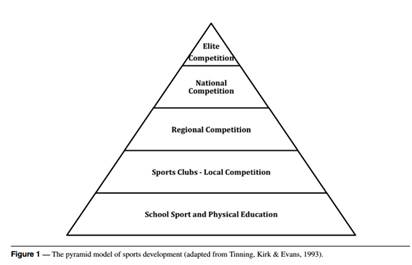
PYRAMID
Survival of the fittest or survival of talent | footblogball
Fantastic article.


Survival of the fittest or survival of talent

The optical illusion that is early talent identification and the selection philosophy of district teams

According to Darwin's theory of evolution organisms which are better adapted to their environment tend to survive longer. Does the environment we create influence the selection process and favor those that possess attributes that give them a temporary advantage while at the same time disqualifying those who at that moment in time are struggling to adapt?  Adaptive behavior is key to the survival of the human race and specific to soccer, a trait of high quality players. However if the early environment supports only temporary adapting systems ( in this case the young player) then those that are better equipt to adapt in the long run may well be lost to us forever.

Are some systems and structures just counterproductive ideologies that that are in conflict with development (learning & biopsychosocial) and the young player's natural learning process? We should of course remember that struggle is also part of the learning process. What are we doing to help players overcome those struggles that will appear during their development (non-linear)?

The Standard Model of Talent Identification
( Bailey, R.P: & Collins, D. The Standard Model of Talent Development and its

Discontents, Kinesiology Review, 2, 248-259)

In a recent paper, Bailey and Collins introduce one of the most common models used in talent identification, the Standard Model of Talent Development (SMTD)

This is a pyramid structure that is based on erroneous presumptions.
  1. Development and performance are essentially linear.
  2. Early ability that is identified as talent indicates future ability and performance.
The selection process is done at the cost of the wider group where focus is placed on those who have been identified as talented ( Bailey, R.P: & Collins, D. The Standard Model of Talent Development and its Discontents, Kinesiology Review, 2, 248-259)

Selection: Based on current performance. Identify those as talented as early as possible.

Early specialization is deemed necessary to reach elite performance level in the future.

Early performance and ability is necessary for success in the future.

De-selection: Hard to return to the system. Questionable selection criteria (often based on early physical characteristics)
PYRAMID

District team selection often begins at the age of 13/14 and is part of this pyramid. Its influence is felt years before the actual selection process. I recently spoke with a Swedish U17 youth international who said that this process can create and feed a stressful environment. Over a year before the district team selection, every day at school, at training, on social media each match or training performance was put under the microscope of analysis. "How did you play? How did I play?  As well as being physically tired you would be mentally tired as well". The player went on to say "I was lucky because I had an external support structure, family and good adult mentors that really helped me, I don't know how I would have coped otherwise". Competition, failure and struggle are of course part of the sporting experience. They don't have to be negative experiences for children. The problems occur when it is all based on adult demands and values. These adult demands and values are appearing earlier and earlier in our sporting structures. The adult and the child, do they have the same motives?

There is no convincing evidence that most sports require an early investment of training in one activity. In fact, what evidence is available suggests that across a number of eventual elite players, early specialization is negatively correlated with eventual success (Gullich, 2011).

In the paper In the paper The Standard Model of Talent Development and Its Discontents (Bailey, R.P; & Collins, D. ) It is suggested that  "the apparent success of the SMTD is ultimately an optical illusion as there is no way of knowing who might have succeeded through different systems, and who were de-selected from the system but might have (under different circumstances) gone on to achieve high performance".

The paper goes on to suggest risks associated with ill-focused of incorrectly administered pyramids.
  1. Early adult like training can lead to over-use injuries. There is a particular high risk associated with intensive training during maturation.
  2. Early intensive training can lead to psychological problems. This can lead to drop out and burnout
Development is non-linear, learning is non-linear. Therefore talent is non-linear
Judging early performance during the formative years does have its problems. This is true especially when judging and identifying something that is non-linear using what is essentially a linear model.
  1. Miss out on identifying other factors that are associated with talent ( soft skills such as decision making, communication, awareness)
  2. Often fails to recognize potential due to a focus on the performance now.
  3. Many pyramid structures based on early talent identification discriminate against those born later in the sporting calendar year.
  4. Size and strength factors that are identified early contribute to a temporary advantage resulting in short term superior performance. This all evens out after maturity. There is a risk that the player has been used for his temporary advantage (to win) and has not actually learned the game. This player will struggle when growth evens out when maturity is attained.
  5. Questionable accuracy with regard to measurement of ability, often affected by gender, ethnicity or socioeconomic background.
Are we judging biological maturation or talent?
Dutch Soccer coach Raymond Verheijen has presented data under the title "Growth spurt study in Dutch Youth Academy soccer". A 12 year study that included 36 professional clubs was carried out in Holland between the years 1997-2009. An analysis of a data base of over 10,000 players was carried out where factors such as height, weight, injuries and date of birth were taken in to consideration. The general idea was that month of birth should have no influence on talent. At the beginning of the study the Dutch schoolboy national teams were selected from August to July. Most players were born in the period August to October (43%) while only 10% of the players were born May-July. This phenomenon is often referred to as the Relative Age Effect (RAE).

Relative age effect (RAE): A bias that seems to favor a higher participation rate amongst those that are born early in the selection period).

Hancock, Adler, & Cote in a study from 2013 suggested that RAE is more than just a physical advantage. The research suggested that there are also some powerful social influences at play.
  1. Parents (Matthew effect) – The rich get richer. Those who are perceived to have ability are given preferential treatment and extra support. This in turn increases that ability which leads to more support.
  2. Coach (Pygmalion effect) – The higher the expectation placed on people the better is their performance. Those who are perceived to have ability are given more attention. Others feel neglected.
  3. Athletes (Galatea effect) – A player may see that she is able to perform better than her peers. This performance can be due to due to early maturation A players opinion about her ability and his self-expectations about her performance largely determine the performance.
During this study the Dutch FA changed the cut-off date for its national youth teams to the Jan-Dec period. The RAE adjusted accordingly. It seemed that the scouting system was primarily based on how old the player was as opposed to how talented that player is or could be. Countries with small populations have a relatively small player pool.

Focusing on winning during the early stages of development just encourages the RAE, in turn making the player pool even smaller. It becomes more about the survival of the fittest as opposed to survival of talent.

The various traits slowly appear and differentiate over time….. infancy, adolescence, and even adulthood will see the latent components undergoing various transformations (Simonton,1999,p442)

In the research paper "Swedish soccer is searching for talent but finding age" Tomas Peterson says why players are chosen in accordance with their physical development is not known "but one may assume that there is a silent agenda dictating that these players will be the most successful in the forthcoming selection steps" from club to district team to national youth team. The material and data collected "indicates that selection on the grounds of physical development is already at work in groups of 5-12 year olds and " and the effect of this process is very clear when these children reach 13 and enter an even harder selection process. It is Tomas Petersons opinion that this is counter- productive to the development "of all the football talent that exists within every yearly cohort of girls and boys. I also believe that its goes against the goals of both the sports movement and the community in general".


Many current methods of focusing on early indicators of talent are very static and linear approaches. They ignore the fact that development is individual and that differences in performance can be explained by differences in maturation. Coaches that judge early talent evaluate and focus on the contemporary level of performance where physical characteristics are fundamental factors in the talent identification process. This brings to the surface three fundamental problems that need to be addressed with early talent ID.
  1. Coaches gamble on the wrong players- (misuse of resources)
  2. Miss out on those with more long term potential
  3. Environment problem (development of a non-inclusive environment. No clear pathway back in to the system)
If we want to keep players viable over what is essentially a long, complex and sensitive development process then the aim should be to keep as many as possible as long as possible active within our sporting organization. What are we doing to help certain players overcome struggles that will appear during their development (non-linear)? What role does the environment play in creating these struggles?  We should remember that failure and struggle is also part of the learning process. Our environment should be a place where these failures and struggles can be met head on and dealt with through patience, encouragement, understanding and support.

Does the environment we create influence the selection process and favor those that possess attributes that give them a temporary advantage while at the same time disqualifying those who at that moment in time are struggling to adapt?


Sent from my iPhone

Tuesday, April 19, 2016

Physical Activity Is the No. 1 Way to Keep Your Brain Young | Psychology Today

University of Tsukuba, used with permission


from Psychology Today:
https://www.psychologytoday.com/blog/the-athletes-way/201510/physical-activity-is-the-no-1-way-keep-your-brain-young

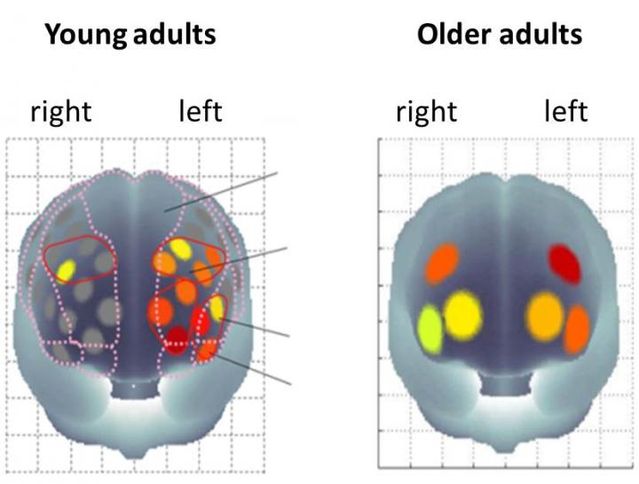
Stroop-interference-related cortical activation patterns are shown.
Source: University of Tsukuba, used with permission
Every day, my inbox seems to be flooded with new findings that physical exercise improves brain health and cognitive function. Yesterday, my mother, along with about a dozen other people, forwarded me a New York Times article from the Sunday Review, "Can You Get Smarter?(link is external)" by op-ed writer, Richard A. Friedman. My mom summed up the article in her email saying, "Did you see this? Exercise!! :-)"
I've been writing about the link between physical fitness and mental fitness for over a decade. Since the beginning, I've also stated my belief that maintaining close-knit human bonds is second only to exercise in terms of our lifelong physical and psychological well-being, which is something Friedman also speaks about in his article. 
Many of the findings that I published 10 years ago in The Athlete's Way: Sweat and the Biology of Bliss(link is external) were mentioned by Friedman in his recent NYT article such as, the idea that mindset is never fixed because of neuroplasticity and that the neurogenesis of new neurons caused by a protein called brain-derived neurotrophic factor (BDNF) is triggered through aerobic exercise. As Friedman explains,
"Intriguingly, exercise in humans and animals increases the level of a protein called brain-derived neurotrophic factor(link is external), or BDNF, in the blood and brain. BDNF promotes the growth and formation of new neurons, and it may be responsible, in part, for a remarkable effect of exercise on the brain: an increase in size of the hippocampus that is linked with improved memory.
Conversely, adverse experiences like major depression can lower BDNF levels and are associated with hippocampal shrinkage, a phenomenon that helps explain some of the cognitive impairments that are a hallmark of depression. Aside from making people feel better, antidepressants can block the depression-induced drop in BDNF, so these drugs are, in a sense, neuroprotective."

White Matter and Gray Matter Work Together to Optimize Brain Function

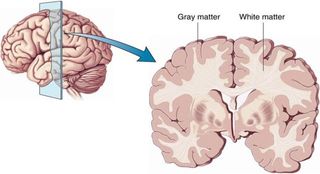
Something that I did not write about a decade ago—but which has come to light in recent years—is that exercise seems to optimize both gray matter brain volumes and white matter integrity.
MS blogspot/Labeled for reuse.
Source: MS blogspot/Labeled for reuse.
Gray matter(link is external) houses the neurons in specific brain regions. White matter(link is external)facilitates the communication between various brain regions. Gray and white matter work together to optimize brain function. The fact that physical activity benefits both gray and white matter is the primary reason that exercise is the No. 1 way to keep your brain young.
Recently, researchers at the Beckman Institute(link is external) at the University of Illinois at Urbana-Champaign, led by Art Kramer(link is external) identified that older adults who regularly engage in moderate to vigorous physical activity tend to have better brain function and greater white matter integrity than their less-fit peers. They also have increased cognitive flexibility.
Cognitive flexibility is a person's ability to switch between modes of thought and to simultaneously think about multiple concepts. I wrote about these findings in an August 2015 Psychology Today blog post, "Why Does Physical Activity Improve Cognitive Flexibility?"
Previously, other studies by Kramer and his colleagues have found white matter improvement linked to physical activity in various age groups. In 2014, Chaddock-Heyman et al found that higher levels of aerobic fitness in children is associated with improved white matter integrity. The team identified that exercise improves the microstructures of white matter in the brain. White matter integrity is linked to faster neural conduction between brain regions and superior cognitive performance.
In two separate 2014 studies—released within the same month—the Beckman researchers reported that physical activity improved the white matter integrity of physically fit children aged 9 to 10 and also in "low-fit" participants aged 60 to 78. I wrote about these findings in a Psychology Today blog post, "Why Is Physical Activity So Good for Your Brain?"

Active Body, Younger Brain

A new study by researchers in Japan led by Dr. Hideaki Soya(link is external), a professor of exercise biochemistry, from the University of Tsukuba and his colleagues shows, for the first time, a direct relationship between brain activity, brain function, and physical fitness in a group of older men.
The October 2015 study, "The Association Between Aerobic Fitness and Cognitive Function in Older Men Mediated by Frontal Lateralization(link is external)," was published in the journalNeuroImage. The researchers found that fitter men performed better mentally than their less-fit peers. The researchers believe the improved cognitive function was the result of using parts of their brains in the same way as people of a younger age.
According to Soya et al, when someone is young, he or she primarily uses the left side of the prefrontal cortex for mental tasks involving short-term memory, understanding the meaning of words and the ability to recognize previously encountered events, objects, or people. However, as we get older, people tend to also use parts of their prefrontal cortex on the right side of the cerebrum(link is external) (Latin for "brain") during these tasks. Both hemispheres of the prefrontal cortex are believed to play a role in our executive function, memory,intelligence, language, and vision.
The researchers said that for tasks involving the temporary storage and manipulation of memory, long-term memories, and inhibitory control—younger adults typically favor the right side of the prefrontal cortex, while older adults engage both hemispheres.
In a press release the researchers said, "This phenomenon has been coined HAROLD (hemispheric asymmetry reduction in older adults) and reflects the reorganization of the brain as compensation for reduced brain capacity and efficiency due to age-related structural and physiological decline."
Wikimedia/Creative Commons
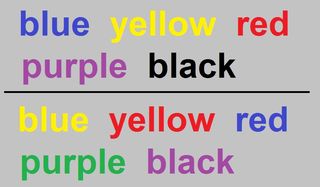
Example of the Stroop test. 
Source: Wikimedia/Creative Commons
For this study, men aged 64-75 years underwent an exercise test to measure their aerobic fitness. The men, whose physical fitness levels varied greatly, then performed a Stroop test to measure their selective attention, executive function, and reaction time. The Stroop test involves reading the word for a color, such as "blue, green, red," but asking the subject to name the color of the word rather than read the word itself.
When the color of the letters doesn't match the word, it takes the brain longer to react, as you can see by taking the Stroop test above. The length of someone's reaction time is used as a measurement of brain function. During this experiment, the brain activity in the prefrontal cortex was measured throughout the Stroop test using a unique neuroimaging technique called Functional Near Infrared Spectroscopy (fNIRS).
This brain imaging technique measures blood oxygen concentration in surface blood vessels using a set of wearable probes in a cap that is placed on the head. Active brain cells require fresh oxygenated blood which dislodges the deoxygenated blood from that region. fNIRS technically measures the changes in color between oxygenated blood (red) and deoxygenated blood (blue). This provides a measurement of brain activity.
The results showed that during the Stroop test older adults typically used both sides of the prefrontal cortex actively, with no difference between right and left, verifying the HAROLD phenomenon amongst this group of men. However, when the association between aerobic fitness and Stroop reaction time was analyzed, the men who were aerobically fit had shorter reaction times.
The researchers were able to identify that higher aerobic fitness is associated with higher left prefrontal cortex activity. Based on these findings, the researchers conclude that more aerobically fit older men can perform better mentally than less-fit older men because they're able to use specific brain regions more fluidly when necessary.
In fact, the fitter older men were using parts of their brains in the same way as they would have when they were younger, the researchers found. These results suggest that higher aerobic fitness is associated with cognitive function via lateralized frontal activation in older adults.
In a press release, Professor Soya concluded, "One possible explanation suggested by the research is that the volume and integrity of the white matter in the part of brain that links the two sides declines with age. There is some evidence to support the theory that fitter adults are able to better maintain this white matter than less fit adults, but further study is needed to confirm this theory."

Conclusion: Physical Activity, Brain Connectivity, and Superfluidity

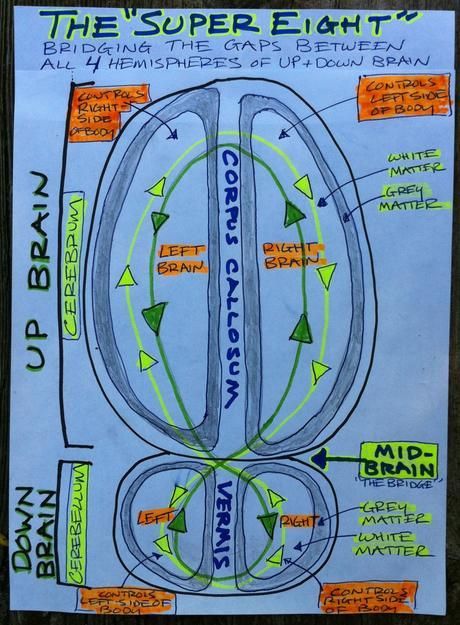
Based on decades of research, I've developed an original hypothesis that physical activity optimizes the structure, function, and connectivity of both hemispheres of the cerebrum and both hemispheres of the cerebellum(link is external) (Latin for "little brain").
To date, most research has focused primarily on the lateralization and connectivity between the left and right hemispheres of the cerebrum across the corpus callosum. But in recent months, there has been a groundswell of research that examines the role of the cerebellum in cognitive function and the creative process. 
Below is a rudimentary sketch that I drew a few years ago to illustrate my concept of superfluidity and brain connectivity between all four hemispheres:
Illustration and photo by Christopher Bergland
Optimizing the structure, function, and connectivity of all four brain hemispheres is the key to superfluidity.
Source: Illustration and photo by Christopher Bergland
I have a hunch that creating a state of superfluidity, which is the highest tier of flow, occurs when there is "zero friction, entropy, or viscosity" between all four brain hemispheres. I believe that the optimization of gray and white matter in the cerebrum and the cerebellum is the key to cognitive flexibility, creativity, and peak performance. This is still an educated guess. That said, I am constantly searching for new clues to prove my hypothesis. Stay tuned!
If you'd like to  read more on this topic, check out my Psychology Today blog posts,
© 2015 Christopher Bergland. All rights reserved.

Sent from my iPhone

Saturday, December 19, 2015

Sports Matter | Dick's Sporting Goods

Image result for sports matter . org

I guess we are tossing aside the old Greek notion of the linkage between a sound mind and a sound body. Given the toxic combination of declining international test scores, increased dropout rates and increased obesity, it seems like we are ignoring a lot of evidence that proves the point. The trend below therefore, is very disturbing if it comes to pass. Maybe we need a safe to fall on our heads to see the obvious, but I guess some failed buracracy or another has an agenda they would rather see served than to have our kids served properly.
By 2020, 27 percent of public high schools in the United States could be without sports due to a lack of proper funding.

Depriving young athletes from engaging in organized sports does more damage than just taking away fun from their lives. It eliminates an outlet that teaches invaluable lessons of teamwork, sportsmanship, respect, time management, and fair play.

Dick's Sporting Goods

 Image result for sports matter . org

Giants Top Minor League Prospects

  • 1. Joey Bart 6-2, 215 C Power arm and a power bat, playing a premium defensive position. Good catch and throw skills.
  • 2. Heliot Ramos 6-2, 185 OF Potential high-ceiling player the Giants have been looking for. Great bat speed, early returns were impressive.
  • 3. Chris Shaw 6-3. 230 1B Lefty power bat, limited defensively to 1B, Matt Adams comp?
  • 4. Tyler Beede 6-4, 215 RHP from Vanderbilt projects as top of the rotation starter when he works out his command/control issues. When he misses, he misses by a bunch.
  • 5. Stephen Duggar 6-1, 170 CF Another toolsy, under-achieving OF in the Gary Brown mold, hoping for better results.
  • 6. Sandro Fabian 6-0, 180 OF Dominican signee from 2014, shows some pop in his bat. Below average arm and lack of speed should push him towards LF.
  • 7. Aramis Garcia 6-2, 220 C from Florida INTL projects as a good bat behind the dish with enough defensive skill to play there long-term
  • 8. Heath Quinn 6-2, 190 OF Strong hitter, makes contact with improving approach at the plate. Returns from hamate bone injury.
  • 9. Garrett Williams 6-1, 205 LHP Former Oklahoma standout, Giants prototype, low-ceiling, high-floor prospect.
  • 10. Shaun Anderson 6-4, 225 RHP Large frame, 3.36 K/BB rate. Can start or relieve
  • 11. Jacob Gonzalez 6-3, 190 3B Good pedigree, impressive bat for HS prospect.
  • 12. Seth Corry 6-2 195 LHP Highly regard HS pick. Was mentioned as possible chip in high profile trades.
  • 13. C.J. Hinojosa 5-10, 175 SS Scrappy IF prospect in the mold of Kelby Tomlinson, just gets it done.
  • 14. Garett Cave 6-4, 200 RHP He misses a lot of bats and at times, the plate. 13 K/9 an 5 B/9. Wild thing.

2019 MLB Draft - Top HS Draft Prospects

  • 1. Bobby Witt, Jr. 6-1,185 SS Colleyville Heritage HS (TX) Oklahoma commit. Outstanding defensive SS who can hit. 6.4 speed in 60 yd. Touched 97 on mound. Son of former major leaguer. Five tool potential.
  • 2. Riley Greene 6-2, 190 OF Haggerty HS (FL) Florida commit.Best HS hitting prospect. LH bat with good eye, plate discipline and developing power.
  • 3. C.J. Abrams 6-2, 180 SS Blessed Trinity HS (GA) High-ceiling athlete. 70 speed with plus arm. Hitting needs to develop as he matures. Alabama commit.
  • 4. Reece Hinds 6-4, 210 SS Niceville HS (FL) Power bat, committed to LSU. Plus arm, solid enough bat to move to 3B down the road. 98MPH arm.
  • 5. Daniel Espino 6-3, 200 RHP Georgia Premier Academy (GA) LSU commit. Touches 98 on FB with wipe out SL.

2019 MLB Draft - Top College Draft Prospects

  • 1. Adley Rutschman C Oregon State Plus defender with great arm. Excellent receiver plus a switch hitter with some pop in the bat.
  • 2. Shea Langliers C Baylor Excelent throw and catch skills with good pop time. Quick bat, uses all fields approach with some pop.
  • 3. Zack Thompson 6-2 LHP Kentucky Missed time with an elbow issue. FB up to 95 with plenty of secondary stuff.
  • 4. Matt Wallner 6-5 OF Southern Miss Run producing bat plus mid to upper 90's FB closer. Power bat from the left side, athletic for size.
  • 5. Nick Lodolo LHP TCU Tall LHP, 95MPH FB and solid breaking stuff.