Showing posts with label MASTER COACHING. Show all posts

Thursday, August 02, 2018

This Is The Real Reason The Best Athletes Usually Make The Worst Coaches | Elite Daily

This Is The Real Reason The Best Athletes Usually Make The Worst Coaches


JACKSONVILLE - A companion to the prior article.

from elitedaily.com
https://www.elitedaily.com/sports/amazing-athletes-flop-coaches/1339816

This Is The Real Reason The Best Athletes Usually Make The Worst Coaches

I've always thought I'd make a great coach.

To be completely honest with you, I was never a spectacular athlete growing up. I mean, I was pretty capable at most sports, but I never expected to earn a scholarship anywhere. I just loved sports and played as a result.

Still, regardless of which sport I was playing, I always found a way to make myself useful -- because of my sports IQ. You know, I'd do all of the little things that don't usually show up on the stat sheet to help my team win.

In short, I played with a very "coach-like" mentality. One that I chalked up to an exorbitant amount of time spent watching sports on TV and playing sports video games.

See, to be a coach, you don't necessarily need to be a great athlete. You need instincts -- and the type of charismatic personality that gets the guys around you fired up to play. Most importantly, you need to know how to win games -- not necessarily have the athletic ability to do it yourself.
Take Vince Lombardi, for example, the man who most consider the greatest football coach of all time. Despite winning five NFL Championships -- and the first two Super Bowls -- Lombardi never played football professionally.

Lombardi just understood the game and was great at translating his knowledge to his players. Although his own football skill set might have not been too profound, he was remarkable at elevating the skill sets of his players. And that's what matters as a coach.

Just because you're able to excel at a sport as a player doesn't mean you'll excel at teaching the sport to others. Sure, it probably doesn't hurt to have achieved some level of success as a player prior to coaching, but the two are far from being causally related.

In fact, according to Sian Beilock Ph.D., a professor of psychology at the University of Chicago, the best players rarely make the best coaches:

As you get better and better at what you do, your ability to communicate your understanding or to help others learn that skill often gets worse and worse.

Sure, you might have a world class jump shot, but unless you're able to pass that skill on to the players around you, you'll never be a good coach.

As Beilock explains, many of the top athletes rarely are able to communicate how or why they're so talented.

These types of upper-echelon athletes might flourish with the ball in their hand -- with the game on the line -- but putting other players in the right spots to succeed is a different thing entirely.

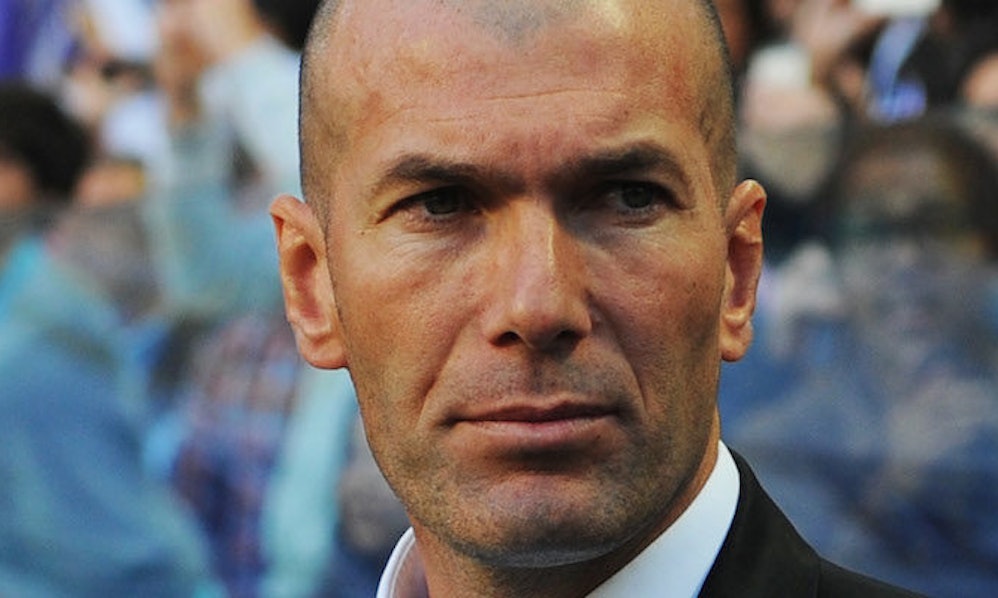
I recently was thinking about the whole player-coaching thing earlier this week, with Real Madrid's announcement that Zizou Zidane would be the new boss of "Los Blancos."

Anyone who follows football (soccer), even slightly, should be familiar with Zidane -- one of the greatest footballers of all time. However, this new opportunity at Real Madrid presents a new test for the Frenchman, marking his first major coaching position.

Although he surely had one of the highest football IQs of any player to ever step on the pitch, it remains to be seen how well he'll fare from the sideline.

If he were to falter, he definitely wouldn't be the first superstar athlete to do so. I mean, take some of these amazing athletes whose coaching tenures weren't nearly as impressive as their playing careers:

Wayne Gretzky
If Gretzky was one fraction as good of a coach as he was a player, he'd probably still have a job behind some NHL team's bench today. In his time coaching the (then) Phoenix Coyotes, "The Great One" failed to elevate his team to the playoffs and produced only one winning record in four seasons.
After putting together a .473 percent winning percentage from 2006 to 2009, he resigned and pumped the brakes on his coaching aspirations. Although I have a feeling he'll return to the sidelines again at some point in the future.
Magic Johnson 
Yes, it was a very short-lived experiment, but Magic Johnson did, in fact, coach his beloved lakers for a brief stint in the 1993-1994 season (in between retirements). Coaching many of his former teammates, Johnson led the purple and gold to a dismal 5-11 record before surrendering his duties at the end of the season.
He then returned to actually playing the game -- as opposed to coaching it -- as a point forward of sorts in the 1995-96 season. Despite it being his worst statistical year as a player, it was still lightyears more successful than his job as a coach.
          Isiah Thomas
I'm a Knicks fan, so I could probably lecture you about Isiah Thomas' shortcomings as a coach until the cows come home. Aside from being a poor coach, Thomas might've been a worse GM -- acquiring Steve Francis and Stephon Marbury at the expense of the Knicks future.
While Thomas surely knew how to run an offense during his days with the Bad Boy Pistons, he couldn't make it happen at the Mecca of basketball, posting a career .456 winning percentage over five seasons with the Pacers and Knicks.
          Ted Williams
Ted Williams is probably the greatest pure hitter of all time, undisputed. However, when it came to Ted Williams the coach, he was far from great.
His career as a manager was pretty short -- lasting only five seasons between the Washington Senators and Texas Rangers -- and for good reason. After winning 86 games with the Senators in '69, his first season, the team got progressively worse over his tenure as manager.
He eventually left the Senators after the '71 season for the Texas job, where he managed to rack up a mere 54 wins. That's just not gonna cut it.
While I'm sure Zidane will kill it as the manager for Real, being great at a sport doesn't necessarily mean you know how to coach it.


Sent from my iPhone

The Best Players Rarely Make the Best Coaches | Psychology Today

The Best Players Rarely Make the Best Coaches | Psychology TodayImage result for the best players rarely make the best coaches

JACKSONVILLE - At the youth level, I can tell you that parents "believe" that the best players make the best coaches and throw a lot of money at what seems to be a low-ROI investment.

from psychologytoday.com
https://www.psychologytoday.com/us/blog/choke/201008/the-best-players-rarely-make-the-best-coaches

The Best Players Rarely Make the Best Coaches

Why those who do can't teach

The 92nd P.G.A Championship ended yesterday with the usual fanfare and excitement that this last major of the year typically garners. But, what this tournament may be most remembered for was the younger generation of golfers - most who had not yet won a major - that sat atop the leaderboard throughout the final days at Whistling Straits.

Seasoned players like Padraig Harrington missed the cut and, although we saw some amazing shots, Tiger Woods was never really in contention. With younger players climbing the superstar ranks, you might wonder if it is time for some of the older generation to think about retirement. But, what does a golfer do after his career on the tour is over? There is of course a long list of options. You might be interested to know, however, that sport science research suggests that coaching should NOT be one of them - especially if a player wants to keep his game at a high level.
As it happens, the best players don't make the best coaches in sports. According to Canadian gold-medal hockey player Therese Brisson, "Recently retired hockey players who played at high levels rarely make the ideal coaches for youth hockey. They know what to do, but they can't communicate how they do it!" She says that given the choice between a skilled hockey player and an experienced physical education teacher to help at the youth hockey camps she now runs, she will always take the teacher. "Teaching skating skills is one of those problem areas," Brisson says. "How exactly do you skate faster?" Being able to communicate this type of information comes from coaching experience, not from playing experience.
This sentiment applies in golf too. Take a recent study conducted by psychologists Mike Anderson and Kristin Flegal.1 The researchers asked expert golfers and beginners to take some short putts on a fairly flat, straight green. The golfers then spent several minutes describing the putts they had just taken or they worked on an unrelated task, instead. Afterwards, all the golfers were asked to perform the putts again. After spending time describing their past putts, the expert golfers needed twice as many attempts to sink their putts as experts who had not put their performances into words. Beginning golfers' performances were not affected by describing putts. These less skilled players even improved a little bit when asked to recount what they had just done.


As I have blogged about in the past, for well-learned activities like taking a free throw, hitting a simple putt, or playing a cadence that you have performed a thousand times in the past, thinking too much about the step-by-step processes of what you are doing can be detrimental. But, it's not just that trying to describe your performance can disrupt it. Skilled performers often have trouble putting their actions into words in the first place. That's why those who perform at the highest levels should think twice about teaching their skills to others. When a scratch golfer in my lab, for instance, was asked to describe a putt he just took, he replied, "I don't know, I don't think while I putt." When your performance flows largely outside of your conscious awareness, your memories of what you've done are just not that good. This makes it hard to teach what you know to someone else. Just think about the type of description you might get from Michael Jordan if he were asked how he dunks a basketball. He might invoke the Nike motto and say that he "just does it," not because he doesn't want to give away his flying secrets, but because he may not know what he does.

As you get better and better at what you do, your ability to communicate your understanding or to help others learn that skill often gets worse and worse. This communication can even screw you up. Just think about golfer Ralph Guldahl, who won the US Open in both 1937 and 1938 and then the Masters in 1939. He was, at the time, one of the best players in the world. Then he wrote, "Groove Your Golf" - a how to guide for the beginning player. Guldahl never won another championship again.
__
1Flegal, K. E., & Anderson, M. C. (2008). Overthinking skilled motor performance: Or why those who teach can't do. Psychonomic Bulletin & Review, 15, 927-932


Sent from my iPhone

Monday, April 30, 2018

COACHING TIPS: If You Sign Up to Be a Volunteer Coach, Be Sure to Do Your Homework First! - Ask Coach Wolff

COACHING TIPS: If You Sign Up to Be a Volunteer Coach, Be Sure to Do Your Homework First! - Ask Coach WolffImage result for coaching tips

This is a great list for those just starting down the path. Read the article for more details.

I especially relate to "rules knowledge". I had a game recently with two highly competitive middle schools softball coaches. The batter hits the ball off the plate, it bounces straight up, the catcher shuffles out and grabs the ball over the plate in fair territory and throws the runner out at first. BOTH coaches yelled, "Blue, it hit the plate, It's a FOUL BALL!!", The coach whose team was on defense, who theoretically, was advantaged by the call, argued the longest and I think still didn't understand the rule after explanation. 

If You Sign Up to Be a Volunteer Coach, Be Sure to Do Your Homework First!


I thought this would be a good day to review what all coaches – especially those parents who volunteer to coach – need to keep in mind when working with kids. 
Rule number one: Absolutely no sarcasm is allowed
Rule number two: If you don't know the rules of the sport you're coaching, learn them.
Rule number three: organize and run your practices so that there's no standing around.
Rule number four: every kid plays – and plays a lot in each game.
Rule number five: Watch your language – including your body language!
Rule number six: Be specific in your praise 
Rule number seven: It's still about having fun.


Sent from my iPhone

Friday, December 29, 2017

WHY we coach | Coach Cano, ONEighty Athletics


Coach Slavik

I just read this article from Jeff Janssen Sports Leadership Center on WHY we coach and had to share it with my fellow coaches.
why we coach:

I COACH YOU because I care about you.

I CHALLENGE YOU because I believe in you.

I EXPECT YOUR COMMITMENT because I know your family and job will.


I HOLD YOU ACCOUNTABLE because life will hold you accountable.


I PUSH YOU OUT OF YOUR COMFORT ZONE because it's the only place where real growth occurs.


I WANT YOU TO DO IT RIGHT THE FIRST TIME because life doesn't always give second chances.


I ASK YOU TO SACRIFICE FOR THE TEAM because true success means being a part of something far greater than yourself.


I IMPLORE YOU TO GIVE YOUR BEST because I don't want you to look back on this season, your career, or life with regrets.


I DEVELOP YOU TO LEAD because your company, community, and country will eventually need you to.


I DISCIPLINE YOU because I want you to learn there's a right way and wrong way to do things and treat people.


I CHALLENGE YOU TO COMPETE because you'll fight some battles in your life where losing is just not an option.


I INSIST YOU PAY ATTENTION TO DETAIL because you'll soon realize that the little things are the BIG things.


I PUT YOU THROUGH ADVERSITY because you'll need the persistence to overcome far greater adversities in your life.


I MAKE YOU EARN A SPOT because you'll take more pride in and ownership of the things you work hard for and earn.


I INSIST YOU DO THE RIGHT THING because I want you to look in the mirror and be proud of who you are and what you stand for.


I REQUIRE YOU TO REPRESENT YOURSELF WITH CLASS because you'll carry your reputation with you for the rest of your life.


I FORCE YOU TO FACE YOUR FEARS because breaking through your fears gives you the confidence to take on any challenge life throws at you.


I DO EVERYTHING I DO because I want you to become the absolute best version of yourself and develop into the responsible and respected adult your family, friends, coworkers, community, and the world all need you to be.


THIS IS WHY

I thought this was a perfect message to start off a great week!

Coach Cano
Win The Kids!

The offseason is here! If you haven't joined the other 1000's of coaches in our Elite Sports Performance Program click the link below and check it out.

Sent to: Theslav1959@yahoo.com

Unsubscribe

ONEighty Athletics, LLC, 102 Clements Ave, Starkville, MS 39759, United States


Tuesday, December 12, 2017

Ten business truisms that apply to coaching, sports | Coach & Athletic Director


Ten coaching truisms

1. If you don't know, say so. If you don't know what you're talking about, stop talking. Too often, we think we must have all the answers because of that adjective (coach) in front of our name. If we have all of the answers, that's because we've stopped learning, and that's never a good thing.

2. Don't jump ship before you hit the iceberg. Hang in their physically and mentally with your team until the bitter end. Most times, we can read the writing on the wall about our teams and we can tell when the season is a bust. That's no reason not to hit it hard with video, or to stop being creative in practice, or to cease trying to make your players better.

3. Confidence comes from success; knowledge comes from failure. In my mind, there's no greater teacher than failure and no greater motivator than success. I'm sure most of us wouldn't be the coaches we are today without some significant failure in our past, so use it as an opportunity to learn.

4. If you're miserable, quit and do something else. If you're still miserable, it's you. We've all been around the folks who complain all the time: Their team doesn't have enough financial support, they're working crazy hours, their team is underachieving, etc. So maybe coaching isn't your gig. If it is, the rest of us don't want to hear about it because we're happy.

5. People won't perform for those they don't respect. Your team doesn't have to love you or even like you (though that'd be nice), but they do have to respect you. They should respect your knowledge of the game, your interest in their well-being and the way you coach them. I'm not saying they should always agree with you, but respect is on a higher level.

6. If you're not passionate about what you're doing, you won't be successful. I once wrote a "Pyramid of Success" series, based on the John Wooden tool. One of the cornerstones of that pyramid is enthusiasm. If you have it, show it. If you don't have it, go get it. Enthusiasm and passion are critical to the success of your team.

7. Conflict is healthy; anger is not. Get some help for that. I once wrote an article about yelling at your players and provided three ways that you can get the most from your team without screaming at them. You're going to have to manage your team and, over the course of the season, that probably comes with conflict. Control yourself, so that you can control the situation.

8. No matter how smart you are, wisdom only comes from experience. When I first started coaching, I knew everything. And with each proceeding year, I knew less and less. Funny how that works out.
Book knowledge of how things should work with your team is only valuable when combined with the street knowledge of how things actually work. If you're new to coaching, hook up with someone who's been at it a while and learn all you can.

9. Whine and complain all you want — nothing will change. We'll listen to you, but we can't help — so why even start down that path? We can't make your alums more involved, or your recruits commit earlier, or your boss give you a raise. So let's celebrate the fact that we get to coach, teach kids life lessons and be happy with what we have.

10. The boss isn't always right, but they're still the boss. What else is there to say beyond that? Our job is to coach 'em up and make our bosses look good. Beyond that, we should give the boss the respect that we want from our teams.

I've always thought that the link between the athletics and business world is pretty strong and the article I found about business truisms was a good demonstration of that.

Dawn Redd is the head volleyball and assistant track & field coach at Beloit College in Wisconsin.

Tuesday, June 20, 2017

Hitting and the Power of Suggestion | FanGraphs Baseball

Hitting and the Power of Suggestion | FanGraphs Baseball
swingsquickslot

Good stuff from Fan Graphs. It illustrates why whether it's hitting (as in this article)  or. pitching verbal cues results may vary from player to player. So say good bye to the cookie-cutter, one-size-fits-all approach and maybe soon the perfect pitching/hitting mechanics model. You'll have success with some players, but lose others but for want of a better verbal cue.

from the article: 
This fact, that there's no universal instruction for baseball development may be frustrating, but if you think about the difference from body to body, it makes sense. 

Ochart himself had some thoughts along these lines. "Coaching, in many aspects, is approached as an art more than a science because the same verbal cue to a group of athletes can cause unique movement adaptations within the group," he told me in an email. "Learning what an athlete feels has always been a critical part of coaching movement, and technology is helping us figure out exactly what's happening and bridging the critical gap between 'feel' and 'do.'"

from FanGraphs.com http://www.fangraphs.com/blogs/hitting-and-the-power-of-suggestion/?utm_source=Driveline+Baseball+Newsletter&utm_campaign=6ef49e1d1a-Sunday_Thunder_Nuggets_12_18&utm_medium=email&utm_term=0_d541cdd9d2-6ef49e1d1a-311453553&mc_cid=6ef49e1d1a&mc_eid=48e9d48f3e

Hitting and the Power of Suggestion

I was drinking a beer with Kevin Youkilis — or rather, I was drinking one of his new brewery's beers, and he was drinking water — and we were talking about the state of the game. I think I mentioned something about chopping wood — how young players are coached (badly?) to hit down on the ball, and how that leads to a lot of swing and miss as players have to try to swing to a point in space — and he stopped me. "Nobody ever swings out to a specific point in space when they're told to chop wood or swing down on the ball," Youkilis said. "What actually happens is that they end up quicker to the ball." My mind was blown.

Youkilis pointed out that he spent his whole career with that philosophy, and though one player's strikeout rate (18.7%) and power (.197 isolated slugging percentage) don't prove anything, it was an eye opener for me. He basically was saying that the power of suggestion might actually have some value, even if the content of that suggestion was technically wrong. And once I thought about it, I realized I'd heard a few smart hitters — including Mark Trumbo — tell me something similar before, but I hadn't been listening right.

In any case, this is one of those testable situations with today's tools of the trade. I asked Jason Ochart of Driveline Baseball if he could create two situations and chart the outcomes using the data collection devices for which Driveline is famous on the pitching end.

In the first situation, Ochart told his hitter to be "quick to the ball." This is maybe not exactly the same thing as telling them to chop wood, but I didn't complain. I don't want him to tell his hitters something he doesn't want to tell them, and what he did tell them still permits us to (attempt to) answer our question: is it possible to change a hitter's swing metrics just by changing what you say to him?

In the second situation, Ochart gave his hitter the advice followed enthusiastically by modern hitters: "Get your hands to the slot first, and then swing." A fundamentally different coaching statement.

The results were different, too. In very interesting ways.

First, a table. Ochart used his Diamond Kinetics app to measure the player's swing by hand speed and distance in the zone. This player is a major-league baseball player.

Swing Stats for One Hitter, Two Conditions

Condition Hand Speed Distance in Zone
Quick to Ball 24 mph 23 inches
Hands to Slot 21 mph 28 inches

SOURCE: Diamond Kinetics / Driveline Baseball

Major league hitter told to be "quick to the ball' or "get hands to slot first" in two conditions.

For this hitter, the cue had an interesting result. Being quick to the ball was better for his bat speed, and bat speed begets power. However, he was in the zone for a shorter period, meaning that his swing was steeper and he was more likely to miss the ball. He wasn't giving his hands as much chance to get to the ball.

Here's what the two swings looked like, mapped by that Diamond Kinetics app. "Quick to the ball" is the green swing and "hands to slot" is in orange.


It looks like the "quick to the ball" cue compelled the batter to get his hands down to the slot faster! That might have cost him some time in the zone, though. And that missing time comes early on in the swing, when the brain may still have time to alter the path of the bat some.

The orange swing looks like it's better for a steeper launch angle, though, and that's something that the league's hitters have been seeking to do more over the last year-plus. Thanks to Bill Petti, we can see that baseball's hitter are hitting fewer balls in the 0 to -20 degree angles that produce poor outcomes. Maybe this is from more "hands to slot" coaching happening around the league, and maybe that coaching is due to analysis based on these Statcast stats.

launch_angle_fre_yr_consec-2

Now it's time for a step back. We can't universalize this small finding to all players, not in a direct manner. What we can probably take from this is that coaching matters, and that each of these conditions is probably better for a specific swing. In other words, there are maybe powerful guys with good launch angle who could benefit from being told to be "quick to the ball." And maybe there other are guys with decent power but who need to lift the ball more; perhaps they'd benefit from being told to get the "hands to the slot" first.

This fact, that there's no universal instruction for baseball development may be frustrating, but if you think about the difference from body to body, it makes sense.
Ochart himself had some thoughts along these lines. "Coaching, in many aspects, is approached as an art more than a science because the same verbal cue to a group of athletes can cause unique movement adaptations within the group," he told me in an email. "Learning what an athlete feels has always been a critical part of coaching movement, and technology is helping us figure out exactly what's happening and bridging the critical gap between 'feel' and 'do.'"

And that's probably the perfect way to sum this up. Yes, it's probably not great to tell people to swing down on the ball. But if you take the kernel from that coaching, and tell them to be quick to the ball, you'll probably be saying the right thing to at least one type of hitter. Figuring out which type of hitter needs to hear which coaching is the next step.


Sent from my iPhone

Friday, June 16, 2017

Listen to Why the world of coach education is "full of bulls**t" | The Talent Equuation | Hard2Guard Player Development Newsletter 7.19


SOMETIMES YOU GET A TWO FOR ONE!! Brian McCormick's Hard2Guard Player Development Newsletter hist my mailbox every month or so and is always chock full of cutting edge ideas for coaches REGARDLESS OF THE SPORT!! You get a great education with each one.
For me, the best part is clicking on the embedded links, I want to read what impresses and influences the guys that I am impressed and influenced by. That;s a great two for one. Learning is problem solving not just mindless drills that don't mimic what the athlete encounters in actual competition, 
          Both the podcast and the newsletter will make you a better coach going forward. So will taking           advantage of two for ones.


Listen to Why the world of coach education is "full of bulls**t" - Richard Bailey from The Talent Equation Podcast in Podcasts.
https://itunes.apple.com/us/podcast/the-talent-equation-podcast/id1209549739?mt=2&i=1000385982572

Dr Richard Bailey is one of the most widely respected researchers and academics in the world of sport. He currently works at the global policy making body the International Council for Sports Science and Physical Education (ICSSPE) where he gives talks all around the world on matters related to the development of sport and physical activity. 

In this episode Richard pulls no punches in exposing the world of coaching for adhering to practices and educational models that have no evidence base or have proven to be false.
We talk about...
- Why we have 'the worst system in the world - barring all the others'
- His latest research which shows that 60% of coaches have been taught that there are 'learning styles' (Bull***t!)
- His challenge for the coaching industry to professionalise
- His views on drills within coaching and why they have no place in a learning enironment.
May 31, 2017 at 1:05 AM
Unknown Size (Audio)


Introduction

I finally listened to The Talent Equation podcast, which is hosted by Stuart Armstrong, the head of coaching at Sport England. In the last week, I listened to episodes with Danny Newcombe, the assistant coach for Hockey Wales, and Dr. Richard Bailey, a coach educator, which is reflected below. The final article refers to a video that appeared on my Twitter feed. Nothing personal. Again, I do not try to find these videos to critique, but when something like this appears on my feed, it needs to be addressed.

Several people have emailed recently about clinics in the fall; my fall is nearly booked with refereeing college soccer and my new team; please be in touch quickly if you would like to plan something. Finally, I still am looking for a business partner with business/marketing/web design skills to expand Playmakers League. Please let me know if you or someone who you know is interested. 

Earn the right to drill

As Danny Newcombe and Stuart Armstrong discussed practice design and drills, Newcombe said that players must "earn the right to drill." In our current youth sports environment, there is the idea that one must master the requisite techniques through drills or isolated practice prior to playing the game; parents of six and severn year olds have contacted me about training their children prior to their children joining a team or even practicing the sport in the park. 
Newcombe's comment suggests the opposite approach, and one more aligned with K. Anders Ericsson's original work on deliberate practice. Ericsson suggested that those who engage in deliberate practice must discover their passion for the endeavor first, and that passion or desire to improve originates through play and leads to more refined practice, rather than the other way around. 
Newcombe and Armstrong discussed the battle between skills practiced in the contextual environment — typically some form of modified or small-sided game — and techniques practiced with hundreds of consecutive repetitions. Whereas research suggests that skills learned within the game context will transfer to the game, we also know that the best players practice on their own, typically with more constant, block practice. How do we overcome this dichotomy? 
Newcombe mentioned that it is typically the best players who practice on their own after practices to refine their techniques. Practice time, which is limited, is invested in skill work in a contextual environment. During the offseason, a high-school or club team may practice twice per week for two hours per practice; rather than invest that time in individual, isolated technique practice, use that time for the contextual practice, and those who have the desire to improve will spend their free time practicing their technique.
Beyond the idea of time scarcity and allocating resources, "earning the right to drill" means that the players have played enough to know what and how to drill. When players practice a right-hand layup in a pregame layup format, they may lack the experience to practice in a manner what improves the transfer to a game. Consequently, they mimic the coach's model, and they attempt to perform the layup in the same way every time, using the ideal angle and speed to be successful. In a game, this ideal layup is rarely available; we spend hours developing this ability to make the perfect layup, but Mike MacKay, a master coach developer with Canada Basketball, has written that the most missed shot in basketball is the poor-angle layup. If the pregame layup drill transferred to all layups, there would be no such decrement in performance because of the ubiquity of this practice. Instead, practicing the ideal layup has little to do with the non-ideal layup; two ways to practice the non-ideal layup are through contextual drills or games and through imagining these situations in one's individual practice. In the pregame layup drill, rather than mimicking the coach's ideal layup, imagine the game context and attempt more relevant shots based on different speeds, angles, and defenders.
This is earning the right to drill. An NBA player can practice individually and transfer the practice to the game because he imagines the context. His experience informs his practice. He understands how the skill is performed in the game. Often, young players lack this ability, which is one reason that they mimic directions precisely. 
As an example, I worked out with three of my new players yesterday. We did a simple drill that included a finish. I was focused on their catch and first step on a drive, but I attempt to finish all drills with a shot. I gave the instructions that we would do five repetitions from the right wing and five from the left wing. On each side, I asked for a different finish on each repetition. When we got to the fifth repetition, one player stopped and asked for another option. Whether through a lack of skill or a lack of imagination, her finishing was limited to a traditional layup, reverse layup, and a two-foot layup. When she had time to think, she was able to come up with numerous alternatives (Rondo, up and under, inside hand, goofy foot, etc), but it only enhances her performance if these finishes are available to her during a game. The lack of context or the lack of imagination prevented her from practicing these shots. She needs to play more to earn the right to drill in order to practice these shots that she might use without prompting. 
This is a different approach than the traditional. Traditionally, the coach would have the players practice several finishes with multiple repetitions per finish before playing the game. When there is no context, do the players use these finishes in the game? Can they transfer the new finishes to game situations? Can they connect the what to the why and the when? Earning the right to drill is an interesting idea when designing practice sessions and drills. 

21st Century Guide to Individual Skill Development
$9.99
Buy Now

180 Shooter
$19.99

Buy Now

The 21st Century Basketball Practice
$9.99
Buy Now


Learning is problem solving

In his discussion of practice and problems with coach education with Stuart Armstrong, Dr. Bailey said that all "learning is problem solving", and isolated technique practice often lacks a problem to solve. He differentiated learning and practice: Learning is the acquisition of new or novel behaviors; practice is automating those behaviors. Much of what we do is practice, but not necessarily learning, and often this appears to be intentional. Many coaches appear to believe that practice is a time to eliminate mistakes and narrow potential actions; for instance, many coaches argue that shooters should use one method of footwork because it reduces mistakes. Many believe that the permanent pivot foot is the best method because they believe that it reduces traveling violations. Therefore, practice is not directed toward learning new actions, but refining old actions. 
In games, players solve problems. If I want to pass, I decide to whom I will pass, when I will pass, and which type of pass I will use. I may have to adjust for my defender or my teammate's defender or potentially a help defender. My pass is not pre-determined; it is a solution to the problem of passing to a teammate in a constantly changing environment. 
In practice, I practice a two-hand chest pass in a stationary partner passing drill, and I refine this skill until my technique is perfect, but I am not learning to solve the problem that I will face in a game. Practicing the technique does not help me decide when or how or to whom to pass. Ultimately, these decisions change the technique, and most passes require a different technique than the perfect technique that I mastered in the two-line partner passing drill. 
We often discuss progressions of drills, and common methods progress in a linear fashion: stationary chest pass; stationary bounce pass; stationary overhead pass; stationary pass with on-ball defender and stationary target (monkey in the middle); undefended chest pass with movement (two-person shuffle passing); undefended chest pass with patterned movement (three-person weave); etc. Each progression adds something new and builds on the previous drill in a progressive manner. Once we have learned these passes, we practice these passes in the same drills to refine the techniques rather than moving to more contextual environments to solve problems. 
In addition to progressions, one thing that is lost in the games vs drills argument is the ability to regress. I may start with an advantage passing drill rather than a stationary partner passing drill. An advantage drill does not replicate a game perfectly, but it incorporates some game context: defenders, movement, anticipation, decision-making, etc. The game creates problems to solve, and these solutions ultimately require the use of various techniques. 
As I watch the players solve these problems, I may notice a technical issue. Often, the problem is a lack of pivoting; players twist at the waists rather than pivoting or, when pressured, they lean back onto their back foot. Either solution likely leads to a turnover, but the issue is not passing, but pivoting. More passing drills are unlikely to solve these mistakes, despite the mistakes manifesting themselves when the players pass. 
Therefore, I regress and use a pivoting drill. This may or may not include passing. After completing this drill or drills, I return to the game to see if they have improved in their abilities to solve the problems. There is a chance that they now excel; if so, I may have to add to the game to create more difficult and more complex problems to continue their learning. There also is a chance that improved pivoting has highlighted another problem, and I use a new regression to address the new problem. 
Too often, we teach counters and fakes to players without a defender to fake or a reason to counter. In a stationary partner passing drill, why use a wrap-around bounce pass? In a game where the objective is to get the ball to the block, I see the utility of a wrap-around bounce pass. Now I understand. As a coach, if the players struggle to make that pass to the post player, I regress and demonstrate the pass. Because they understand its purpose, the learning generally is quicker than if I teach this pass in my linear progression without any defense or reason to use the pass.
Refining skills is not wrong. Players should spend time refining and improving their techniques and movements. However, success in games is determined by the skills, and the coupling of the perception and action. Techniques change when a player is confronted with different problems: Faster speeds, defenders, reduce spacing, reduced time, etc. Because these techniques change under game constraints, more time should be invested in learning and practicing the skills in the game context.  

Purposeless Training

A coach posted this video of young girls jumping over a 12-inch hurdle before shooting. Before I interjected, other coaches or trainers had supported this coach for teaching the proper fundamentals of shooting. There is nothing proper or fundamental about the shooting in this video. This is a major problem with coaches and trainers in the Instagram generation. Therefore is nothing to support in this video. 
First, last week, I listened to Dr. Mike Young describe his categorization of plyometrics. Generally, people use height as a measure of intensity, but jumping onto a box, regardless of its height, is less intense than jumping and landing on the same level or landing from a box. As Dr. Young described, when there is movement —horizontal or lateral — the demands increase. Similarly, when repeating jumps, rather than performing single jumps, the demands increase. 
In this instance, the girls jump laterally and presumably attempt to repeat their jump, as they jump over the hurdle and into a shot. Whereas the hurdle is only 12 inches, which is not particularly high, the combination of demands is clearly too much for these girls. Their landing techniques from the initial jumps are atrocious, potentially predisposing the girls to injury, and the landings do not put the girls in a position from which they can shoot competently. The entire purpose of shooting footwork is to prepare a player to shoot with balance; in this case, the footwork prevents this. 
Second, the hurdle changes the girls' attentional focus. Rather than looking at the basket, where they attempt to shoot, they look down at the hurdle as they jump. With their eyes focused on the ground, their posture changes. The demands change the desired attentional focus and posture of shooting. Sure, the drill may be hard, but what are the players learning? They practice something that they would not want to replicate in the game. If this attentional focus and posture transfers to the game, this would be referred to as negative transfer; in that sense, the best case scenario is that this drill does not transfer at all. If the best case scenario is no transfer of the drill to the game, what are we doing? 
Third, the coach identified this as a drill to teach "the turn" in shooting. Regardless of one's views on turning before or during one's shot, or what "square" means, this drill has nothing to do with the turn. Tom Nordland is the first shooting coach who I heard advocate for a severe turn, and he started this instruction with feet on the ground in a typical form shooting drill. Jumping over a hurdle, or jumping in general, has nothing to do with turning one's body or squaring one's body to shoot. The turn refers to the direction that one faces as she starts her shot, and the motion involved after one leaves the ground to shoot. These girls are practicing pre-shot movement; in reality, the girls are practicing what is referred to as "the hop" (which is incorrect terminology, as shooters land on two feet, and a two-foot landing is a "jump"). A young girl (or anyone really) should not jump 12 inches off the ground to "hop" into her shot, and these girls clearly cannot utilize the elastic or plyometric benefits of the "hop" because they lack the requisite strength. To teach these girls to use the "hop" in their shots, the first step would be to teach them to land from a jump correctly, and the second step would be to add strength to utilize the elasticity in the "hop". Otherwise, they are shooting with less balance and producing less force on a shot that is already beyond their strength levels because of the height of the basket relative to their size and strength. 
When I replied on Twitter because I could not bite my tongue at this ludicrousness that put these young girls at risk of injury, the poster asked for a better way to teach the turn. Again, regardless of one's perspective on the turn, if you want to see the turn occur naturally, ask players to run and stop quickly; the turn is the same basic movement as Lee Taft's hockey stop. It is natural. When moving forward, and stopping quickly, athletes turn toward perpendicular to their movement to brake. Taft's hockey stop tends to be a full perpendicular turn or a 90-degree turn compared to the pre-stop movement; the 90-degree turn facilitates a quicker change of direction if one is transitioning from a sprint in one direction to a sprint in the other direction (picture a 5-10-5 shuttle or a suicide drill). Because nobody has advocated a full 90-degree turn in relation to the basket when shooting, the "turn" for shooting is somewhere between a normal jump stop where the player faces in the same direction as the pre-stop movement and a hockey stop. Again, this is not something that has to be taught; every player turns to some degree when stopping their forward movement unless directed to do something else. In a suicide drill, ask players to sprint to the line and back pedal to the baseline, and unless they have been taught a good lunge stop, they will turn. 
When players turn to shoot in games, much of this turn is due to the deceleration. If you watch many shooters, they turn more on jump shots than free throws? Why? If it was because of elbow alignment or whatever the various systems teach, why would their turn differ? Shouldn't they align their elbow on free throws too? I believe that players turn more due to deceleration; the better players actually turn more, as their impulse is less when decelerating prior to initiating their shots because they have better strength and body control. A young player who lacks strength, such as these girls, cannot possibly shoot with the quickness of a player such as Steph Curry because they cannot control that amount of speed and force (if they could generate it). 
Finally, the coaches and trainers praising this coach on Twitter are ignorant or irresponsible. If they do not understand that this is useless and potentially dangerous training for these girls, they are ignorant. If they understand that it is potentially dangerous, and praise the coach anyway because he is following their "shooting system", they are irresponsible. One of the major problems in coaching, training, and sports today is the Instagram culture; training is based on getting likes on Instagram. We are not training the client in front of us as much as we are promoting ourselves or our business to the masses. Every drill is an advertisement, not a carefully designed activity to solve a problem for the player or players. In this self-marketing world, boring drills do not grab attention. We have to make the boring drills look hard; rather than having these girls do a basic form shooting drill, which would be more appropriate, although probably beyond their level because of the basket height, we have them jump over a hurdle in order to post on Instagram. Parents, players, and coaches need to be more discerning when they look at these videos and realize the complete uselessness of many of these drills, and, in this and similar cases, the irresponsibility of the drill. 


Copyright © 2017 180 Shooter, All rights reserved.
You are receiving this because you opted in at 180shooter.com or subscribed via email from 2007-13.

Our mailing address is:
180 Shooter
1919 van Buren St.
Hollywood, Fl 33020

Add us to your address book


Want to change how you receive these emails?
You can update your preferences or unsubscribe from this list

Email Marketing Powered by MailChimp

Giants Top Minor League Prospects

  • 1. Joey Bart 6-2, 215 C Power arm and a power bat, playing a premium defensive position. Good catch and throw skills.
  • 2. Heliot Ramos 6-2, 185 OF Potential high-ceiling player the Giants have been looking for. Great bat speed, early returns were impressive.
  • 3. Chris Shaw 6-3. 230 1B Lefty power bat, limited defensively to 1B, Matt Adams comp?
  • 4. Tyler Beede 6-4, 215 RHP from Vanderbilt projects as top of the rotation starter when he works out his command/control issues. When he misses, he misses by a bunch.
  • 5. Stephen Duggar 6-1, 170 CF Another toolsy, under-achieving OF in the Gary Brown mold, hoping for better results.
  • 6. Sandro Fabian 6-0, 180 OF Dominican signee from 2014, shows some pop in his bat. Below average arm and lack of speed should push him towards LF.
  • 7. Aramis Garcia 6-2, 220 C from Florida INTL projects as a good bat behind the dish with enough defensive skill to play there long-term
  • 8. Heath Quinn 6-2, 190 OF Strong hitter, makes contact with improving approach at the plate. Returns from hamate bone injury.
  • 9. Garrett Williams 6-1, 205 LHP Former Oklahoma standout, Giants prototype, low-ceiling, high-floor prospect.
  • 10. Shaun Anderson 6-4, 225 RHP Large frame, 3.36 K/BB rate. Can start or relieve
  • 11. Jacob Gonzalez 6-3, 190 3B Good pedigree, impressive bat for HS prospect.
  • 12. Seth Corry 6-2 195 LHP Highly regard HS pick. Was mentioned as possible chip in high profile trades.
  • 13. C.J. Hinojosa 5-10, 175 SS Scrappy IF prospect in the mold of Kelby Tomlinson, just gets it done.
  • 14. Garett Cave 6-4, 200 RHP He misses a lot of bats and at times, the plate. 13 K/9 an 5 B/9. Wild thing.

2019 MLB Draft - Top HS Draft Prospects

  • 1. Bobby Witt, Jr. 6-1,185 SS Colleyville Heritage HS (TX) Oklahoma commit. Outstanding defensive SS who can hit. 6.4 speed in 60 yd. Touched 97 on mound. Son of former major leaguer. Five tool potential.
  • 2. Riley Greene 6-2, 190 OF Haggerty HS (FL) Florida commit.Best HS hitting prospect. LH bat with good eye, plate discipline and developing power.
  • 3. C.J. Abrams 6-2, 180 SS Blessed Trinity HS (GA) High-ceiling athlete. 70 speed with plus arm. Hitting needs to develop as he matures. Alabama commit.
  • 4. Reece Hinds 6-4, 210 SS Niceville HS (FL) Power bat, committed to LSU. Plus arm, solid enough bat to move to 3B down the road. 98MPH arm.
  • 5. Daniel Espino 6-3, 200 RHP Georgia Premier Academy (GA) LSU commit. Touches 98 on FB with wipe out SL.

2019 MLB Draft - Top College Draft Prospects

  • 1. Adley Rutschman C Oregon State Plus defender with great arm. Excellent receiver plus a switch hitter with some pop in the bat.
  • 2. Shea Langliers C Baylor Excelent throw and catch skills with good pop time. Quick bat, uses all fields approach with some pop.
  • 3. Zack Thompson 6-2 LHP Kentucky Missed time with an elbow issue. FB up to 95 with plenty of secondary stuff.
  • 4. Matt Wallner 6-5 OF Southern Miss Run producing bat plus mid to upper 90's FB closer. Power bat from the left side, athletic for size.
  • 5. Nick Lodolo LHP TCU Tall LHP, 95MPH FB and solid breaking stuff.